Last updated November 18, 2026
Free written scope consultation - allowances, timeline, and change-order rules on paper before a single trade is scheduled
The Complete Driveway & Pavers Guide for North Las Vegas Homeowners
Here’s a number that catches people off guard: a paver driveway installed to the base depth printed in most national manufacturer guides will likely start shifting, settling, or rocking within three years in North Las Vegas. Not because the pavers are defective. Because those guides were written for Georgia clay and Midwest frost, not for the caliche hardpan that sits under most residential lots on the valley’s north side. We’ve pulled up failed installs that looked textbook on paper and were doomed the day the excavator left. This guide covers how to read the ground before you dig, what base depth actually holds, which materials survive 110°F surface temperatures, what North Las Vegas HOA and Clark County rules require, and how the dollars break down per square foot.
Quick Answer
A paver driveway in North Las Vegas typically costs $14 – $18 per square foot installed for standard concrete pavers, $19 – $24 for permeable pavers, and $22 – $28 for travertine. The single biggest factor in whether that money lasts is base preparation: caliche hardpan 6 – 18 inches below grade means you need 8 – 12 inches of compacted Class II base rather than the 4 – 6 inches national guides recommend, or the pavement will fail.
Styles & brands we work with
- Kitchen remodeling
- Bathroom remodeling
- Home additions & ADU
- Roofing
- Windows & doors
- Driveway & pavers
- Fence
Table of Contents
- Why Caliche Changes Everything in North Las Vegas
- How Deep Does the Base Need to Be?
- Paver Brands and Heat Ratings That Matter Here
- What Does a Paver Driveway Cost in North Las Vegas?
- Slope, Drainage, and Flash Floods
- HOA Approval and City Permits
- The Installation Process, Step by Step
- Common Mistakes to Avoid
- When to Call a Professional
- Frequently Asked Questions
Why Caliche Changes Everything in North Las Vegas
Caliche is a cemented layer of calcium carbonate that forms in arid soils when dissolved minerals precipitate out of groundwater and re-crystallize. In plain terms: it’s natural concrete, and it does not drain. Under many North Las Vegas residential lots, we find a hardpan layer somewhere between 6 and 18 inches down. Sometimes it’s a thin, chalky band; sometimes it’s a slab thick enough to ring a digging bar.
That matters for exactly one reason. Water that can’t move through soil has to move sideways, and a paver driveway that traps water between the pavers and the caliche will pump, settle, and heave. In clay soil, water drains slowly but eventually. In caliche, it pools.
Before any excavation, we probe the ground across the whole footprint with a steel rod every few feet, not just at the four corners. Where we hit refusal, we dig a test pit to see the depth and thickness. That reading determines the base strategy:
- Caliche at 18+ inches: Standard base depth usually holds, provided drainage grades away from the slab.
- Caliche at 12 – 18 inches: We deepen the base and install a drainage plane.
- Caliche shallower than 12 inches: Often requires breaking the caliche layer inside the footprint or excavating it out and replacing with drainable aggregate. This is the case that breaks budget on a cheap quote – because the bid was priced before anyone probed.
This is why a North Las Vegas paver quote that doesn’t mention soil testing is a quote with an open-ended change order buried in it. Our approach under The Haven Standard is to probe first and price the number we find, so the written price you receive reflects what the ground actually is. You can see how that plays out on our Driveway & Pavers in North Las Vegas page.
How Deep Does the Base Need to Be?
In North Las Vegas, plan on 8 – 12 inches of compacted Class II aggregate base under a driveway that will take vehicle traffic. National guides steer you toward 4 – 6 inches. In our experience, that recommendation comes from climates with frost heave (where deep base is a cost tradeoff) and soils that drain. The Mojave is the opposite problem: soil that doesn’t drain at all, and thermal movement that runs through the pavement all summer.
Here’s what the layers look like on a properly built driveway:
- Excavated subgrade: Caliche probed, broken, or removed where shallow. Depth varies by what the probe reveals.
- Geotextile fabric: Optional but valuable over caliche – it prevents fine particles from pumping up into the base.
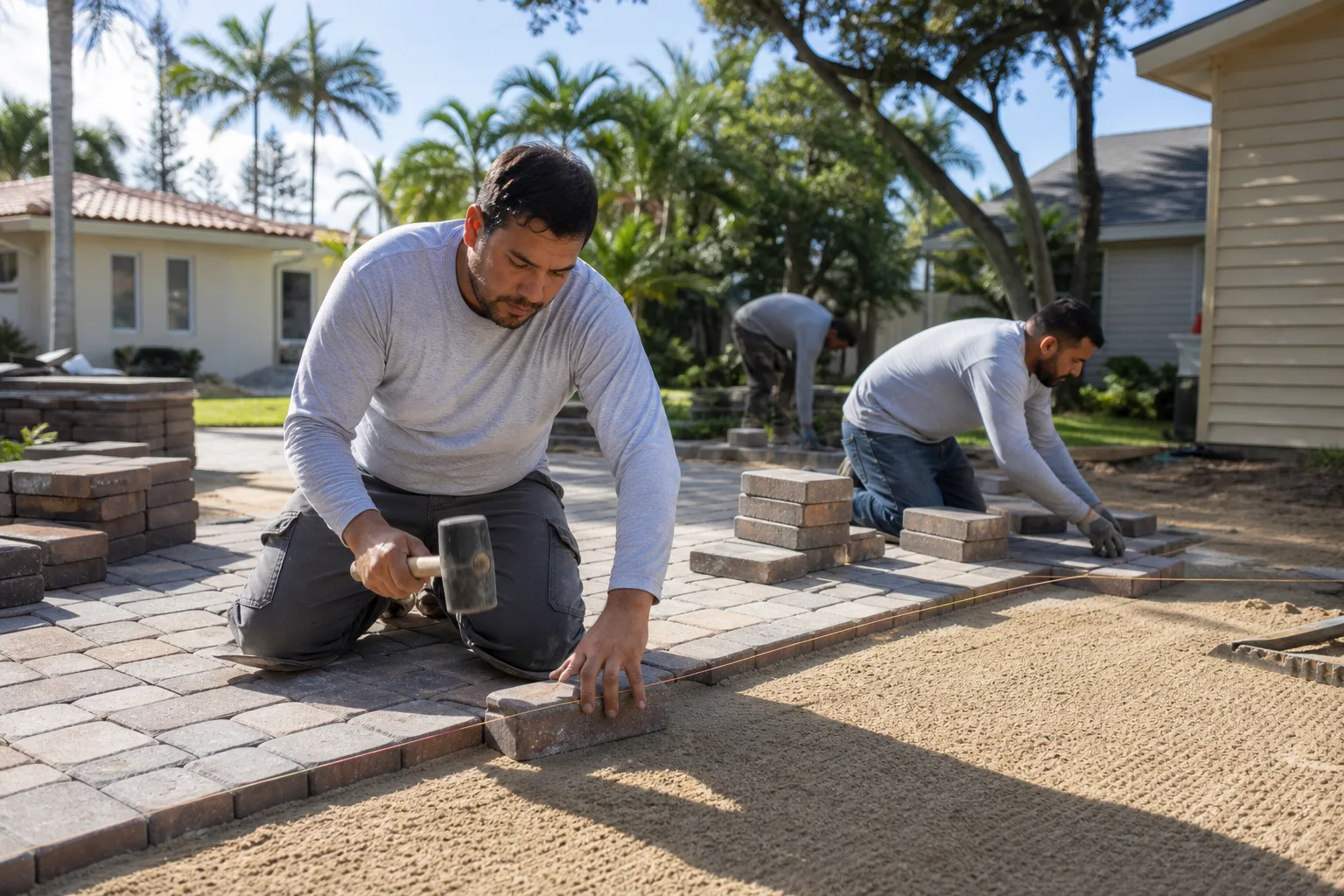
- Class II base: 8 – 12 inches, placed and compacted in 3 – 4 inch lifts with a plate compactor.
- Bedding sand: 1 inch, screeded to grade. Not more, or the pavers will rock.
- Pavers: Set to pattern, cut edges tight to the restraints.
- Edge restraints: Spiked in with the correct base embedment. Skip this and the whole field spreads.
- Polymeric sand: Swept into joints and set with water. This is the joint that survives wind-driven desert grit.
Compaction testing is the other thing national guides skip. We compact in lifts with equipment heavy enough to reach 95% density, because a 12-inch base compacted in one pass is still loose at the bottom. Loose base under a loaded driveway is where the rutting starts.
Paver Brands and Heat Ratings That Matter Here
Surface temperature on a North Las Vegas driveway in July routinely runs 20 – 30°F hotter than the air, so 108°F air means 130°F-plus pavement. Not every paver formulation is rated for that. The three we see hold up best are:
- Belgard: The Belgard Catalina and Mega-Lafitt lines carry proven heat and freeze-thaw ratings. Compressive strength for the standard blocks runs 8,000 psi or better – that’s the spec you want on a driveway where a loaded truck parks.
- Pavestone: A strong cost play. Their standard 60mm driveways pavers hold up reasonably well under sun load; the important filter is the 60mm minimum thickness, not the 48mm patio pavers sold at big-box stores.
- Angelus: Good source for permeable and large-format pavers, and their color-fastness is a real factor here. Faded polymer in UV country is a common complaint.
Thermal expansion is the number most homeowners never see on a quote. Concrete pavers expand about 0.0000055 inches per inch per degree Fahrenheit. From a cool morning at 60°F to a summer surface at 130°F, a 100-square-foot driveway field expands roughly 0.15 inches total – small, but on a 20-foot run, that’s a real push against the edge restraints. That’s why we spec restraints rated for lateral load rather than the plastic strips used on garden paths, and why on any run over 40 feet, we leave a joint at the house or garage on a compressible filler.
In dollar terms per 100 square feet, better thermal spec typically adds roughly $40 – $90 compared with big-box stock. That’s cheap insurance for a surface you plan to keep for 25 years.
What Does a Paver Driveway Cost in North Las Vegas?
Your total depends on square footage, site access, the caliche finding, and material tier. Here are the ranges we see on North Las Vegas driveways – two-car footprint (roughly 400 – 500 sq ft):
| Tier | Cost per sq ft (installed) | Typical 450 sq ft total |
|---|---|---|
| Concrete pavers (Belgard, Pavestone, 60mm) | $14 – $18 | $6,300 – $8,100 |
| Permeable pavers | $19 – $24 | $8,550 – $10,800 |
| Travertine / natural stone | $22 – $28 | $9,900 – $12,600 |
What moves the number up:
- Shallow caliche – breaking or excavating the layer adds roughly $2 – $5/sq ft depending on thickness.
- Heavy excavation – cutting into an existing concrete slab adds demo and haul-away.
- Complex grading – a driveway that needs to be raised 8+ inches for drainage means more base material by the truckload.
- Curved or bordered designs – cutting and laying patterns is labor, not material.
- Sod removal and disposal – usually a small add-on, but not free.
What moves the number down: simple running-bond patterns, straight runs with no curb, a level site, and a stock paver in a color the manufacturer keeps in production. Your row of mature desert landscaping and the garage approach are the two places most often underestimated. Get the written price before you sign; we’ll put it in writing and cover every line. If you have a competitor’s estimate, we’ll review it line by line for free so you can see what’s missing. Fence work often happens alongside driveway work – our Fence Installation in North Las Vegas page covers that side of the yard.
Slope, Drainage, and Flash Floods
Clark County code requires a minimum 2% grade on driveways draining to the street (roughly a quarter-inch per foot), and 1% where draining to a landscape area. That’s a floor, not a target. In a flash-flood zone, slope is the difference between a dry driveway after a storm and a pond that undermines the base in one monsoon season.
What we plan for on North Las Vegas lots:
- Water leaves the property – the driveway grade must clear the lowest curb or landscape point without pooling against the garage slab.
- Highest point at the garage – the driveway slopes away from the house, period. A low point near the garage threshold is a wet garage in year one.
- Channel drains or swales – where site constraints force an interior low point, we install a channel drain tied to a landscape discharge.
- Permeable base – on lots with tight side yards or steep grade, permeable pavers over an open-graded base let the water drop through instead of sheet-flowing to a neighbor.
Here’s where national guides fail again: their 1 – 2% guidance assumes non-erodible soil downstream. Gravelly Mojave desert soil under a sheet flow will scour into rills in one storm. We confine and direct the flow rather than letting it spread. If you’re planning multiple outdoor improvements at once – a driveway, a wall, a casita – our Home Additions & ADU in North Las Vegas page covers how grading on larger projects nests with the paver work.
HOA Approval and City Permits
Two separate approvals, and the order matters. In North Las Vegas, most HOAs require submitted plans for any hardscape change to a driveway or front yard – including paver color, pattern, and the visible edges. The permit process begins with the city, but an HOA that rejects the color after the driveway is poured is a costly redo.
- Pull your HOA design guideline packet first. Look for allowed paver colors, maximum pattern variance, and setback from the property line.
- Submit a plan sheet with material spec and grade. Most HOAs want pavers and pattern specified, plus the contractor’s name and coverage.
- Wait for written HOA approval before applying for the city permit. A rejected HOA submittal doesn’t need a city permit; an approved one does.
- Apply for a Clark County or City of North Las Vegas grading and right-of-way permit. Driveways tying into city streets usually require a right-of-way permit for the apron and a grading permit for the base excavation.
- Schedule inspections. Grading and final inspection apply. We include them in the written scope so you’re not chasing signatures after the crew leaves.
Two things almost always delay this process: a homeowner who applied for the permit before HOA sign-off, and an HOA that requires a particular paver brand or color that isn’t stocked quickly. Ask your contractor what the HOA has already approved in your neighborhood – and check whether the driveway apron ties into an existing curb cut or requires a new one. Curb cuts are a common hidden cost.
The Installation Process, Step by Step
Here’s the sequence, in the order a professional crew runs it. This is what a two-week, 450-square-foot driveway looks like in practice:
- Soil probe and site survey. Steel rod and test pits across the footprint. This informs the quote.
- Written price and scope signed. No work begins until the number and scope are in writing.
- Demo and haul-off. Existing concrete, sod, or failing paver removed and disposed of.
- Caliche treatment. Where shallow, breaking or excavation and replacement with drainable base.
- Grading per plan. Cut and fill to the specified slope, confirmed with a laser level.
- Base placement and compaction. Class II base in 3 – 4 inch lifts, compacted to density.
- Edge restraints. Set and spiked at the correct embedment.
- Bedding sand screeded. 1 inch, level, no high spots.
- Pavers laid and cut. Pattern laid, edge cuts made clean with a wet saw.
- Polymeric sand installed. Swept, compacted, and set with water.
- Final inspection and photo record. We document the base depth, compaction, and finish with photos and leave you a record of what was found and what was done.
Weather is the wild card in North Las Vegas – days over 105°F slow the compaction and sand-set work, but they don’t stop it. Rain, when it comes, stops everything: you don’t lay pavers on a saturated base.
Common Mistakes to Avoid
- Trusting the 4 – 6 inch base number from national guides. It was written for drainable soils, not Mojave caliche. On shallow hardpan, that base will pump and settle within three seasons.
- Skipping the soil probe to save a bid days. The quote looks lower, but the change order for caliche excavation arrives mid-project – after the pavers are ordered.
- Buying thin 48mm pavers for a driveway. Those are patio pavers. A loaded truck will crack them. Spec 60mm minimum and check the compressive strength spec.
- Ignoring the HOA design guidelines until after the crew is scheduled. A rejected color means demolition of a brand-new driveway at the homeowner’s cost.
- Assuming the contractor pulls the permits. Get it in the written scope. Unpermitted right-of-way work can be torn out by the city.
- Overlooking edge restraints. Without the correct embedment, the paver field spreads and the joints open – one bad monsoon and you’re re-sanding the whole drive.
- Choosing by color before choosing by base prep. A beautiful pavers field over bad base is a car-park problem in three years.
When to Call a Professional
A few scenarios where a weekend install just isn’t a realistic option:
Your driveway needs a street tie-in, which means a right-of-way permit and inspection. Your site has probed caliche shallower than 12 inches, which needs excavation and engineered base work. You’re replacing a failed driveway and need to know why it failed – the diagnosis is worth more than the tear-out. Your HO A has specific color and pattern requirements and you need a plan sheet submitted correctly. Or your existing driveway is settling unevenly and you’re not sure whether paver overlay or full rebuild is the right call.
Rowan Construction Group offers free estimates in North Las Vegas and a free second opinion on any written estimate – bring a competitor’s quote and we’ll review it line by line. Call (844) 708-4417. Our technicians bring up to 19 years of experience, and every project is quoted with a flat written price and written scope before work starts.
Frequently Asked Questions
Expect $14 – $18 per square foot installed for standard concrete pavers, $19 – $24 for permeable, and $22 – $28 for travertine – so a 450-square-foot two-car driveway runs roughly $6,300 – $12,600. Caliche depth and site access are the two variables that move the number most. Call (844) 708-4417 for an exact quote – estimates are free and in writing.
Most failures come from base depth, not bad pavers – national guides recommend 4 – 6 inches of base, but caliche hardpan here means you need 8 – 12 inches for the base to drain and stay stable. A paver field installed on insufficient base over caliche will pump and settle within three years.
Yes, in almost every case. A driveway tying into a city street requires a right-of-way permit, and excavation usually requires a grading permit, with both scheduled for inspection. Your HOA approval should be obtained before the city permit is pulled, or the approval can come back to bite you.
A typical two-car driveway runs about one to two weeks from demo to final inspection, weather and HOA approval permitting. Shallow caliche adds excavation time, and a HOA that hasn’t signed off adds a week or more. We’ll give you a written schedule with the price.
No change proceeds without a signed change order. Under Clause 1 of The Haven Standard, the price is written before anyone starts – and if the probe turns up shallow caliche, that’s priced before the contract, not after. If a material availability issue forces a substitution, we’ll write the change and you sign before work continues.
Belgard’s Catalina and Mega-Lafitt lines, Pavestone (60mm thickness or better), and Angelus for permeable and large-format all carry proven heat ratings. Ask for the compressive strength and thermal expansion specs in writing – those numbers tell you how the pavers will move against the edge restraints through a North Las Vegas summer.
The Bottom Line
National paver guides give you a base depth built for other soil, other sun, and other drainage. Here, the ground decides. Probe the site for caliche before you accept a quote. Expect 8 – 12 inches of compacted Class II base, not 4 – 6. Spec 60mm pavers from a brand that publishes its heat and expansion numbers. Get the HOA approval in hand before the permit is pulled. Grade to 2% minimum, always away from the garage. And get the price in writing before a single pavers is ordered – so the number that ends up in your driveway matches the number on the page. For a written, line-item quote on a paver driveway or any outdoor project, see the Rowan Construction Group North Las Vegas home page and call (844) 708-4417 to schedule your free estimate.
Written by the team at Rowan Construction Group North Las Vegas.
See the difference
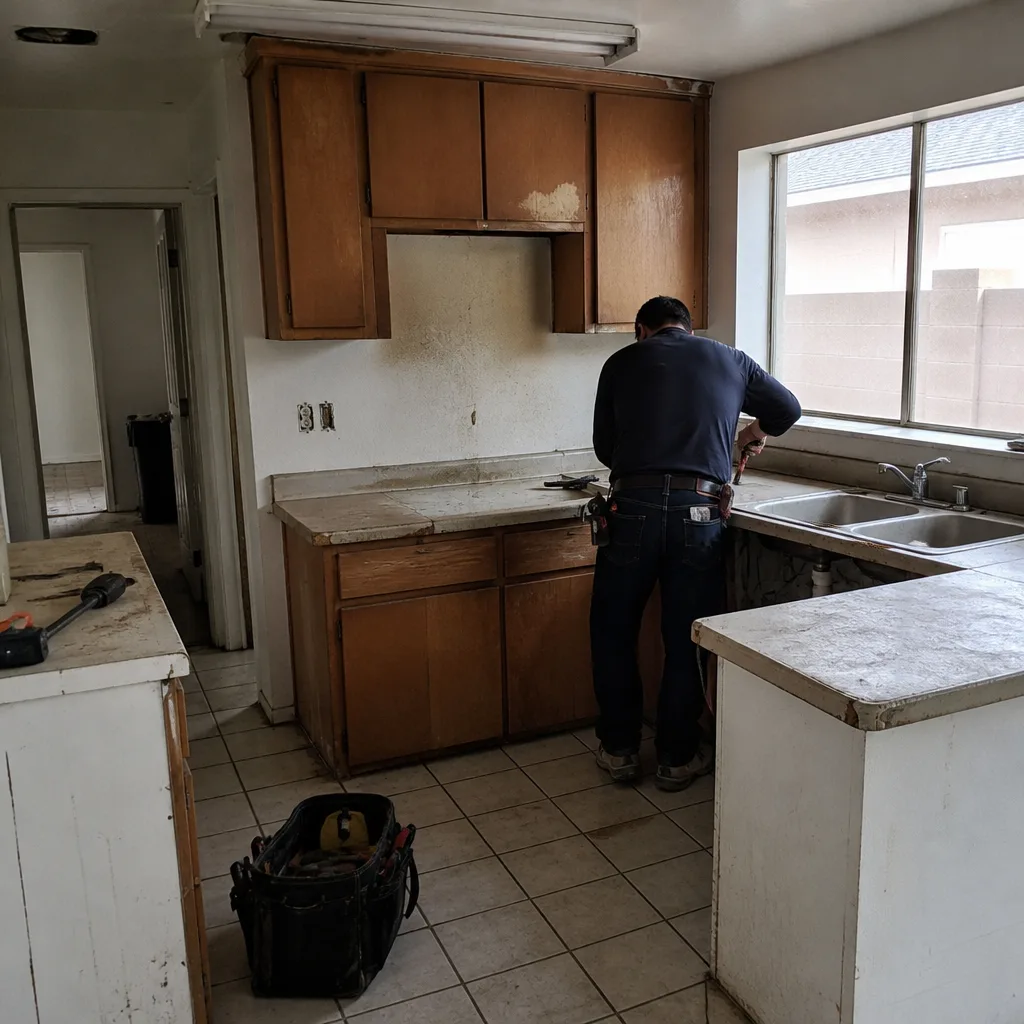 Before
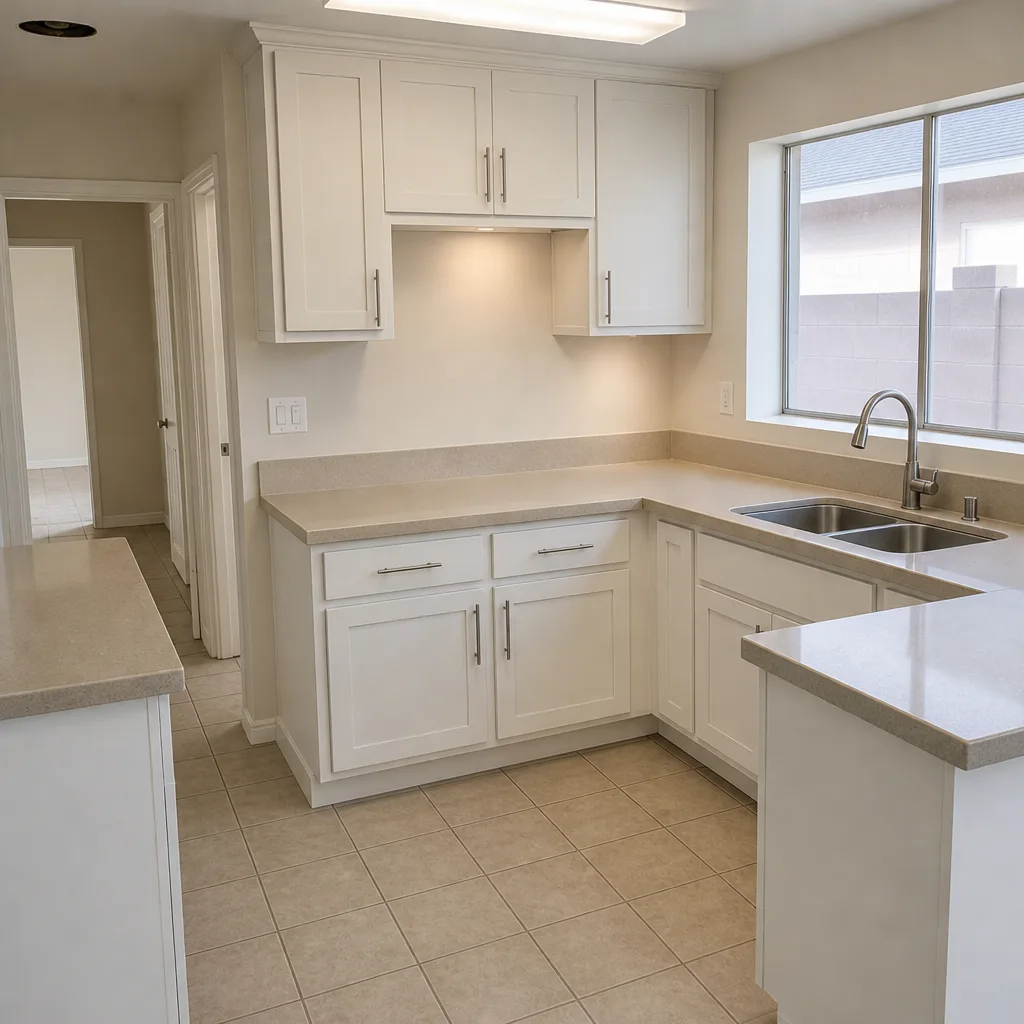 After
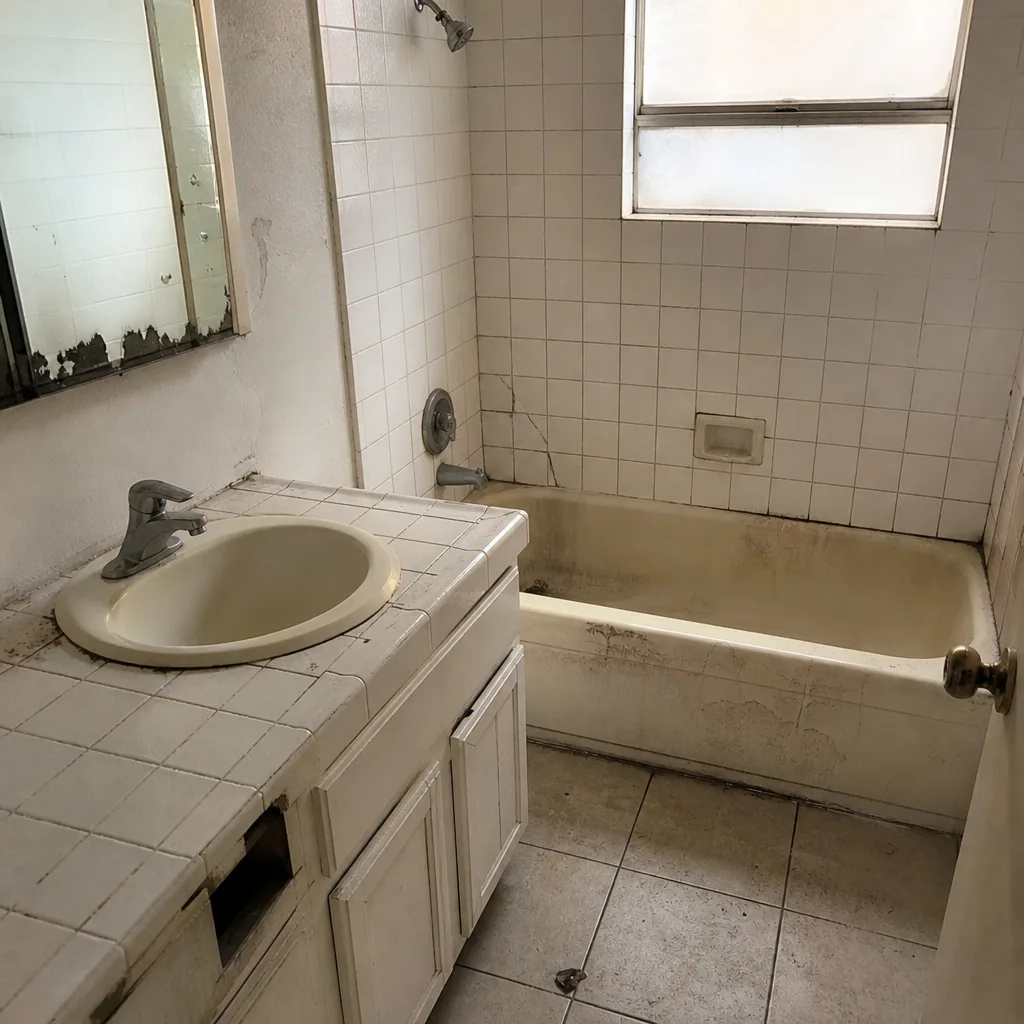 Before
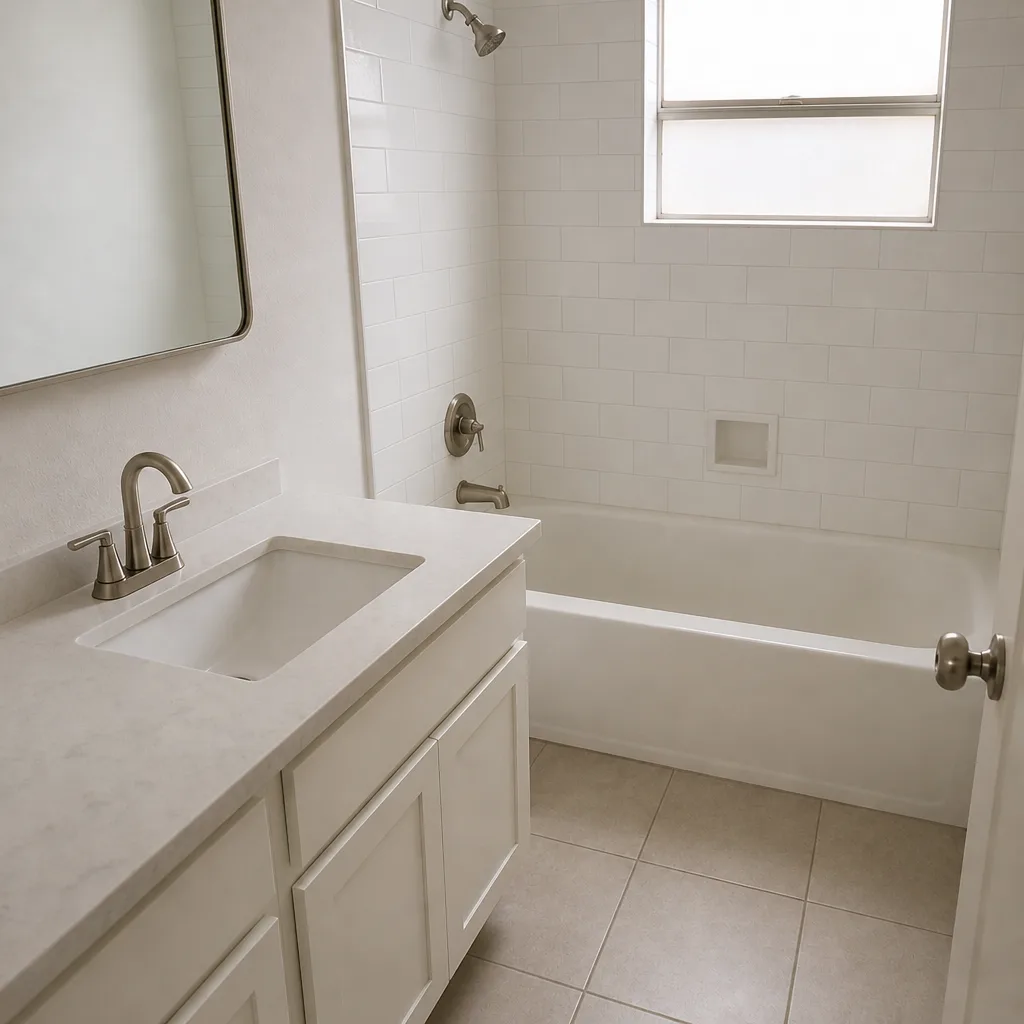 After
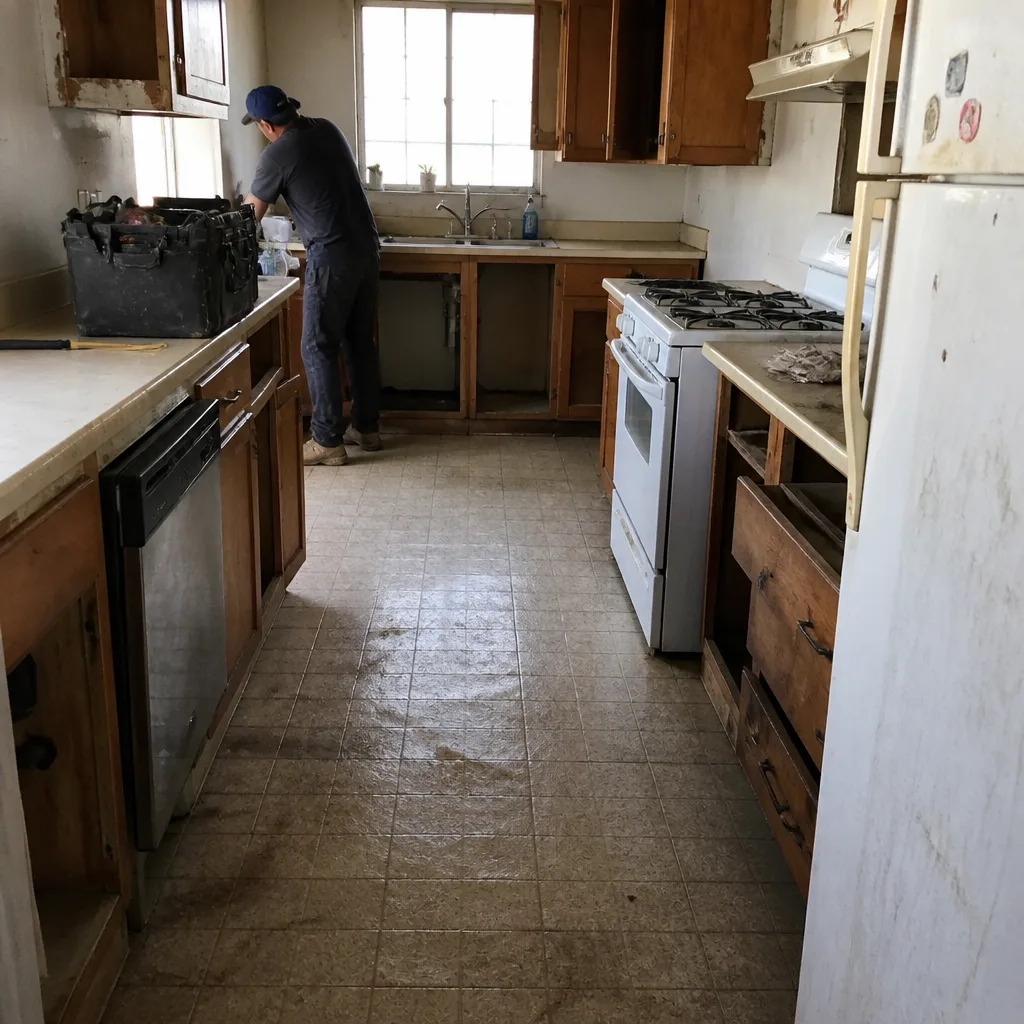 Before
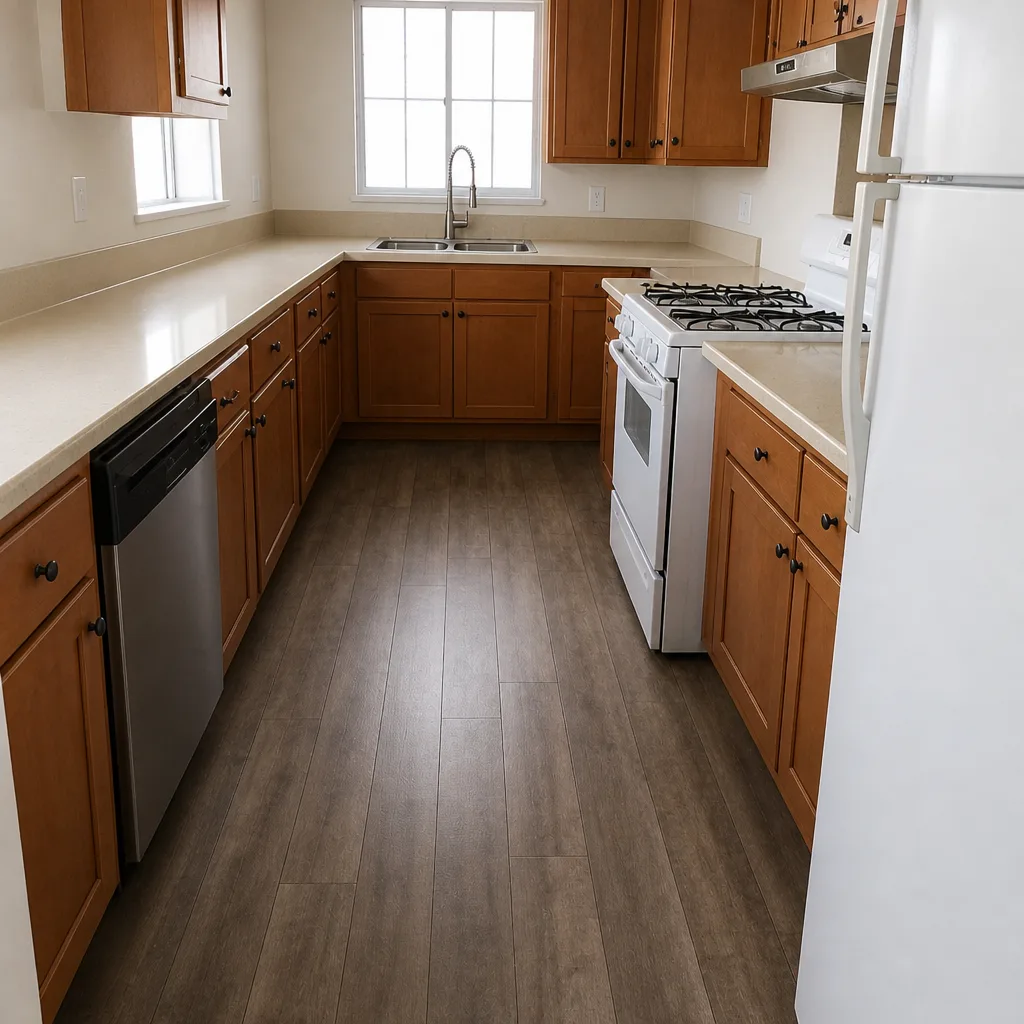 After