Last updated November 18, 2026




Free written scope consultation - allowances, timeline, and change-order rules on paper before a single trade is scheduled
How Long Does Driveway & Pavers Take? Timelines and What to Expect
A 600-square-foot paver driveway takes two to three days to install. From the day you sign the contract to the first afternoon you park a car on it, expect four to eight weeks. That gap is not a contractor stalling. It is the space between what a crew actually does with its hands and everything that has to happen before and after the work: permit processing, material lead time, and the cure window that keeps the joints from failing. In North Las Vegas, permit review alone currently runs 10 to 15 business days, and the crew isn’t standing in your driveway for most of that calendar. Here is the honest week-by-week picture, what stretches it, and how to read a contractor’s timeline so you know whether it’s a schedule or a sales pitch.
Quick Answer
Paver driveway installation itself usually takes two to five working days for a typical residential driveway, with base prep and compaction taking the bulk of it. Counting from signed contract to project closeout, a realistic figure is four to eight weeks in North Las Vegas: 10 to 15 business days for permit approval, one to two weeks to schedule materials, then the install, then a final inspection wait of three to five days. Special-order pavers and caliche removal push the far end higher.
Styles & brands we work with
- Kitchen remodeling
- Bathroom remodeling
- Home additions & ADU
- Roofing
- Windows & doors
- Driveway & pavers
- Fence
Table of Contents
- The Week-by-Week Timeline From Contract to Closeout
- What Actually Happens During the Install Days
- North Las Vegas Caliche and Why It Adds Days
- Material Lead Time, Stock Pavers vs. Special Order
- Polymeric Sand Cure Time and Why It Matters
- How to Structure Payment Around Verified Phases
- Questions That Reveal a Realistic Timeline
- Weather, Heat, and Seasonal Timing
The Week-by-Week Timeline From Contract to Closeout
When someone asks how long driveway pavers take, the answer depends on which clock they’re reading. A contractor’s estimate covers install days. Your lived experience runs from first handshake to the moment the driveway belongs to the household again. Those are two different numbers, and the schedule below is the one you’ll actually live through.
- Day 1: Contract signed, permit application filed. The plans, site survey, and drainage details go to the jurisdiction. Under a written scope, this step is clean because the drawings and price were settled before you signed.
- Days 10 to 15: Permit approval. This is the current processing window for residential driveway permits in North Las Vegas. Slips happen when plans need comments returned, so a contractor who pre-checks the submittal saves you days.
- Days 16 to 20: Material delivery scheduled. Stock pavers from a local supplier can arrive within days. Special-order colors and textures are a separate story, covered below.
- Install Day 1: Demolition and haul-off. Existing concrete or asphalt is broken out and removed. On a typical driveway this is a single day with the right equipment.
- Install Days 2 to 3: Base work and compaction. Crushed aggregate goes down in lifts and gets compacted in passes. This is the phase that determines whether the pavers stay flat for a decade.
- Install Days 3 to 5: Paver setting and edge restraint. Pavers are laid, cut to borders, and locked with edge restraint. Polymeric sand is swept into the joints.
- After completion: Final inspection. Scheduled once the work is done. Expect a three-to-five-day wait for the municipal inspection slot.
North Las Vegas projects in master-planned neighborhoods like Aliante and communities near the 215 frequently include HOA design review on top of the permit, and HOA architectural committees can add another one to two weeks if the paver color or layout changes the streetscape. Ask about that early. It’s one of the details that separates a project running on schedule from one that keeps resetting its promised date.
What Actually Happens During the Install Days
Install days are the part of the timeline the crew controls, and they’re also the fastest-moving. Here’s the sequence so you know what to expect from your front window.
- Demolition (roughly one day): Old surface broken out, spoil hauled away. Dust control matters in a closely built neighborhood, and the crew should wet the site as they cut.
- Excavation and grading (half to one day): The subgrade is cut to depth and sloped away from the garage and street. Positive drainage is what keeps water out of the slab and off the foundation.
- Base installation and compaction (one to two days): Three to four inches of compacted aggregate for a residential driveway, in lifts. The compactor runs in overlapping passes, and you’ll hear it more than you see it.
- Setting bed and paver installation (one to two days): A thin layer of bedding sand, then pavers laid in the agreed pattern. Borders are cut and edge restraint is pinned.
- Polymeric sand and cleanup (half a day): Sand swept into joints, misted to activate, surface cleaned. The crew’s documented photo record is taken and delivered per the Haven Standard.
For a standard two-car driveway of about 600 square feet, that’s two to three install days. A long, wide driveway with curves and multiple bands of contrasting pavers can move to four to five. Pavers from brands like Belgard or Techo-Bloc come in standard colorways that stock well, while custom blends or hand-cut borders add time to the layout phase itself. If your project is part of a broader outdoor plan, the same scheduling discipline applies across our Driveway & Pavers in North Las Vegas service, and it’s worth coordinating with a fence line at the same time if that’s on your list, because trenching and grading can be shared.
North Las Vegas Caliche and Why It Adds Days
Caliche is a cemented layer of calcium carbonate that forms in desert soils, and it is the most reliable schedule surprise in North Las Vegas. It can sit under the surface like a slab of concrete where you least expect it. Standard excavation equipment scrapes across it and stops. Breaking it out takes a hydraulic breaker or ripping teeth, which can add one to two full days to the demolition and grading phase, plus the cost of the heavier equipment.
A contractor who has done work in the area knows this and scopes for it. They either test the subgrade before quoting or build a caliche contingency into the written price. What you don’t want is a flat quote that turns into an awkward conversation on install day. Under Clause 1 of the Haven Standard, the price is written before anyone starts, and that’s what protects you when conditions are worse than a surface inspection suggested. Insist on knowing how your contractor handles caliche in writing. In our experience, the honest answer is that caliche is common enough that the bid either includes a stated contingency or the contractor tests the soil first. If neither, treat the timeline as a best case.
Material Lead Time: Stock Pavers vs. Special Order
Most of the calendar distance between contract and a finished driveway is material, not labor. Paver selection drives this phase far more than most homeowners realize.
- Stock pavers from a local supplier: Should be on a truck within days of the permit clearing. Standard colors from major brands – Belgard, Techo-Bloc – are commonly stocked regionally.
- Special-order colors or textures: Add two to four weeks. Custom blends, hand-pressed finishes, and one-off colorways may come out of a different plant, which is where the wait lives.
- Angelus, Belgard, and Toffino-sourced specialty lines: These have earned their lead times, and they earn them again. The color you fell in love with on a sample board may not be the color on your driveway for six weeks.
The question to ask before signing is not “when can you start?” It’s “is this product in stock at the supplier today?” That’s a different question with a different answer, and a contractor who can answer it truthfully has actually checked. Some suppliers quote lead times that look shorter than reality. The only reliable number is a confirmed in-stock quantity or a current production date on a specific order. This is one of the details a written price and written scope should make explicit, and it’s exactly the kind of thing a free second opinion on a competitor’s estimate can clarify line by line.
Polymeric Sand Cure Time and Why It Matters
Polymeric sand binds the pavers together and fills the joints. It is also the part of the schedule most likely to be rushed, and rushing it is the single most common cause of early failure we see on North Las Vegas jobs.
After the sand is swept in and activated with a light mist, it needs time to cure before the driveway is loaded. The rule: 24 hours before foot traffic, and 72 hours before a vehicle. Drive a car over a freshly sanded driveway and the joints displace, the sand film lifts, and the interlock starts to break down. That shortcut – and a warranty may not cover it. Polymeric sand manufacturers are usually clear that premature traffic voids coverage, and a careful contractor won’t want to sign it off until the cure window has passed.
The heat in North Las Vegas changes the physics a little. High daytime temperatures speed surface drying, so a crew working midsummer will mist the joints more often and may extend the no-traffic window slightly to compensate. It’s not a dealbreaker, just something a local crew plans around rather than discovering on day one. Plan to leave a second vehicle on the street for the first few days after the crew leaves. That’s a small inconvenience compared to a re-sanded driveway six months later.
How to Structure Payment Around Verified Phases
Timelines and payment structure are the same conversation. A contract that pays on calendar dates rewards the contractor for waiting. A contract that pays on verified phase completion rewards the contractor for the work actually being done and inspected. The second structure is the one you want.
- Deposit at contract signing: Covers material ordering and permit fees. Typical range is 20 to 30 percent. Keep this proportional to the work being funded, not to enthusiasm.
- Second payment at base completion: Released once demolition, excavation, and compacted base are complete and verified with photographs. This is the invisible-phase payment, and it’s the one that gets skipped when a schedule is behind. Don’t skip it.
- Third payment at paver setting and edge restraint: Taken when pavers are installed and locked. Documented with photo record.
- Final payment after cure and inspection: Released after the polymeric sand cure has passed, the final inspection is signed off, and the written warranty is in your hands.
This is the same discipline that keeps Rowan Construction Group projects within a few percent of the agreed price across 4,000-plus jobs: no work proceeds on a change until a change order is signed. When a schedule slips, it’s almost always because a change – deeper excavation, caliche, a different paver – showed up without a signed clock attached. If the contract has signed change orders and photo-recorded phase payments, your timeline is defensible. If it’s a calendar and a handshake, it’s a guess. If your plans stretch beyond the driveway into additions or an ADU, the same principles apply to Home Additions & ADU in North Las Vegas projects, where the timeline stretches into months and the payment discipline matters even more.
Questions That Reveal a Realistic Timeline
You can learn more about a contractor’s timeline from three questions than from an hour of sales talk. These are the ones worth asking before you sign, ideally in writing. A confident contractor will answer them directly.
- “What’s your current permit approval lead time in North Las Vegas?” If they say “a week” and the jurisdiction is running 10 to 15 business days, they either haven’t pulled one recently or aren’t telling you. Both are problems.
- “Is the paver I selected in stock at the supplier today?” Not “available,” not “usually stocked.” In stock with a quantity attached. Ask to see the confirmation if it matters.
- “What’s your plan for caliche if we hit it?” A bid that doesn’t address caliche hasn’t thought about your actual lot. It’s also revealing about how change orders will be handled.
- “When is your final inspection typically scheduled, and how many days after completion?” Three to five days is the honest answer right now. Same-day inspection is not a real thing.
- “Who pays for re-sanding if the joints fail within the warranty period?” The answer should be the contractor, in writing, without a “reasonable wear and tear” asterisk doing all the work.
These questions look like small talk. They’re actually the difference between a timeline and a price. A written price before any work starts is table stakes; a written scope with these answers in it is what makes the number trustworthy.
Weather, Heat, and Seasonal Timing
North Las Vegas doesn’t have a rainy season the way the southeast does, but it has two weather patterns that shape a paver driveway schedule. The first is summer heat. Pavers, polymeric sand, and the crew all work fine at 105 degrees, but the surface cure runs faster, and a careful crew shifts to cooler morning hours and adjusts the sand misting accordingly. The second is the occasional winter storm and the “monsoon” wind and rain systems that hit between July and September. During base compaction, rain adds 24 to 48 hours minimum per event, because you can’t compact saturated aggregate, and the base has to dry back before the compactor goes back on it.
The practical lesson: schedule for the season you’re actually in. A late-spring or early-fall install typically has the fewest weather-driven slips in North Las Vegas. A July install may not slip at all, but the crew’s pacing will be different and the workday may start earlier. A January install is fine, it’s just more weather-contingent. Ask the contractor how they build weather contingency into the schedule, because a crew that plans for delays will finish closer to schedule than one that pretends weather doesn’t exist.
Common Mistakes to Avoid
- Accepting a “two-day” quote without asking about permits. Two install days is accurate for the install and completely wrong for the calendar. Ask for the full timeline from signed contract, not just crew days.
- Driving on the driveway before 72 hours. Polymeric sand needs three days before vehicle traffic. Early traffic displaces joints and may void the manufacturer’s coverage. Leave the car on the street.
- Paying the full balance on calendar dates. Payments tied to dates reward waiting. Payments tied to verified phases reward results. Structure the contract on the work, not the calendar.
- Choosing a special-order paver without confirming the lead time in writing. Custom colors are beautiful and slow. Get the production date, not the marketing date.
- Ignoring caliche in the quote. North Las Vegas soils are full of it. A flat quote without a caliche contingency is a change order waiting to happen.
- Skipping HOA approval in a master-planned community. Aliante and similar HOAs review paver color and layout changes. If you don’t submit early, the schedule resets after the permit clears.
- Starting base work without a drainage plan. Water that runs toward the garage slab on a North Las Vegas lot finds the lowest point, and that low point is usually your foundation. Grade and slope get decided before pavers go down.
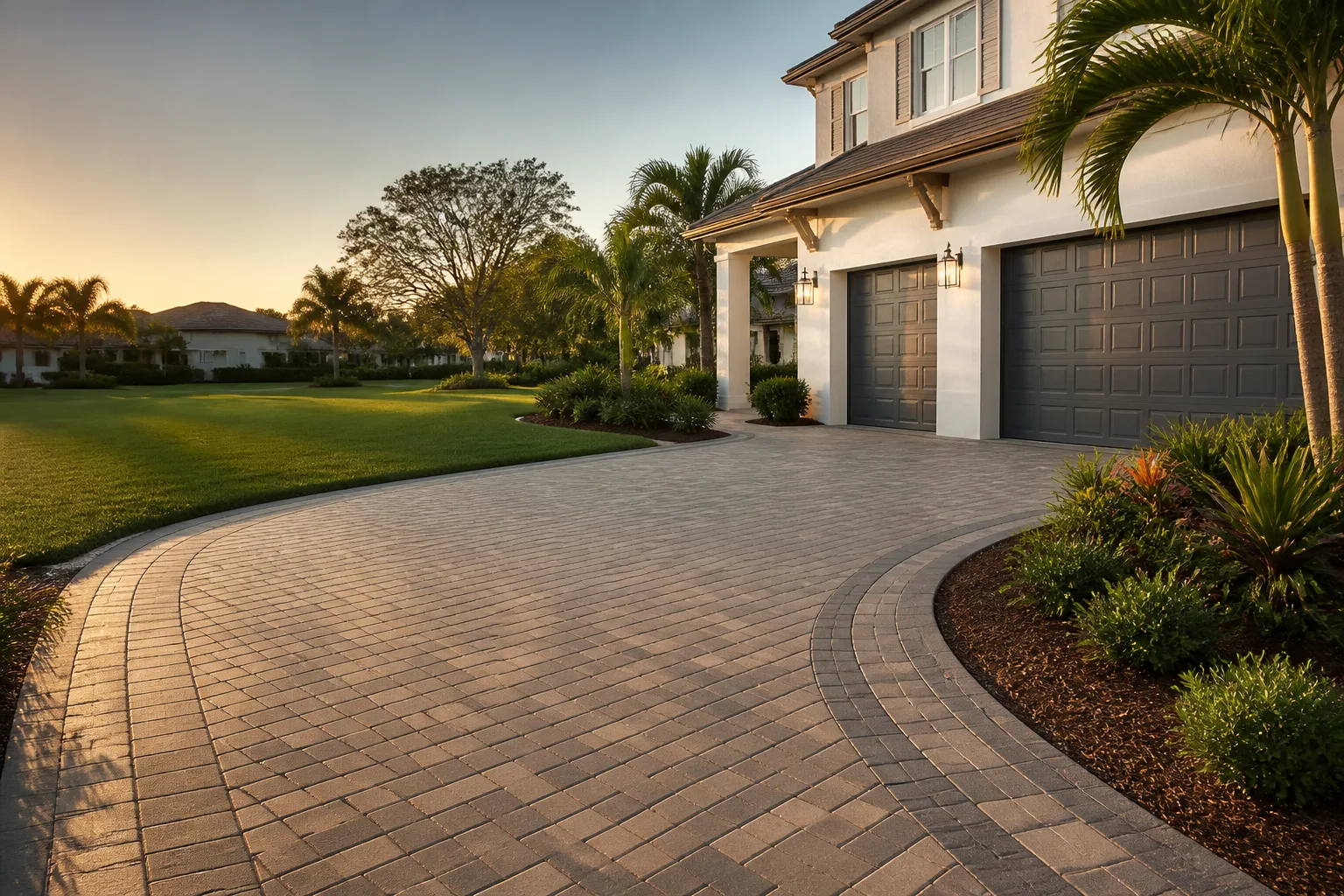
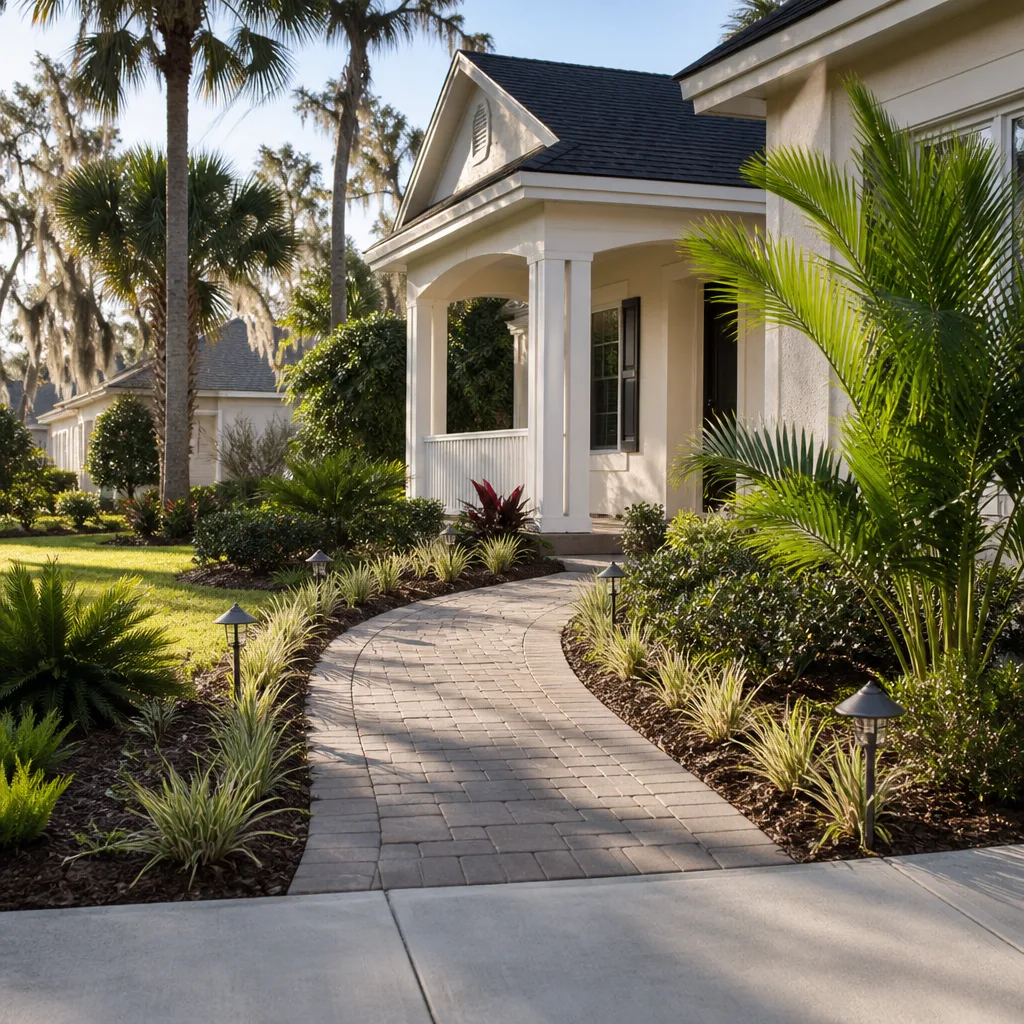
See the difference
 Before
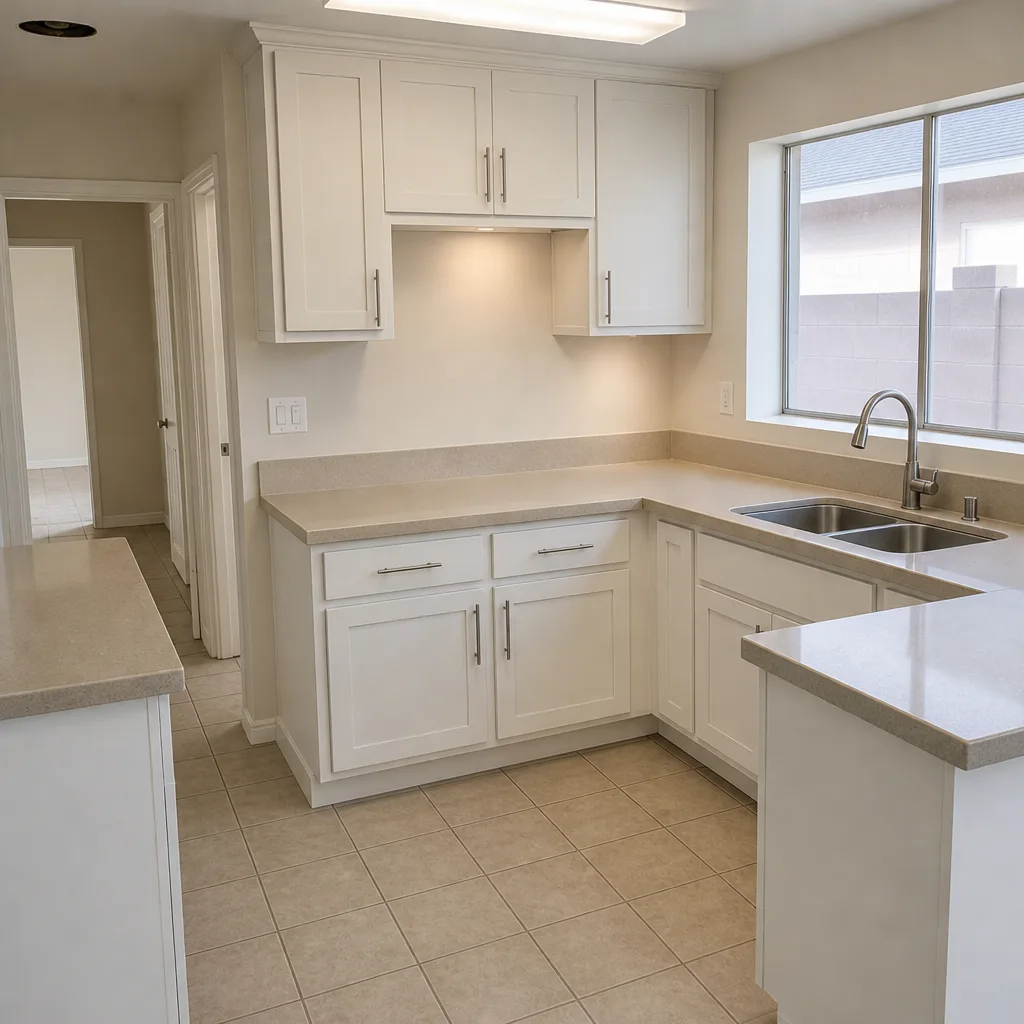 After
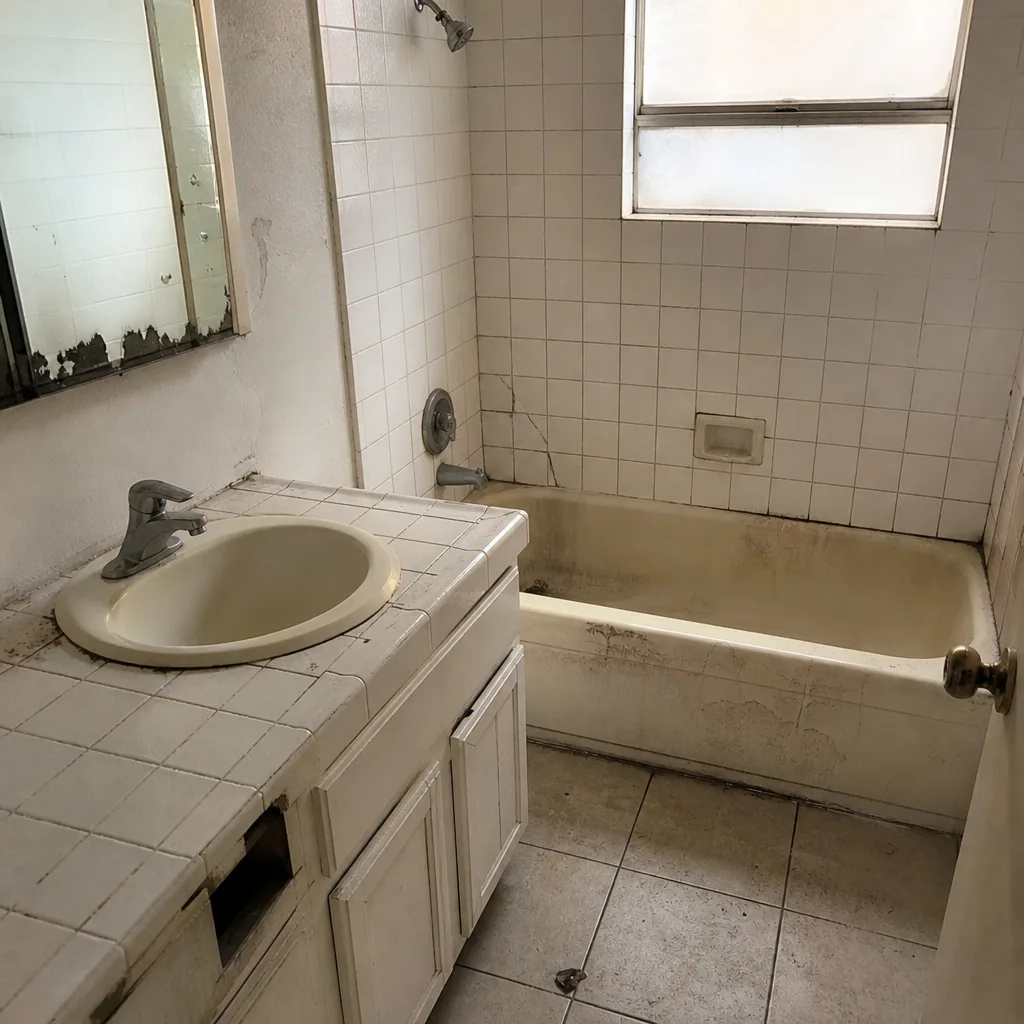 Before
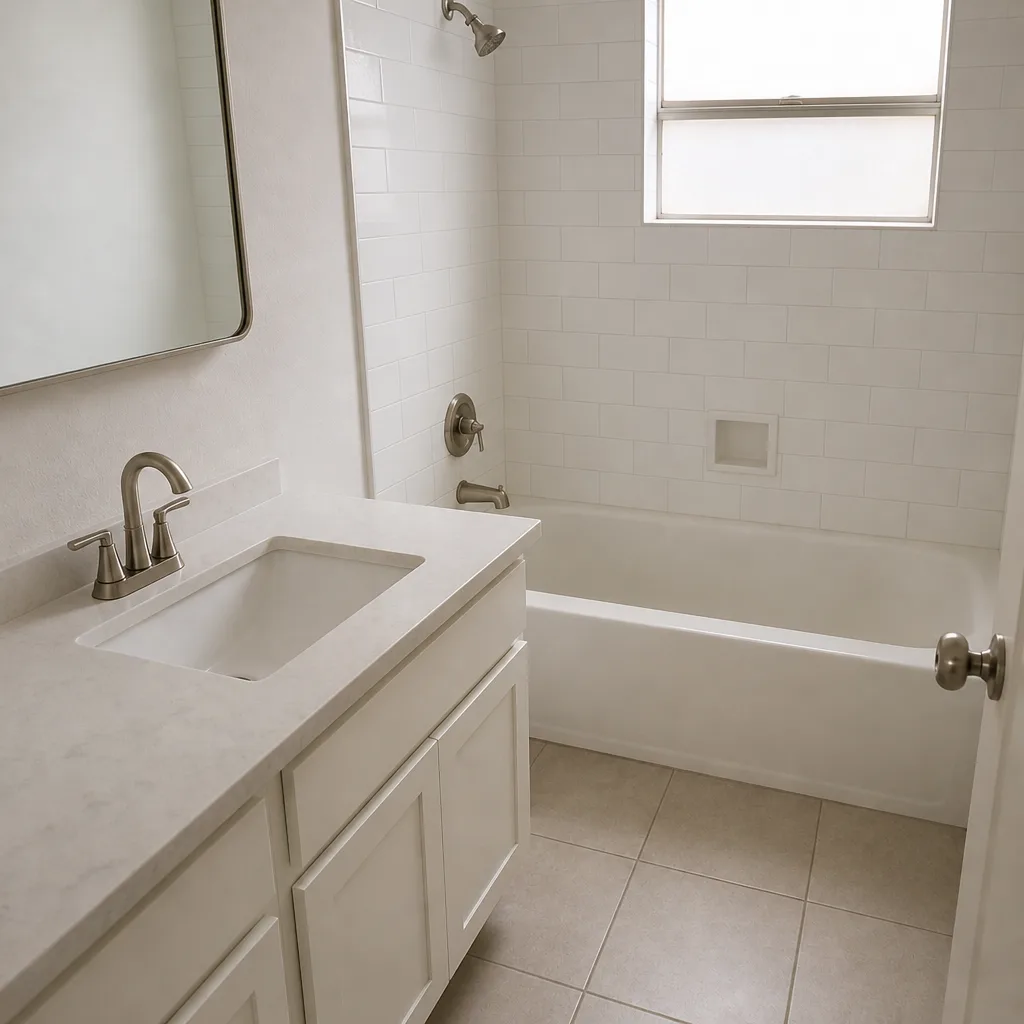 After
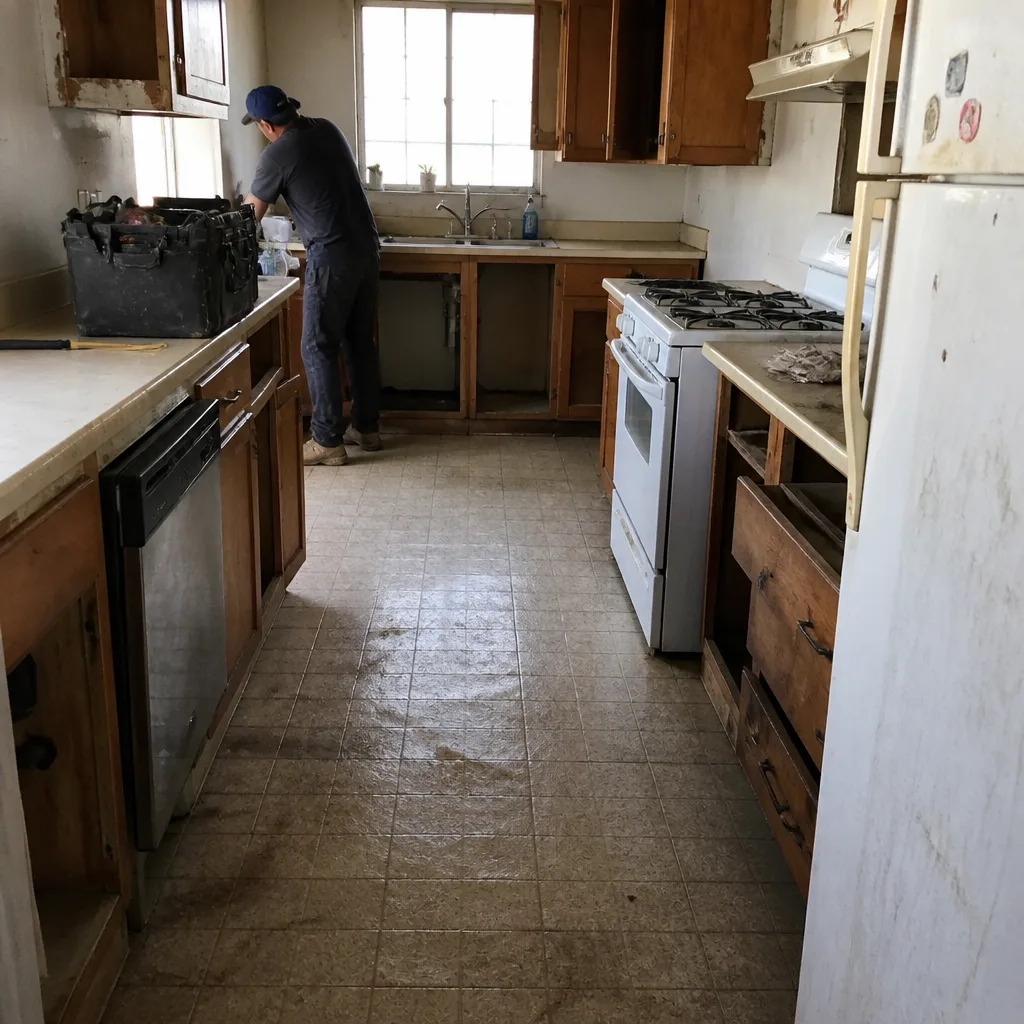 Before
 After
When to Call a Professional
Some driveway work is fine for a homeowner with a strong back: resealing, replacing a cracked paver, sweeping sand into a joint. What is not a weekend project is demolition of a concrete driveway, excavation and grading, base compaction with a plate compactor, and paver setting bed accuracy. The base phase is where the long-term result is decided, and a poorly compacted subgrade undercuts everything above it. If your project is a full replacement, a new build on a bare lot, or a repair that involves caliche, storm drainage, or an uncooperative subgrade, bring in a trained contractor. Rowan Construction Group North Las Vegas offers free estimates in North Las Vegas and can walk the site before quoting – call (844) 708-4417.
If a broader exterior plan is on your list – replacing the fence while the crew is already set up, for example – the sequencing matters because trenching and grading can be shared. Our Fence Installation in North Las Vegas service is often coordinated with paver work for exactly that reason, and the written quote for each phase is kept separate so you can compare line by line.
Frequently Asked Questions
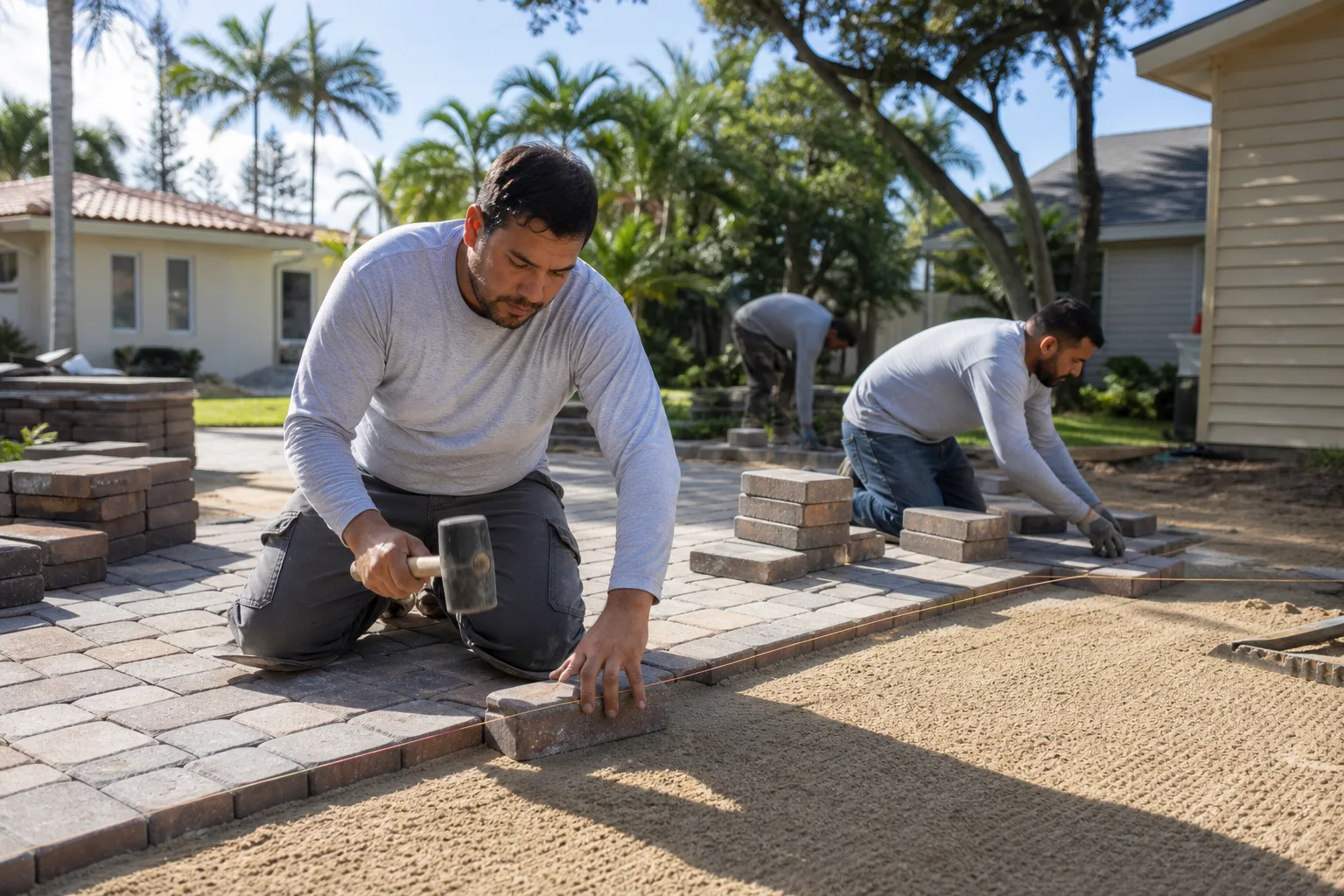
Installation itself typically takes two to five working days: one day for demolition, one to two for base prep and compaction, and one to two for setting pavers and polymeric sand. Add two to four days on top for a caliche removal, and add a 72-hour cure window before you drive on it. The full calendar from signed contract is four to eight weeks. Call (844) 708-4417 for a timeline specific to your driveway.
Because the install is not the only phase. The six-week figure includes 10 to 15 business days of permit review, one to two weeks to schedule materials (longer for special order), the install days themselves, then a three-to-five-day wait for final inspection. The crew is only on-site for a fraction of that calendar. Most of the difference between a two-day quote and a six-week experience is waiting, not labor.
Twenty-four hours before foot traffic, and 72 hours before vehicle traffic. In the summer heat, the crew may extend the vehicle window slightly and mist the joints more often to compensate for fast surface drying. Driving on it early displaces the joints, and the manufacturer’s coverage may not apply. Call (844) 708-4417 if you want the exact cure window for your paver type – it varies by product.
It can, and the delay is real. Rain during base compaction adds 24 to 48 hours per event because you cannot compact saturated aggregate. In North Las Vegas, the summer monsoon window and the occasional winter storm are the two main risks. Late spring and early fall installs see the fewest weather-driven slips.
Technically yes in some cases, but it requires the existing slab to be structurally sound, properly graded for drainage, and fully intact, with enough vertical clearance for the paver layer at the garage apron and street. A contractor who recommends overlay without inspecting the slab is guessing. Most North Las Vegas driveways with caliche or cracked concrete come out, not under.
No work proceeds on a change until a change order is signed. Under the Haven Standard, the written price is the price, and a change only happens when conditions force it – deeper caliche, an unexpected subgrade problem – and only with your signature. That discipline is why Rowan Construction Group projects finish within a few percent of the agreed cost. Call (844) 708-4417 to schedule a free estimate.
The Bottom Line
Paver driveways take two to five days to install and four to eight weeks from signed contract to first car parked. The difference is permit review, material lead time, and the 72-hour cure window, not misdirection. In North Las Vegas, permit processing is currently 10 to 15 business days, caliche can add one to two days, and special-order pavers add two to four weeks. The two questions that separate a real schedule from a sales number are “what’s your current permit lead time?” and “is the material in stock today?” If you want the full picture with the price range on the page before you commit, start with our Rowan Construction Group North Las Vegas home page and the written-price promise behind every project.
Call Rowan Construction Group at (844) 708-4417 to schedule a free estimate for your paver driveway in North Las Vegas. You’ll get a written price, a written scope, and a realistic timeline – before any work starts.
Written by the team at Rowan Construction Group North Las Vegas.