Last updated November 18, 2026
Free written scope consultation - allowances, timeline, and change-order rules on paper before a single trade is scheduled
DIY vs Professional Driveway & Pavers: What’s Safe to Do Yourself
Laying the pavers themselves is the easiest part of a paver driveway. The base preparation, which most DIY guides cover in two paragraphs, is where 80% of failures originate, and it requires equipment that costs $300 a day to rent and technique that takes a full day to get wrong. We’ve walked up hundreds of North Las Vegas driveways where the surface looked fine and the failure was already sitting six inches underneath it. This guide breaks the job into phases, tells you which ones a careful homeowner can genuinely handle, which ones carry hidden failure risk in our desert soil and summer heat, and what a professional bid should itemize in writing before you sign it.
Quick Answer
Demolition and paver laying are safe DIY phases. Excavation, grading, base compaction, edge restraint, and final compaction are not, because they need a laser level, a 10-ton plate compactor, and experience reading soil conditions that North Las Vegas homeowners rarely have the equipment for. On a 400 square-foot driveway, rental gear alone runs $680 to $920, which erases most of the savings before you account for wasted material.
Styles & brands we work with
- Kitchen remodeling
- Bathroom remodeling
- Home additions & ADU
- Roofing
- Windows & doors
- Driveway & pavers
- Fence
Table of Contents
- The Four Phases of a Paver Driveway, Ranked by DIY Risk
- The Permit Reality in North Las Vegas
- Tool Rental Cost vs. Contractor Cost on a 400 Sq Ft Project
- The DIY/Professional Handoff: Three Failure Modes
- What a Professional Bid Should Itemize in Writing
- Why North Las Vegas Soil and Heat Change the Equation
- Common Mistakes to Avoid
- When to Call a Professional
The Four Phases of a Paver Driveway, Ranked by DIY Risk
Not every phase carries the same risk. Think of the job as four separate projects, each with its own equipment list and its own way of failing.
- Demolition. DIY-feasible. Breaking out old concrete or pulling up existing pavers is muscle work. A rented electric demolition hammer and a dumpster handle it. Watch for buried irrigation lines and gas stub-outs before you swing a hammer.
- Excavation and grading. Requires a laser level and plate compactor. Getting the base to a consistent depth of 6 to 8 inches with a 2% slope away from the house is not a guess-and-check process. A 2% slope on a 20-foot driveway means a 4.8-inch drop across the run. Get that wrong and water pools against your garage slab instead of running to the street.
- Base compaction. Requires a 10-ton plate compactor, not the 1-ton rentals at Home Depot. This is the phase that decides whether your driveway lasts 15 years or 4. Aggregate base has to reach 95% Proctor density in lifts of 2 to 3 inches. A 1-ton plate compactor running on 8 inches of loose base compacts the top inch and leaves the rest soft.
- Paver laying. DIY-feasible with patience. If the base is right, laying pavers is a puzzle with a satisfying end. Expect 6 to 8 hours for a 400 square-foot driveway if you keep your lines tight.
- Edge restraint and final compaction. Professional recommended. The edge restraint locks the whole field in place, and the final compaction pass runs across the finished surface with a pad-protected plate compactor. Skip either one and the field creeps, joints widen, and the pavers start rocking within two summers.
In our experience across North Las Vegas, the failures we get called out to fix are almost never in the phases a homeowner thinks are hard. They’re in the two we just flagged as risk: base compaction and edge restraint.
The Permit Reality in North Las Vegas
North Las Vegas requires a permit for driveway work over 500 square feet. That threshold catches most two-car driveways. The permit is not optional paperwork you can skip on a small job. Unpermitted driveway work can void homeowner’s insurance coverage for related water damage, which is a sentence that costs far more than the permit fee.
Here’s how it plays out in the real world. A homeowner re-paves a driveway without a permit. Two winters later a rain event sends water under the garage slab because the grading was wrong. The insurance adjuster asks for the permit number, doesn’t get one, and the claim gets denied. That’s the scenario. We’ve heard versions of it from North Las Vegas homeowners more than once.
- Permit threshold: 500 square feet of hardscape area. Most two-car driveways clear it.
- What the permit covers: Grading, drainage, base depth, and site plan review.
- What you’ll need: A site plan showing slope direction and drainage path, plus disclosure of the edge restraint system.
- Who pulls it: The property owner or the licensed contractor doing the work. If you’re hiring, and the contractor doesn’t offer to pull the permit in the written bid, that’s a red flag worth pausing on.
North Las Vegas zoning and building code provisions apply to any hardscape that touches your driveway apron at the street, too. The driveway approach permit is a separate document from the hardscape permit. Ask about both before you break ground.
Tool Rental Cost vs. Contractor Cost on a 400 Sq Ft Project
Here’s where the DIY math changes. On a 400 square-foot paver driveway, the equipment rental bill alone lands between $680 and $920 for a weekend. Homeowners usually budget for the pavers and the base material and forget that the gear is a line item.
| Item | Weekend Rental Range |
|---|---|
| 10-ton plate compactor | $180 – $260 |
| Laser level (rotary, tripod) | $85 – $130 |
| Electric demolition hammer | $95 – $140 |
| Sod cutter or mini-excavator for excavation | $220 – $310 |
| Hand tools, rakes, screed rails, string | $60 – $80 |
| Total rental bill | $640 – $920 |
Add material waste. DIY paver jobs typically waste 12% to 18% of the paver order due to cuts, breakage, and miscounts. A pro running the same job wastes 5% to 7% because they’ve run the layout math before ordering and they know how to cut to the field instead of the other way around. On a $2,400 paver order, the difference is $170 to $270.
A professional bid in North Las Vegas for a 400 square-foot driveway with base prep and Belgard or Techo-Bloc pavers typically lands between $4,800 and $7,200 depending on paver selection and site access. After rental, waste, and the value of a weekend, the DIY savings margin on the same scope is narrower than the price gap suggests. What you’re really buying when you hire is the compaction standard and the permit. That’s the part that costs real money to redo.
The DIY/Professional Handoff: Three Failure Modes
There’s a middle path that looks smart on paper: the homeowner preps the base, then hires a professional to lay the pavers. We’ve been called as the second opinion on this arrangement more times than we can count. Three failure modes come up again and again.
- Base compaction disputed after the fact. The homeowner says the base is at 95% Proctor density. The paver crew says it’s at 70%. Nobody has a test result. When the pavers start rocking at month 14, the paver crew blames the base, the homeowner blames the pavers, and the warranty is gone because the scope was split.
- Grading liability. If the base was graded to the wrong slope, the paver crew is now laying a surface that directs water into the garage. They’ll finish the job because that’s what they were hired for. The water damage shows up the following spring.
- Warranty split. A paver installation warranty usually covers the whole system, base included. Split the scope and the warranty splits with it. The paver layer warrants their pavers, the homeowner owns the base, and nobody covers the failure.
Signed scope language prevents all three. If you’re splitting phases, the written agreement needs to specify: base depth as measured, compaction standard and who tested it, whom to call if the paver surface fails within 365 days, and who is responsible for the permit. Our Driveway & Pavers in North Las Vegas page spells out the scope we put in writing for every job. If a bid or an agreement between you and a paver layer doesn’t include those four items, the document is incomplete.
What a Professional Bid Should Itemize in Writing
If a bid doesn’t include the following five items in writing, it isn’t a bid. It’s a number someone said out loud.
- Base depth. Not “proper base.” A number: 6 inches of compacted Class II aggregate base, or 8, whichever the site calls for. The number should be in the contract.
- Compaction standard. “95% Proctor density” is the phrase. If the bid doesn’t specify it, the crew might be running a walk-behind plate compactor on 8 inches of aggregate, which is not the same thing.
- Edge restraint type. Spiked plastic edge restraint, concrete curb, or aluminum. Our edge of the industry standard is the spiked plastic system, but the specific product should be named.
- Joint sand specification. Polymeric sand versus regular sand changes how the driveway behaves in North Las Vegas wind and heat. Polymeric is the default for a reason; regular sand blows out in a single spring.
- Warranty terms. What’s covered, for how long, and what isn’t. Ours is the 365-Day Done Right Promise: if it isn’t done right, we make it right. It’s printed on every page and backed by a terms page, not an asterisk.
The Haven Standard’s Clause 1 carries the whole point: the price is written before anyone starts. That’s the standard every Rowan Construction Group job runs on, whether it’s a driveway in North Las Vegas or a Home Additions & ADU in North Las Vegas. If a bid you’re reviewing falls short of all five items, bring it by. We offer a Free Second Opinion on any written estimate, line by line, at no charge.
Why North Las Vegas Soil and Heat Change the Equation
North Las Vegas has a specific set of conditions that punish sloppy base work harder than other markets do. Our soil is alkaline, caliche-heavy in places, and expands when it takes on water. Summer surface temperatures on a paver driveway routinely push north of 150°F. Both conditions interact with base prep in ways a generic DIY guide won’t mention.
Caliche is a calcium carbonate layer that forms in our desert soil and behaves like a soft rock in the wrong spot. If you excavate and hit caliche at 4 inches, you can’t just compact over it and pretend. It needs to be broken up or drilled and the pit refilled. That’s a piece of local knowledge that we’ve had to bring to more North Las Vegas driveways than we can count. A homeowner running a mini-excavator for the first time won’t likely know it’s there until the plate compactor starts hammering and the base won’t compress.
Thermal movement is the other one. Polymeric sand joints absorb the expansion and contraction cycle that comes with our temperature swings. Regular sand joints fail fast, and so does an edge restraint system that wasn’t designed for the movement. On the scopes we write, a North Las Vegas driveway gets polymeric joint sand and a spiked edge restraint as standard, not as an upgrade. We’re currently working with Silestone and Caesarstone in adjacent applications for patios, and the material read on the pavers follows the same logic: match the material to the condition.
If your property also needs fencing along the driveway, our Fence Installation in North Las Vegas team can coordinate that scope with the driveway work so the footing doesn’t disturb the new hardscape.
Common Mistakes to Avoid
- Renting a 1-ton plate compactor from Home Depot and expecting the base to compact. The 1-ton units top out at about 5% of the compaction capacity of a 10-ton machine. They’re fine for a walkway. They’re not fine for a driveway base. This is the single most common North Las Vegas DIY failure we get called back to fix.
- Skipping the permit because the job “isn’t that big.” The 500 square-foot threshold catches most two-car driveways. Unpermitted work can void your homeowner’s insurance coverage for related water damage, and that risk lives on the property record, not on the contractor.
- Ordering pavers without a layout plan first. Field cuts should run from the edges, not through the middle of the driveway. DIY orders that waste 18% of the paver material usually started with the homeowner ordering “a little extra” and running a diagonal pattern they didn’t measure for.
- Using regular sand in the joints. North Las Vegas winds peel regular sand out of the joints within a single season. Polymeric sand is the only joint material we’ll install on a driveway, and the bid should say so.
- Forgetting the edge restraint on the driveway apron. The edge restraint at the street apron is the piece that keeps the field from spreading underload. It’s a small-dollar line item in the bid and the whole driveway’s longevity depends on it.
- Compacting in one thick lift instead of three 2-inch lifts. A plate compactor works the top inch and a half of whatever you give it. Hand the right machine a 6-inch lift and it compacts 1.5 inches and leaves 4.5 inches soft.
- Starting the DIY job on a weekend that ends in 100°F heat. Base compaction and paver laying both want cool mornings. In North Las Vegas, a May or June start that runs into afternoon heat bakes the base and makes the paver cuts less accurate.
See the difference
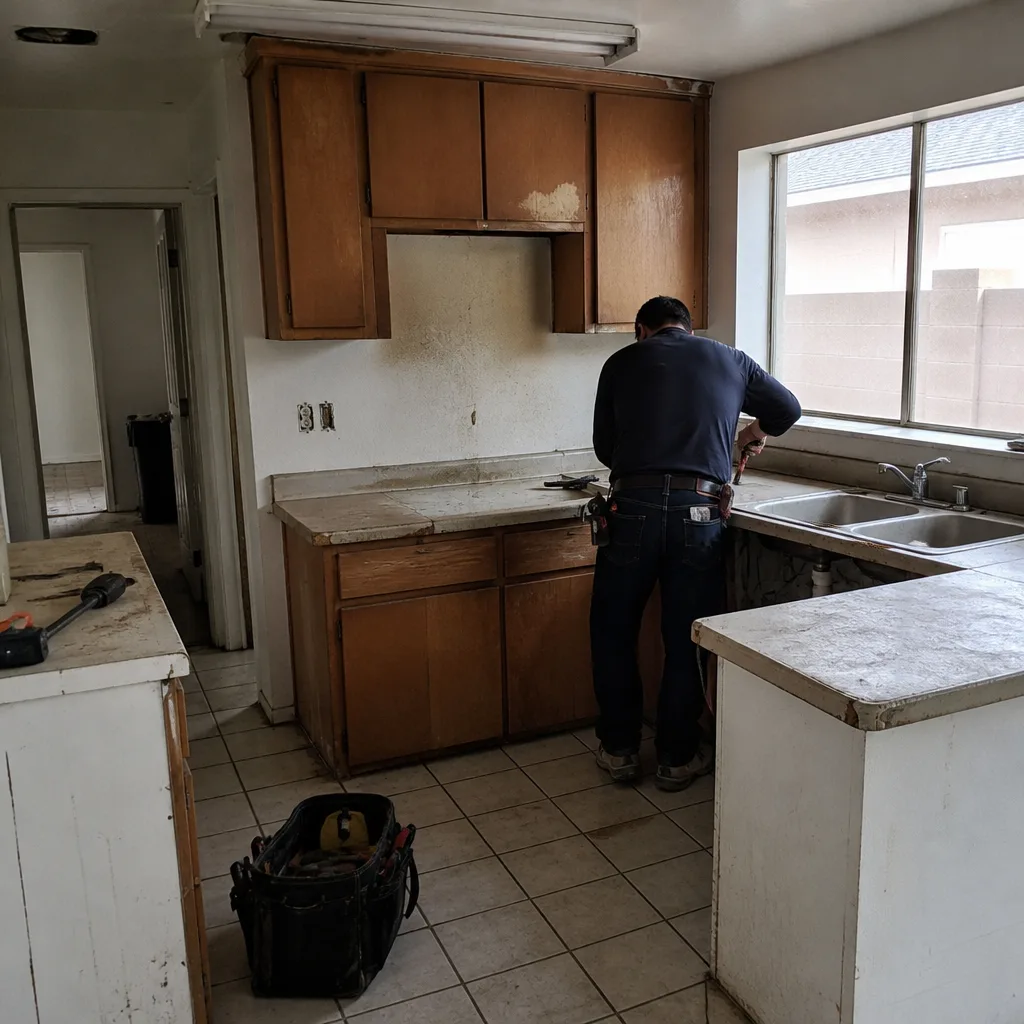 Before
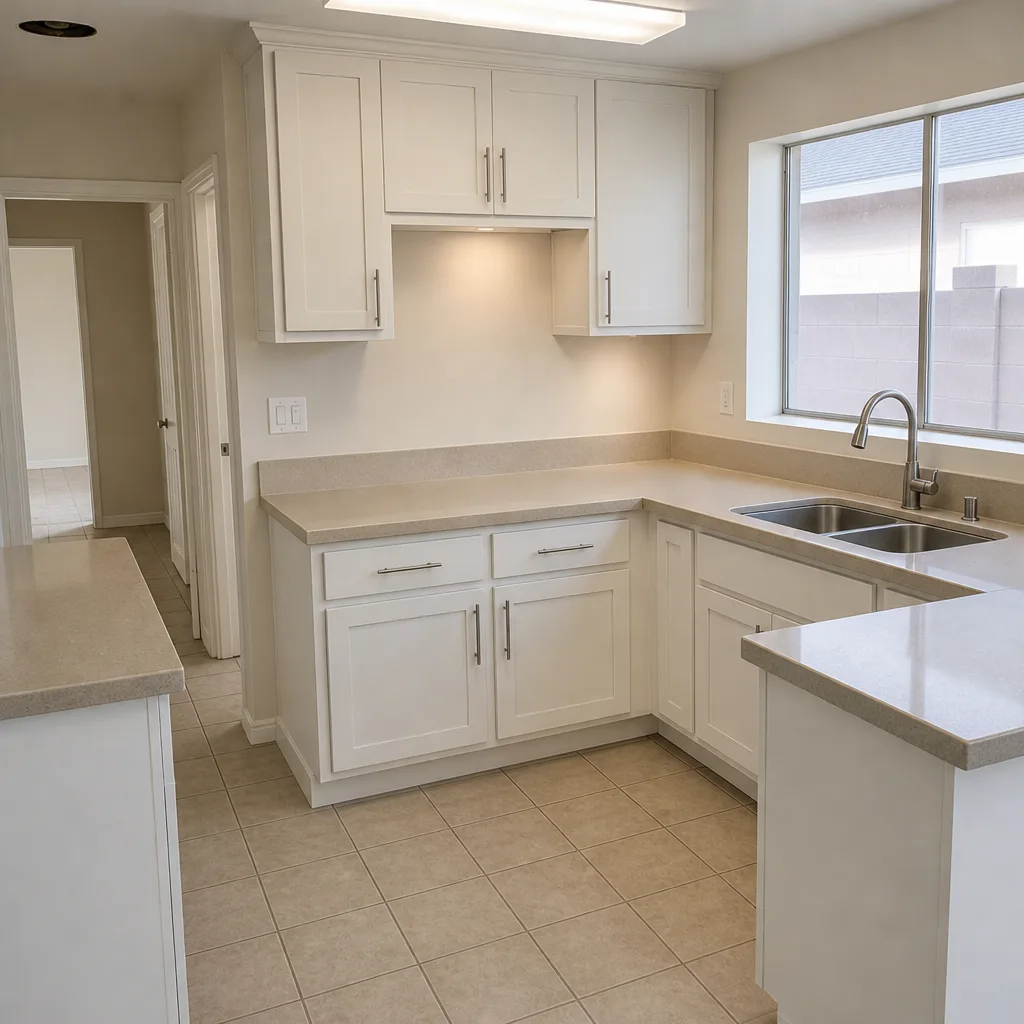 After
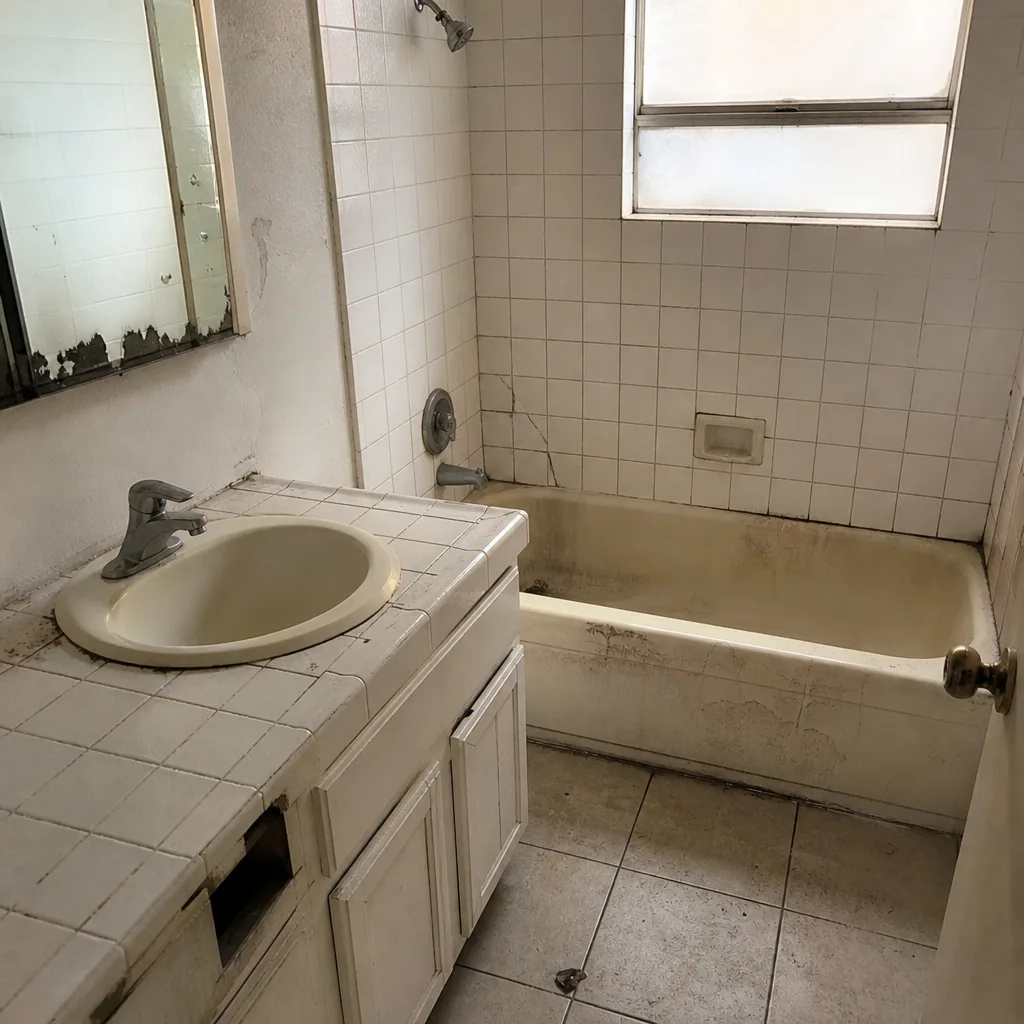 Before
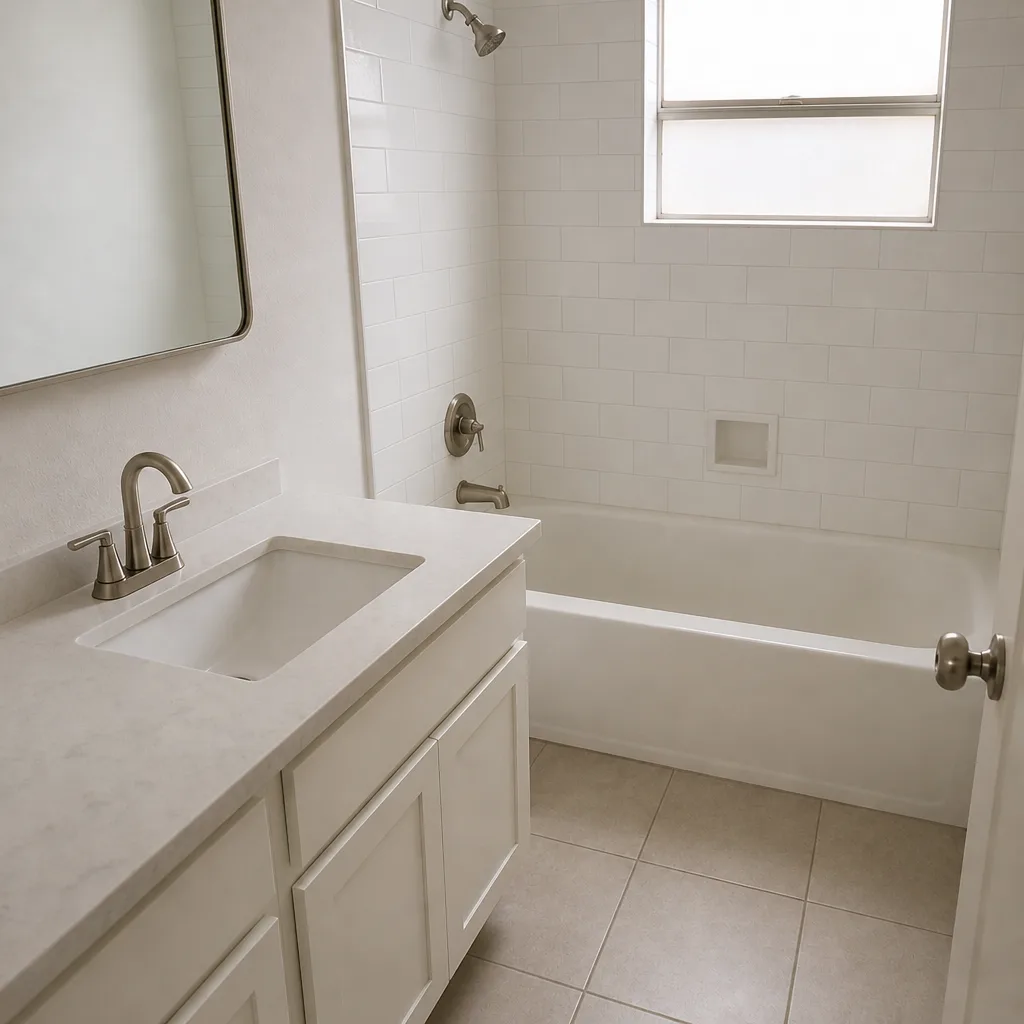 After
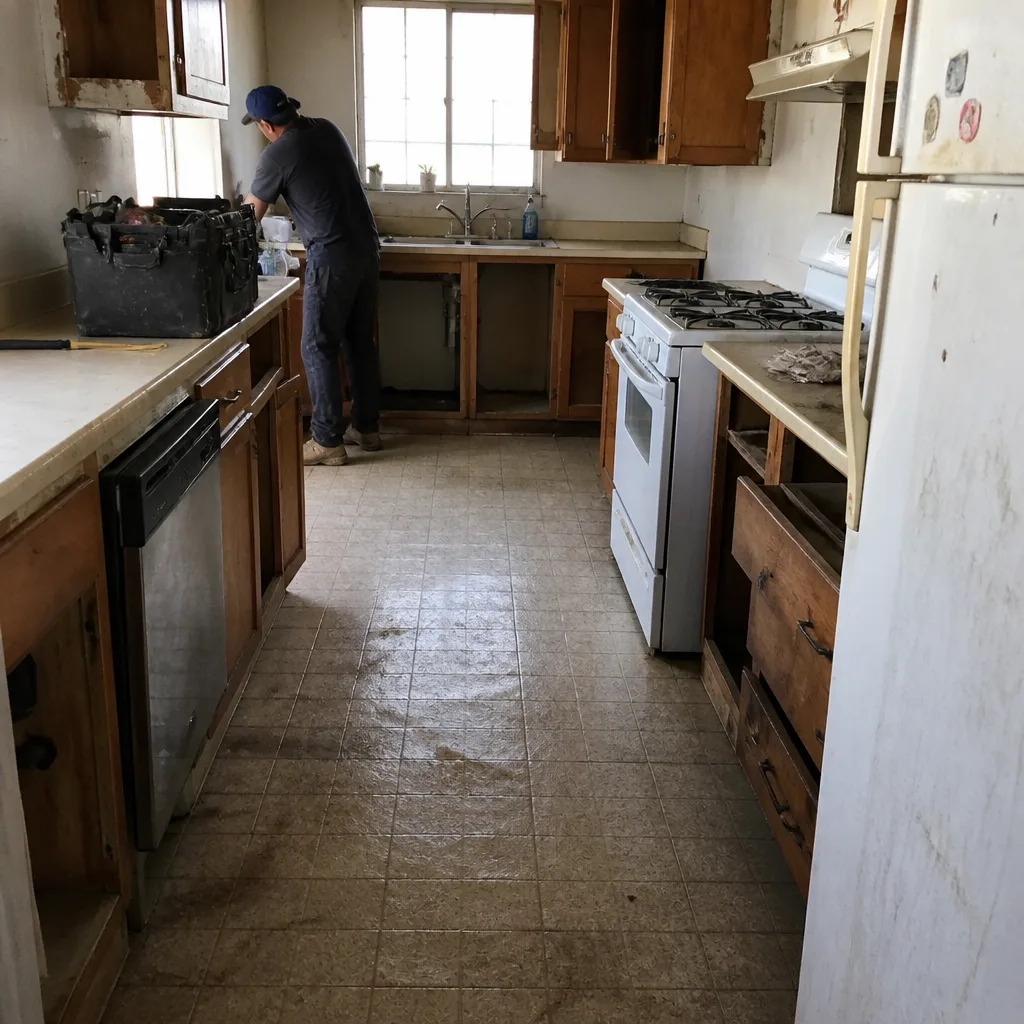 Before
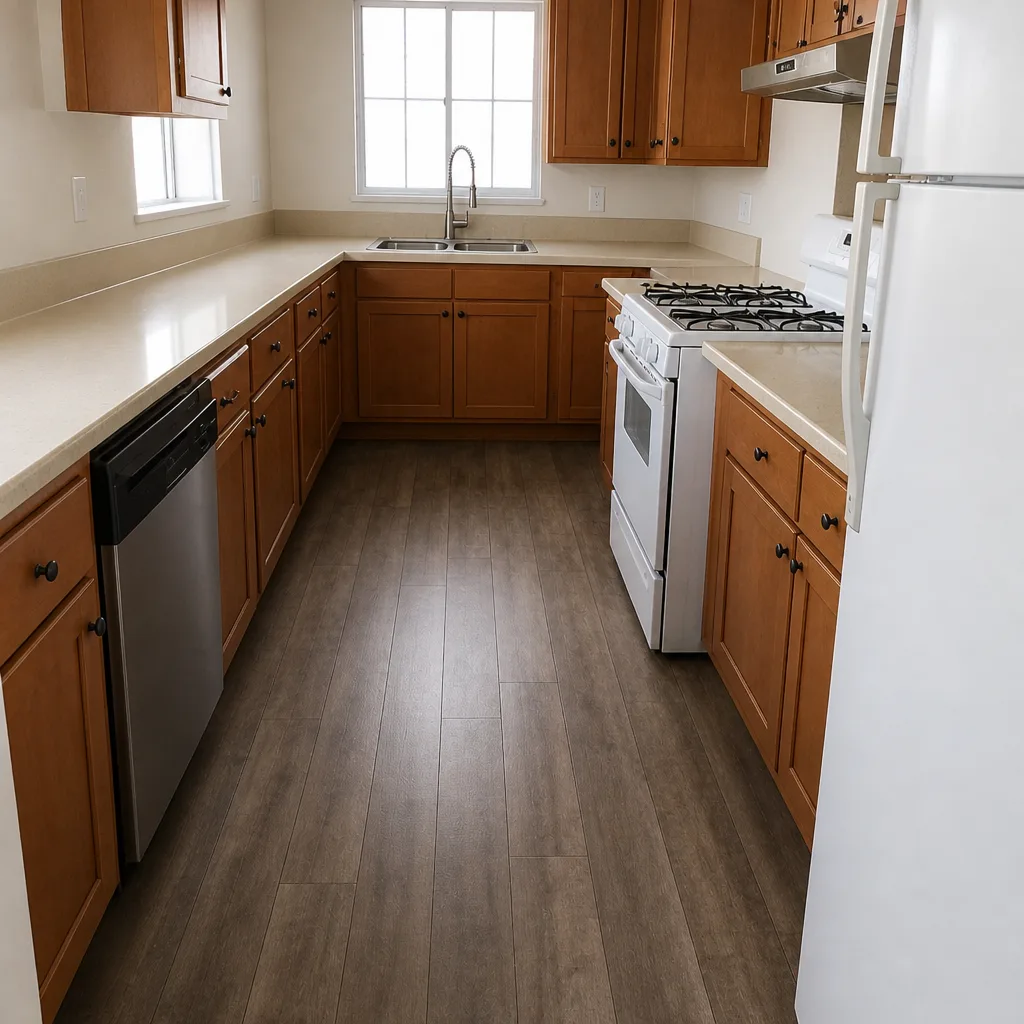 After
When to Call a Professional
Call a professional when the driveway scope crosses 500 square feet, when the base needs excavation below the caliche layer, when the slope needs to be re-graded to move water away from the garage, when the driveway apron ties into a public street, and any time the paver field carries more than a single-vehicle load. That covers most North Las Vegas driveways. If you live near Aliante, Eldorado, or the older neighborhoods off Las Vegas Boulevard North, call for a free second opinion on any bid you’re holding before you sign it, even if you’re planning to do the demolition and the paver-laying phases yourself. Rowan Construction Group North Las Vegas offers free estimates in North Las Vegas, free second opinions on any written estimate, and a written price before any work starts. Call (844) 708-4417. Calls are answered by a live person 24/7, and every visit includes a documented photo record as a standard deliverable.
Frequently Asked Questions
Yes, you can safely lay the pavers yourself if the base is already correctly prepped and compacted. The phases worth doing yourself are demolition and paver laying. The phases to hand off are excavation, grading, base compaction, edge restraint, and final compaction, because they need equipment and technique that most homeowners don’t have. Call (844) 708-4417 for a free estimate on the professional phases.
A 400 square-foot paver driveway in North Las Vegas typically runs $4,800 to $7,200 with base prep and Belgard or Techo-Bloc pavers, depending on paver selection and site access. That range includes permit work, base excavation, compaction, edge restraint, polymeric joint sand, and the 365-Day Done Right Promise. Call (844) 708-4417 for an exact quote. Estimates are free.
Yes, if the work is over 500 square feet. The City of North Las Vegas requires a permit for driveway work at that threshold, and most two-car driveways clear it. Unpermitted driveway work can void homeowner’s insurance coverage for related water damage. If you hire, the permit should be listed in the written bid. Call (844) 708-4417 with questions on permit scope for your property.
A 10-ton plate compactor, which is the machine the job actually requires, rents for $180 to $260 for a weekend in the North Las Vegas market. The 1-ton walk-behind units at Home Depot run $60 to $100 and won’t achieve the compaction standard a driveway base needs. Total weekend rental for all the required equipment runs $640 to $920. Call (844) 708-4417 for a bid that includes the compaction standard in writing.
No, not on any Rowan Construction Group job. The written price is a flat price with a written scope and a written warranty, and no work proceeds on a change until the change order is signed. That’s Clause 1 of the Haven Standard, and it’s the discipline that has kept projects within a few percent of the agreed cost across 4,000-plus jobs. Call (844) 708-4417 to schedule a free estimate.
You can, but the arrangement carries three failure modes: disputed compaction, grading liability, and a split warranty that doesn’t cover the whole system. If you’re going split-scope, the written agreement needs to specify base depth, compaction standard, permit responsibility, and warranty responsibility. We recommend against it. Call (844) 708-4417 for a free second opinion on any written estimate before you sign.
The Bottom Line
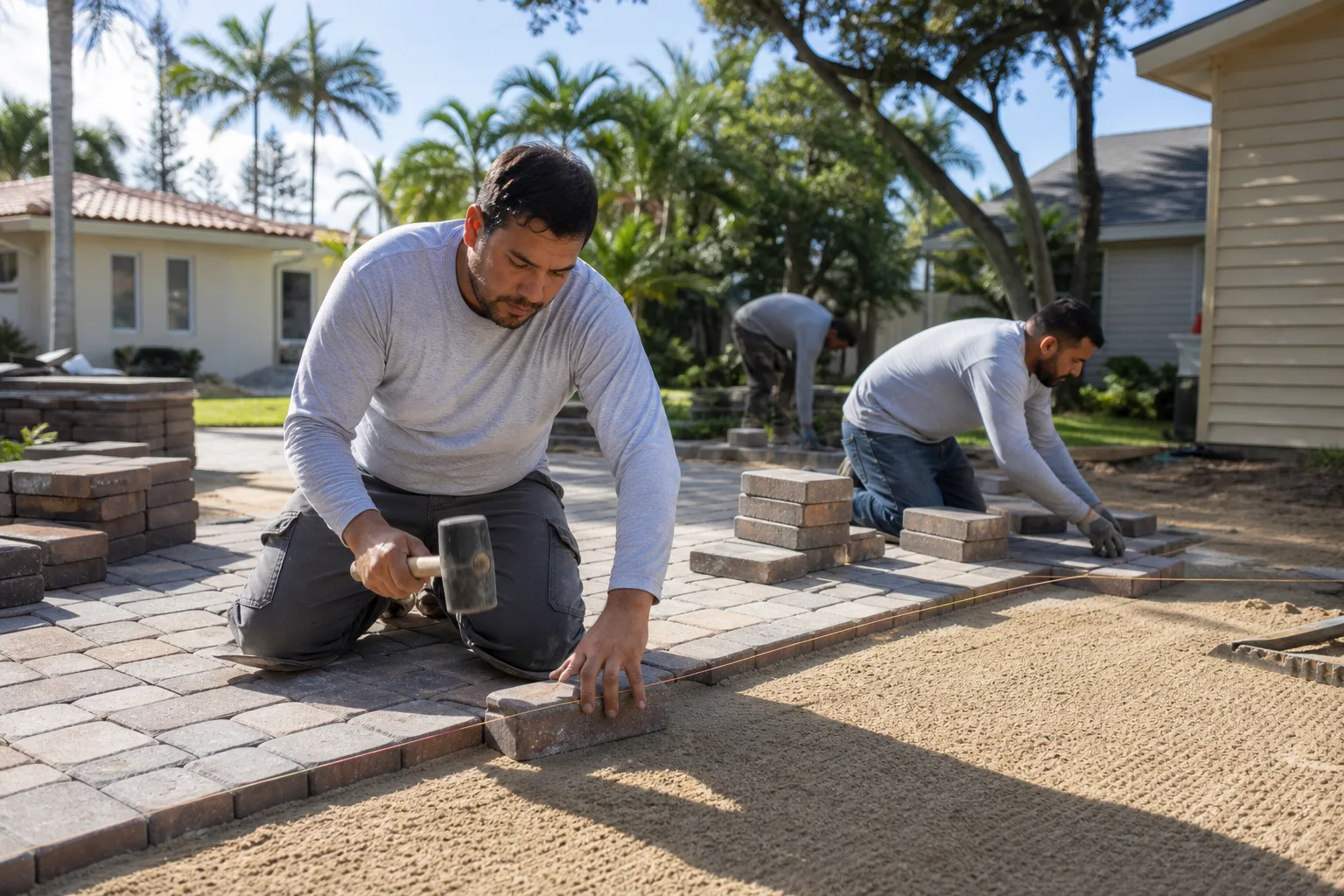
Laying pavers is the easy part. Base prep, compaction, and edge restraint are where paver driveways fail, and those are the phases that need a 10-ton compactor, a laser level, and experience reading North Las Vegas caliche. On a 400 square-foot driveway, rental gear alone erases most of the DIY savings before material waste gets factored in. A bid worth signing itemizes base depth, compaction standard, edge restraint type, joint sand specification, and warranty terms in writing. If yours doesn’t, call (844) 708-4417 for the free second opinion before you sign.
Written by the team at Rowan Construction Group North Las Vegas.