Last updated November 18, 2026



Free written scope consultation - allowances, timeline, and change-order rules on paper before a single trade is scheduled
Driveway & Pavers Warning Signs Every Homeowner Should Know
A paver that rocks slightly when you step on it is not a loose paver. It is evidence that the bedding sand beneath it has migrated. Where sand migrates, water follows – and where water goes in a Mojave summer, the base material eventually collapses.
That is the uncomfortable thing about paver driveways. The early failure signals look cosmetic. A little sand washing out, a slight rock underfoot, a hairline gap at the border. All of it is easy to ignore and almost all of it starts 12 to 18 months before the failure that actually costs money – the tire that drops into a sinkhole, the soldier course that splits, the grading that turns your driveway into a shallow pool every monsoon season.
We have walked hundreds of driveways across North Las Vegas, from the newer builds off Losee to the older slab-turned-paver yards near Civic Center, and the pattern is consistent. The homeowners who catch the small signs spend hundreds. The ones who wait spend thousands. This guide is the checklist we would hand a friend.
Quick Answer
The five warning signs that matter most, ranked by urgency, are rocking pavers, depleted joint sand, spreading edge pavers, surface depressions visible from 10 feet, and standing water after rain. The first two are early and cheap to fix. The last two mean the base has failed and the driveway needs reconstruction, not repair. North Las Vegas homeowners should inspect the perimeter after every summer monsoon and photograph anything that changes.
Styles & brands we work with
- Kitchen remodeling
- Bathroom remodeling
- Home additions & ADU
- Roofing
- Windows & doors
- Driveway & pavers
- Fence
Table of Contents
- The Five Failure Indicators, Ranked by Urgency
- Rocking Pavers: The Earliest Warning Sign
- Efflorescence vs. Normal Color Variation
- The Rebar Test for Base Integrity
- What to Look for at the Perimeter
- Depressions and Standing Water: The Serious Stage
- How to Document Problems for a Warranty Claim
The Five Failure Indicators, Ranked by Urgency
Not every problem is an emergency and not every crack means rebuild. What matters is knowing which stage you are looking at, because the cost curve is not linear. Early repairs run in the range of a nice dinner out. Late-stage reconstruction runs in the range of a used car, and the trigger is almost always a base that was not draining.
Here is how we rank what we see on driveways around North Las Vegas, with the typical repair cost for each.
| Indicator | Stage | Typical Cost |
|---|---|---|
| Rocking pavers underfoot | Early | $2 – $4 per sq ft to reset |
| Joint sand depletion | Early | $0.40 – $0.60 per sq ft to re-sand |
| Edge paver spreading | Moderate | $6 – $10 per linear ft |
| Surface depression visible from 10 ft | Serious | $12 – $18 per sq ft |
| Standing water after rain | Serious | Full drainage correction; quote required |
- Rocking pavers. An early warning. The paver itself is fine – the bedding sand under it has shifted and left a void.
- Joint sand depletion. An early warning. When the joints lose their sand, the locking mechanism breaks and water gets straight into the base.
- Edge paver spreading. Moderate. The soldier course at the border is separating, usually because the edge restraint has failed.
- Surface depression visible from 10 feet. Serious. The base is no longer compacted. Reset will not hold.
- Standing water on the surface after rain. Serious. Grading is wrong or the drainage path is blocked. Correcting it requires redesign, not patching.
Treat that table as the shopping list. If you see a rocking paver and nothing else, you are at the first line. If you see standing water and two other items, you are near the bottom.
Rocking Pavers: The Earliest Warning Sign
A paver that rocks when you step on it is a paver with a void underneath. The bedding sand has migrated out laterally – usually toward the nearest edge, or toward a joint that has lost its fill. The paver itself is fine; the base layer has the problem. When you step on the corner that still has support, the opposite corner lifts slightly, and it feels like the paver is loose.
The reason this matters in North Las Vegas more than in most cities comes down to heat. A paver surface in direct July sun can reach 140 to 160 degrees Fahrenheit. That drives moisture in the joint sand to the surface and out. Wind does the rest. Over a few summers, joints that started full end up three quarters full, and the pavers begin to move against each other rather than lock. The same wind that dries the pavers also blows fine dust into the voids, so you do not always see the loss.
Catching a single rocking paver early is a reset. We lift the paver, trowel the bedding sand back, reset, and re-sand the joint. It is $2 to $4 per square foot for a handful of pavers and it takes an afternoon. Leave it, and the adjacent pavers start to rock too. Each one loosens the next.
A word on the DIY temptation: pulling a paver and tamping sand under it by hand is a reasonable weekend job for a single paver if you are confident there is no base issue. But if the paver rocks more than a half-inch, or if you find mud under it instead of clean sand, stop and get it looked at. Mud under a paver means water has been reaching the base, and resetting the paver will not fix that.
Efflorescence vs. Normal Color Variation
Paver color variation is normal and usually aesthetic. Efflorescence is a white mineral deposit that forms when water moves through concrete or clay pavers, dissolves salts, and leaves them on the surface as the water evaporates. The two look different once you know what to look for, and the difference matters because one is a material defect and the other is a drainage signal.
Here is how to tell them apart.
- Normal variation. Color differences are uniform across the whole driveway, present from day one, and follow the random blend the manufacturer used. Brands such as Belgard and Techo-Bloc ship pavers with intentional batch variation for a natural look. No white crust, no pattern.
- Efflorescence. A white, powdery film or crust appears over time, usually three to twelve months after installation. It often looks worse after a rain. If the pattern tracks the joint lines – white bloom running along the joints like chalk marks – the water is moving up through the joints, not evaporating evenly from the surface. That is a drainage problem, not a paver defect.
- Patterned efflorescence, perimeter-heavy. If the white bloom concentrates near the edges and low spots, water is pooling there and being drawn up. Same conclusion – drainage correction is the fix.
You do not usually need to replace the pavers. A dilute acid wash will clear efflorescence, but if the cause is water entering the base, the white bloom comes back within a season. In our experience running driveway callbacks around North Las Vegas, just under half of efflorescence complaints are resolved by correcting a joint sand issue or a grading problem rather than a material flaw. Ask the contractor to show you the joint condition before accepting “efflorescence is normal” as the answer.
The Rebar Test for Base Integrity
This is the one field test worth learning. It separates a settlement problem from a base problem, and it costs nothing but a section of steel rod.
Push a half-inch rebar rod straight down into a depressed or rocking section of the driveway. Go slowly and feel the resistance.
- Resistance within 1 to 2 inches. The base is still compacted. The problem is a bedding layer issue – reset the pavers and re-sand.
- Resistance between 2 and 4 inches. The base is marginal. Get a professional assessment before doing anything.
- No resistance past 4 inches. The base has lost compaction. Water has been reaching it and washing out the fines. This needs reconstruction – lifting the surface, re-grading, re-compacting a proper aggregate base, and re-laying – not resetting the pavers.
Do not force the rod. If it plunges, you have your answer. If it stops, note where it stopped in inches and photograph the rod with a tape measure alongside it.
Note carefully: the rebar test is not for slab concrete driveways, and it is not something we would suggest for a very shallow paver installation where the rod might hit utility lines. If you do not know what is buried under the driveway, do not push steel into it. This is a check for a paver installation with a known aggregate base underneath. And if the driveway is on a slope, any significant subsurface void is a trip-and-fall risk – in that case, keep people off it and get it assessed.
What to Look for at the Perimeter
The perimeter tells you what is happening underneath, usually 12 to 18 months before the interior of the driveway shows it. Soil movement starts at the edges and works inward. Three details on a paver driveway are worth a look every few months.
- Edge restraint spikes pulling up. The aluminum or plastic edge restraint at the border is pinned with spikes. On a driveway near civic or commercial ground, soil moisture from irrigation and runoff can lift the spikes. If the tops of the spikes are proud of the restraint, water has been working the subgrade.
- Concrete soldier course cracking. Some driveways use a concrete soldier course – a poured strip at the border – and cracks in that strip are a soil movement signal. If the strip has cracked and lifted, the ground under the driveway edge has shifted, and the paver field behind it will follow.
- Pavers lifting at the border. If the border pavers lift when you step on them, the edge restraint has failed and the paver field is bleeding outward. That is a moderate repair that compounds fast. The edge is the last line of defence against lateral spread, and once it goes, every heavy vehicle pushes the field outward.
Also check for a gap between the driveway border and the adjacent grass or landscape strip. In North Las Vegas, drip irrigation lines sitting under a paver border are a common source of subgrade softening – the water is underground, so you can see a sunken border and think the grading is fine. If the border is 1/4 inch or more lower than the driveway field, note it.
Depressions and Standing Water: The Serious Stage
A depression visible from 10 feet is the stage where we stop talking about resetting pavers. Nothing you put on top of a void will hold. Any paver reset into a depressed section will rock again within a season.
A depression means one of two things: the aggregate base has lost compaction, or the subgrade soil has moved. In both cases the fix starts at the bottom, not the top. The paver surface gets lifted, the base is re-graded and re-compacted in lifts, and the pavers go back down. That runs $12 to $18 per square foot for the affected area.
Standing water after rain is the same conclusion with a different mechanism. Water pooling on the surface means the finish grade is not shedding water to the street or a drainage path. When the grade is wrong, the base gets wet from above, which is exactly the failure mode that started the whole problem. In North Las Vegas, monsoon-season thunderstorms can drop an inch of rain in under an hour, so a driveway that drains slowly will pond visibly – which makes it a useful test date. Get out with a phone after the next storm and photograph any puddle that takes more than a few minutes to drain.
Drainage correction is a project. We grade for positive fall to the street, check the transition to the garage apron, and confirm the base sits above any landscape irrigation line. It is not a weekend patch. It is also the point where the driveway stops being cosmetic and starts affecting the structural integrity of the garage slab and the adjacent walls – because water that has nowhere else to go will find the foundation.
How to Document Problems for a Warranty Claim
Most paver installation contracts carry a workmanship warranty for normal settlement, and exclude maintenance neglect. The difference between “normal settlement” and “neglect” is usually documentation, not opinion. Photograph anything you notice before it becomes a dispute.
Here is the protocol.
- Photograph with a tape measure in frame. A photo of a depression is a photo of a dent. A photo of a depression with a tape measure reading 3/4 inch is evidence. Get the tape in the frame alongside the depth, and where possible a second shot with a straightedge across the depression.
- Note the date on every photo, or take them with date stamps on. Water pooling, in particular, needs a dated photo taken after a rain event, not a dry-day photo from memory.
- Photograph the perimeter separately. Edge restraint lift, soldier course cracks, and border lifting all read better when photographed close and parallel with the ground.
- Photograph a reference point. A piece of the driveway that is still flat, in the same shot as the problem, so the contrast is on the record.
- Keep a simple log. A dated list – “rocking paver, front left corner, first noticed April, grew to three pavers by July” – is worth more than ten photos without a timeline.
- Request a written inspection. Any contractor who comes out should give you a written summary of what they found, what caused it, and what the fix is. If the answer is “normal settlement, nothing to do,” ask them to note that in writing too. That is the document you would produce if the driveway fails a year later.
This is the discipline we build into every Driveway & Pavers in North Las Vegas project. Every visit comes with a documented photo record as a standard deliverable, not an upgrade – so if the driveway does move, there is a record of what it looked like when the crew left. A written warranty on paper beats a handshake every time.
Common Mistakes to Avoid
- Treating a rocking paver as a cosmetic issue. It is the first line of the table above, and it is the cheapest repair you will ever make on the driveway. Leave it and it is no longer a single-paver problem.
- Re-sanding without fixing the cause. Filling the joints on a driveway that has a grading problem gives the sand three months at most. Find out where the water is going before you top up.
- Assuming efflorescence is a paver defect. If the white bloom tracks the joint lines, it is water moving up through the joints. Chase the drainage, not a warranty claim against the paver manufacturer.
- Doing the rebar test wrong. Forcing the rod, probing an unknown slab, or pushing it in a section near buried utilities will tell you nothing useful and can be risky. A slow push and a reading of where the resistance stopped is what you want.
- Waiting until a tire drops to act. A depression visible from 10 feet has been visible for months. The difference between resetting pavers and reconstructing a base is about eight to ten times the cost per square foot.
- Using a North Las Vegas driveway quotation with no written scope. “Pavers repaired” is not a scope. Ask what the crew will do to the base, whether they will re-grade, and whether the edge restraint will be replaced. If the price is not written, it is not agreed.
- Installing a paver driveway without checking the base depth against the local aggregate spec. North Las Vegas soil is caliche-heavy in many areas, and that caliche needs to be broken up and the aggregate base brought up and compacted in lifts. A base that was placed in one pass is a base that will settle unevenly in its first two summers.
See the difference
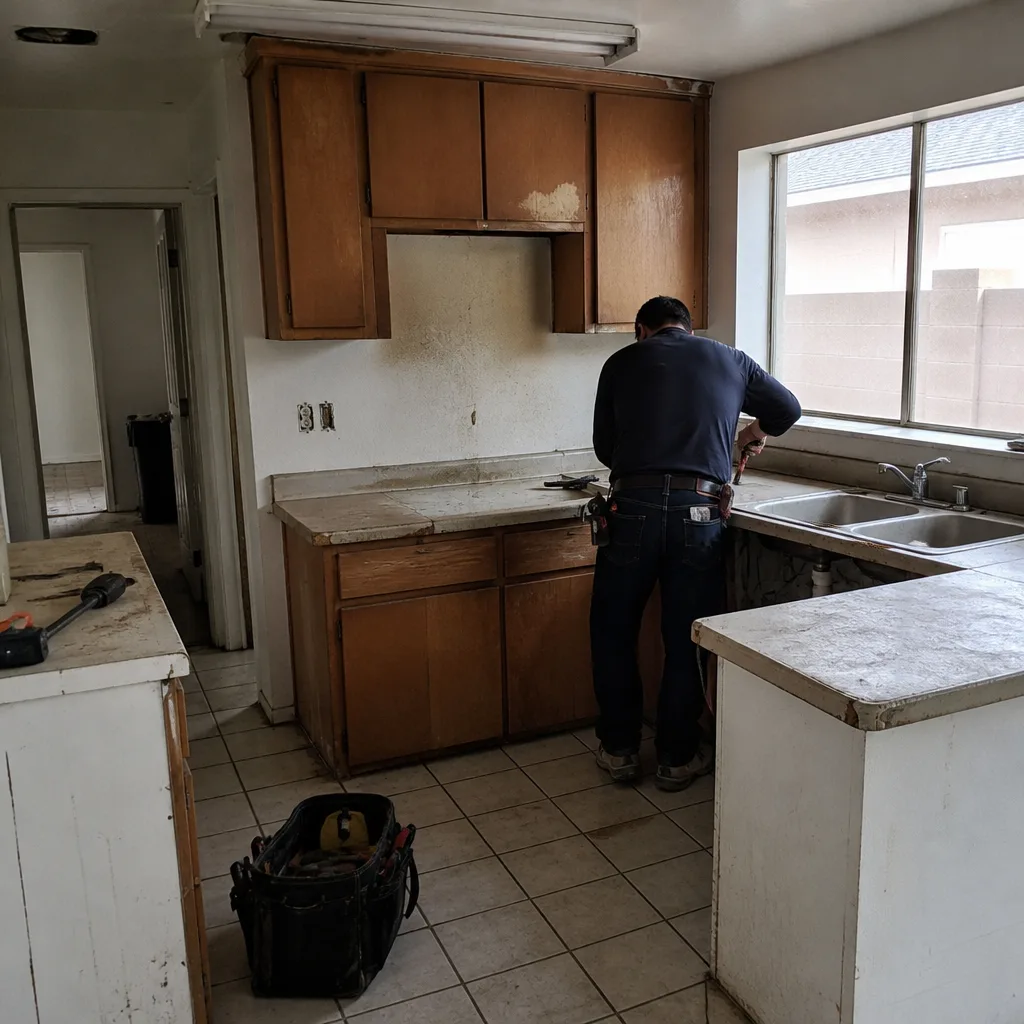 Before
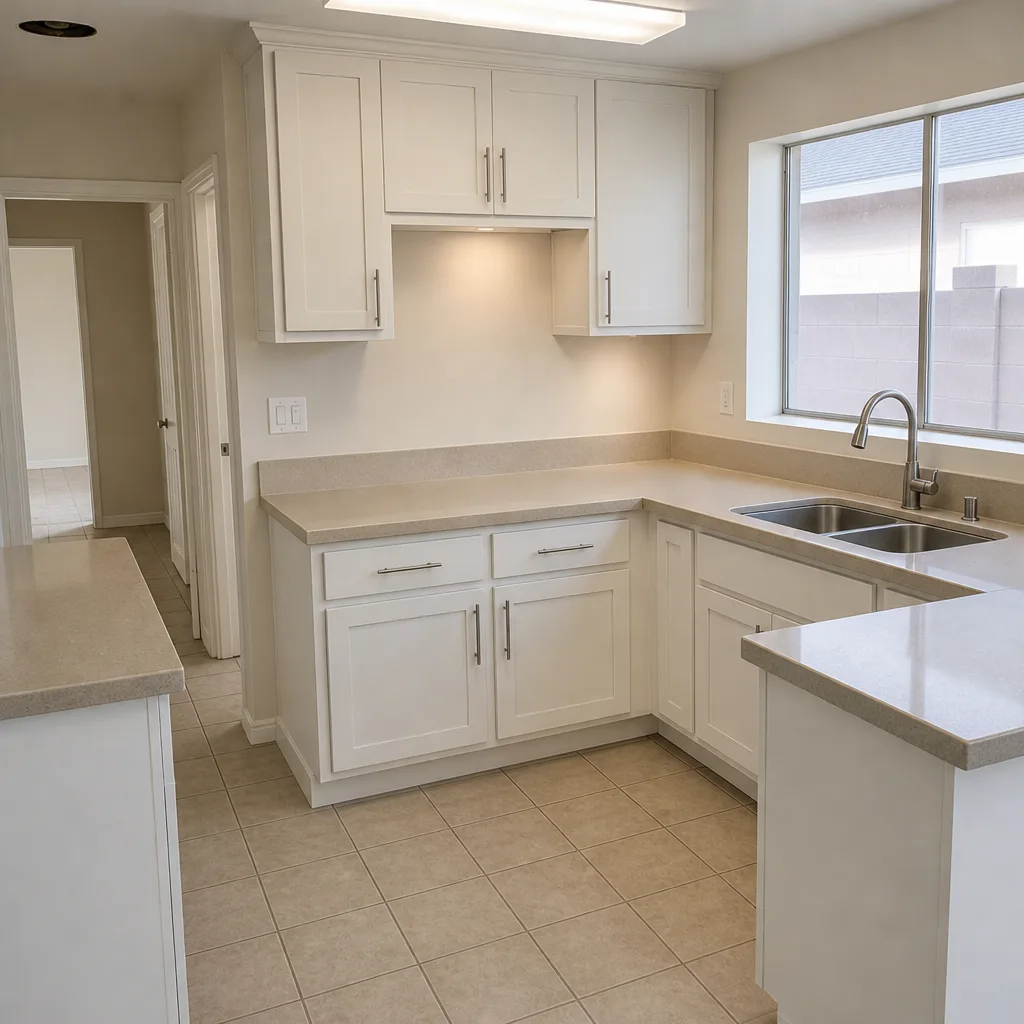 After
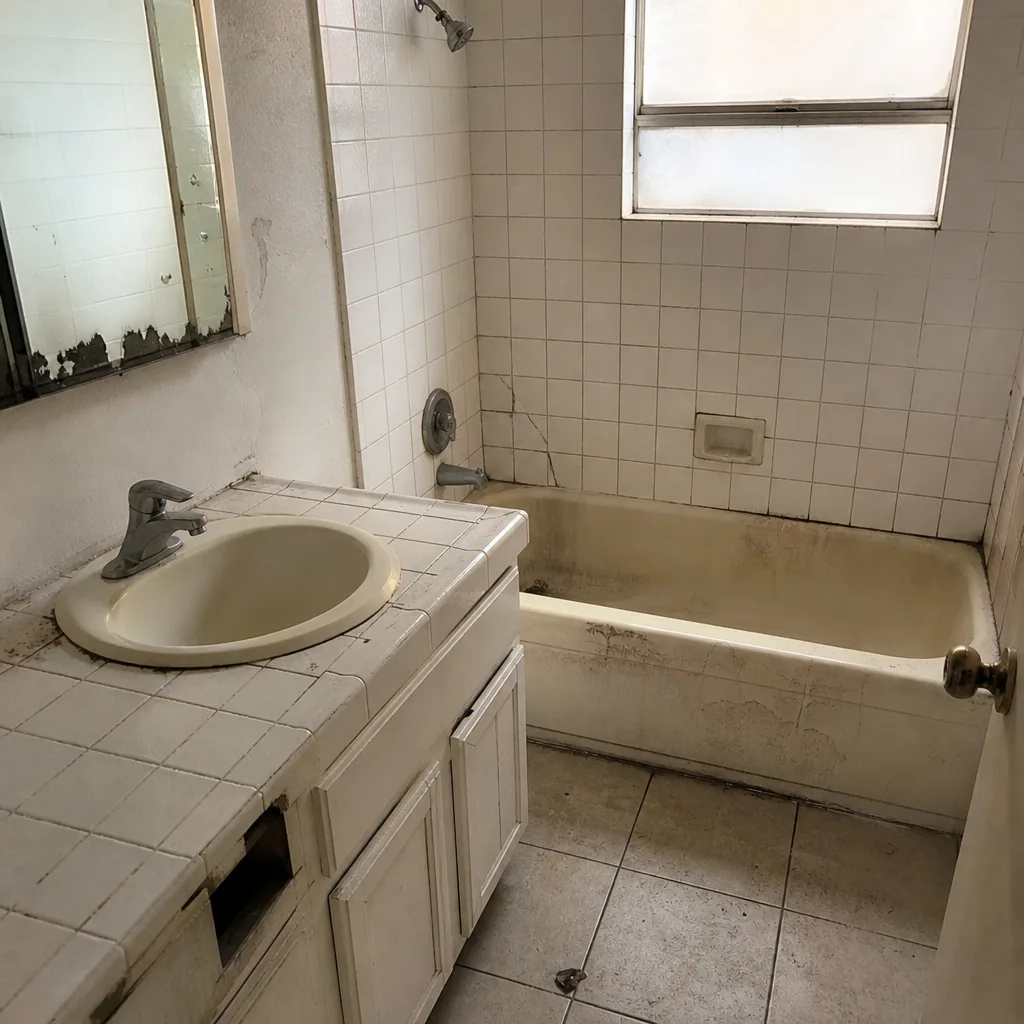 Before
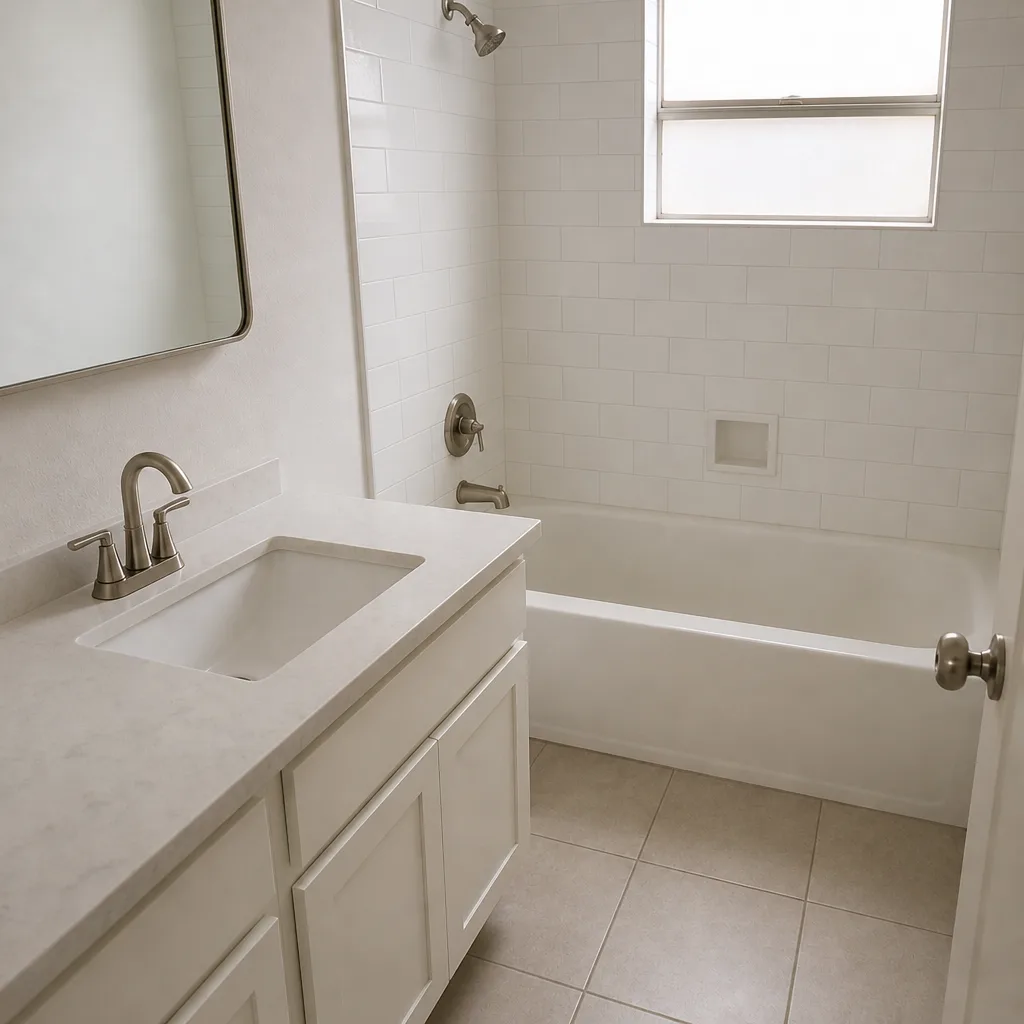 After
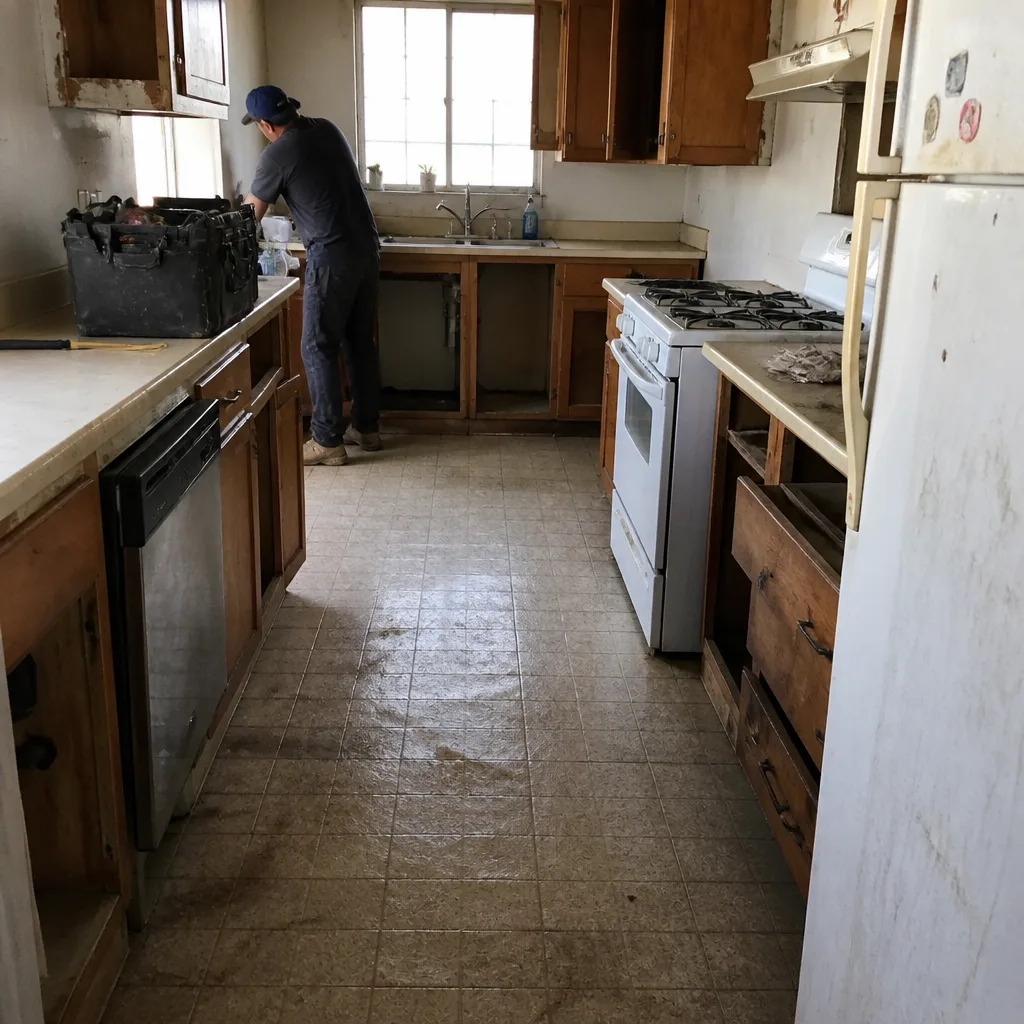 Before
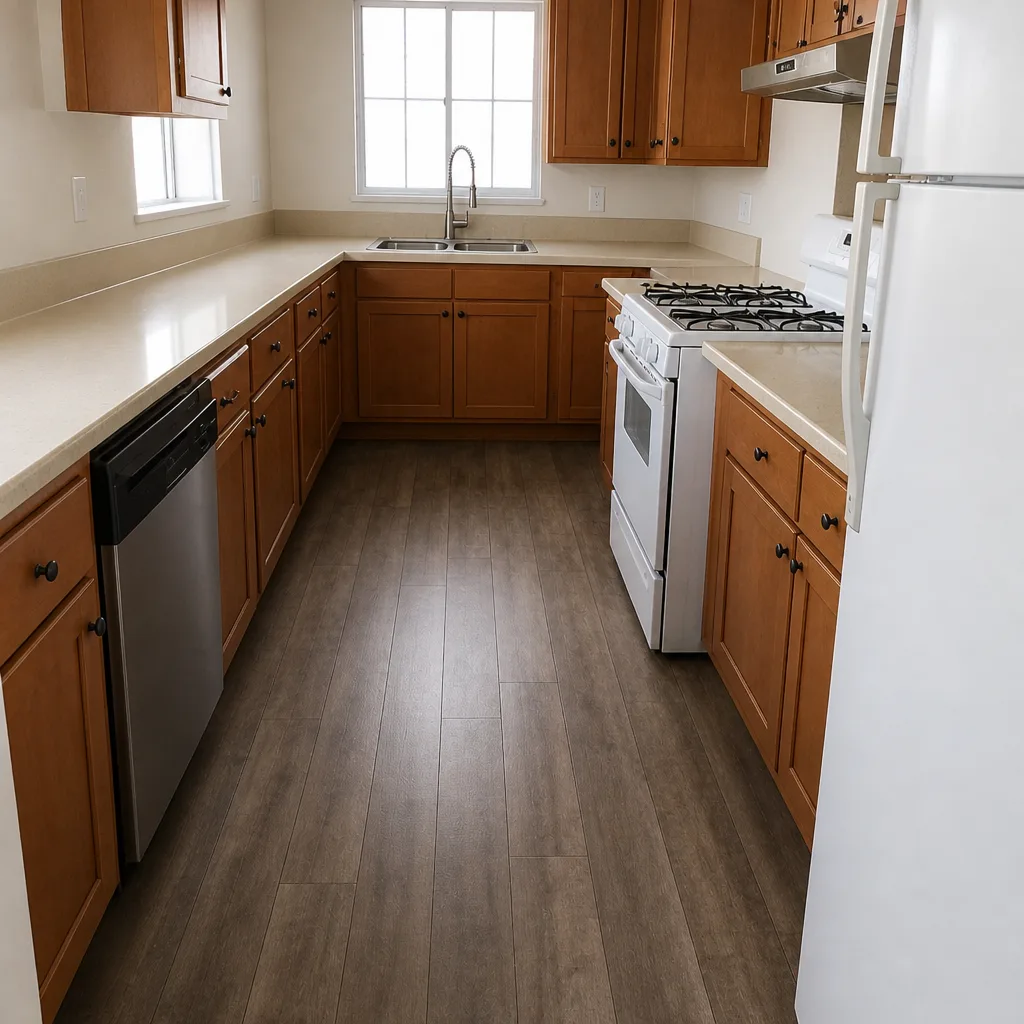 After
When to Call a Professional
Get a trained contractor out if any of the following is true: a paver rocks more than a half-inch underfoot, you see a surface depression from 10 feet, standing water takes more than a few minutes to drain after rain, the perimeter edge restraint has lifted, or the rebar test penetrates more than 4 inches without resistance. Any of those points to a base or drainage problem that a reset will not fix, and it will not get cheaper by waiting.
Some driveway work genuinely does not need a contractor – a single paver reset, or re-sanding a small section with a fresh joint sand, is reasonable weekend work if the base is sound. What we would not suggest is lifting a section, replacing a base, or correcting grading without training, because the water damage to the garage slab that follows a bad fix is expensive to put right and it is easy to cause.
Rowan Construction Group North Las Vegas offers free estimates in North Las Vegas – call (844) 708-4417. Every estimate is a written price before any work starts, and every project comes with the 365-Day Done Right Promise: if it is not done right, we make it right.
Frequently Asked Questions
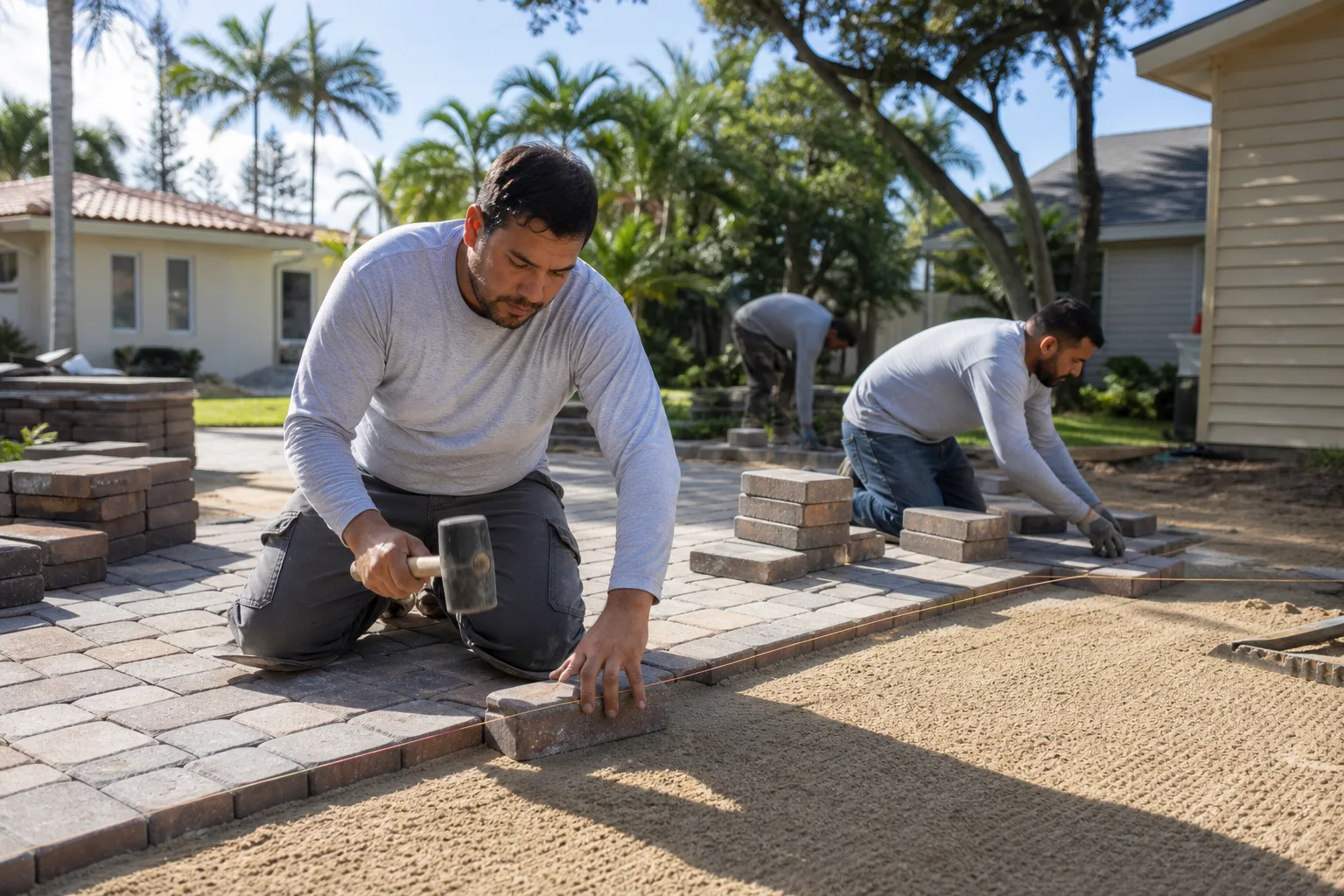
Most early-stage paver repair in North Las Vegas runs $2 to $4 per square foot for rocking pavers and $0.40 to $0.60 per square foot for re-sanding joints. Edge restraint repair runs $6 to $10 per linear foot, and base reconstruction for a depression runs $12 to $18 per square foot. Call (844) 708-4417 for an exact quote – estimates are free.
Not without a signed change order. The written price is the agreed price, and work does not proceed on any change until the change order is signed – the discipline that has kept Rowan’s projects within a few percent of the agreed cost across 4,000-plus jobs. That is also why the written scope has to name what will happen to the base, not just the surface.
Usually, yes, and the documentation makes the difference. Normal settlement shows up in the first few years, is even across the driveway, and rarely tracks the perimeter. Maintenance neglect – sand that was never replaced, a grading problem never corrected – tends to concentrate at the edges, joints, and low spots. A dated photo record with a tape measure in frame separates the two. We will take one on any visit, and include it in the written report.
Reconstruction on an affected section takes anywhere from a few days for a small area to a week or two for a full driveway, depending on access and how much base has to be re-laid. A reset of a few rocking pavers is an afternoon. You will get a written timeline with the estimate, so the schedule is on paper alongside the price.
Not all paver repair needs one – a reset of individual pavers on an existing surface usually does not, and a full driveway replacement or a change to the grading that affects water runoff often does. We will tell you in writing which applies to your job, and if the local authority requires a permit, it is pulled and the inspection is passed before we consider the job finished. Ask for that answer in the quote.
A full replacement is the honest answer when the base has lost compaction under most of the surface, when standing water persists after grading corrections, or when the driveway has failed at multiple locations after previous resets. In our experience, a driveway in North Las Vegas with three or more serious indicators from the ranked list above is a replacement conversation, not a repair. Call (844) 708-4417 for a written assessment before you commit either way.
The Bottom Line
Paver driveway failures do not begin with a sinkhole. They begin with a rocking paver, a joint that has lost its sand, an edge restraint that has lifted. Catching those in the first twelve to eighteen months is the difference between a few hundred dollars and a five-figure rebuild – and it comes down to looking at the right parts of the driveway at the right time, photographing what you see, and documenting it with a tape measure in frame.
If you are looking at any of the five indicators on your own driveway, or you are planning a new paver installation and want the base done right, that is what we do. Rowan Construction Group North Las Vegas quotes a flat written price before work starts, uses brands we can name (Belgard and Techo-Bloc for pavers, with Kohler and Moen fixtures across the trades we handle), and shows you what was found and what was done. Start with a Rowan Construction Group North Las Vegas home look at the full service range, or go straight to the Driveway & Pavers in North Las Vegas page. If the driveway borders landscaping you are thinking of reworking, our Fence Installation in North Las Vegas team can coordinate the perimeter work, and if you are considering a Home Additions & ADU in North Las Vegas, the driveway grading is worth sorting first.
One last thing: keep your written quote on file. It is the document that tells you what was promised about the base, the joint sand, and the warranty – and it is the reference point if the driveway starts to move.
Get a Free Assessment
Call (844) 708-4417 to schedule a free estimate. We answer with a live person and we deliver a written price before any work starts. Bring us a competitor’s written estimate and we will review it line by line at no charge – a free second opinion, no strings. If your driveway has one of the warning signs in this guide, we will tell you what stage it is at, what it will cost to fix, and whether it needs repair or replacement. That answer comes in writing, with a photo record, every time.
Written by the team at Rowan Construction Group North Las Vegas.