Last updated November 18, 2026






Free written scope consultation - allowances, timeline, and change-order rules on paper before a single trade is scheduled
Windows & Doors Maintenance Schedule: What to Do and When
Andersen’s limited warranty on their 400 Series windows requires annual inspection and lubrication of all operating hardware. That task takes about 20 minutes per window and costs under $15 in lubricant. Skip it, and the manufacturer has grounds to deny a claim on a seal failure that had nothing to do with the hardware. We’ve seen it happen. The window warranty paperwork most homeowners file away and never read is a two-way contract, and the maintenance calendar inside it is the part that decides whether a future claim gets paid or denied. This guide turns those buried requirements from Andersen, Milgard, PGT, and Simonton into a dated, North Las Vegas-specific schedule you can actually follow.
Quick Answer
Inspect and lubricate all window and door hardware once a year, caulk exterior joints every 3 to 5 years, and replace weatherstripping every 2 to 4 years. In North Las Vegas, the schedule splits into three local checkpoints: a pre-summer UV-caulk inspection in April, a post-monsoon sill and flashing check in October, and a mid-winter weatherstrip compression test in January. Document every task with a dated photo and a product receipt, because that record is what supports a warranty claim if a part fails later.
Styles & brands we work with
- Kitchen remodeling
- Bathroom remodeling
- Home additions & ADU
- Roofing
- Windows & doors
- Driveway & pavers
- Fence
Table of Contents
- What the Major Manufacturers Actually Require
- The Right Lubricant for Every Track and Hinge
- Your North Las Vegas Seasonal Calendar
- The Annual Inspection Checklist
- How to Document Maintenance for Warranty and Resale
- Five Problems That Require a Licensed Contractor
What the Major Manufacturers Actually Require
Window warranties are not uniform. Andersen, Milgard, PGT, and Simonton each define maintenance differently, and the terms in yours are the terms a claims department will hold you to. Read your specific warranty before you build a schedule, then match it to the table below.
- Andersen (400 Series and similar): Annual inspection and lubrication of operating hardware is required. Andersen also requires reasonable cleaning and excludes damage from “failure to provide reasonable maintenance.” Their glass warranties commonly run 10 to 20 years depending on the product line; hardware coverage runs shorter, often 5 to 10 years.
- Milgard: Full lifetime warranty on vinyl frames and most components for the original owner, with exclusions for damage from neglect, improper cleaning, or harsh chemicals. Mild soap and water only – no abrasive cleaners on the vinyl surface.
- PGT (Florida-born, common in desert builds): Warranty terms emphasize cleaning of the weep system and drainage holes, plus hardware function. Blocked weep holes that cause water intrusion are typically excluded from coverage.
- Simonton: Lifetime limited warranty on vinyl and hardware for the original homeowner, with exclusions for failure to maintain weatherstripping and sealants.
The pattern across all four: the manufacturer agrees to replace defective materials, and the homeowner agrees to maintain them. Every company writes the maintenance clause slightly differently, but every one of them uses it. Miss the annual hardware check on an Andersen unit and a seal failure claim gets complicated even when the seal and the hinge have nothing to do with each other. That is the practical reason this calendar exists.
If you’re unsure which product line is on your home, the glass etch or the interior frame label usually identifies the manufacturer and the year. Photograph it once and keep it with your paperwork. When we quote window replacement across North Las Vegas, we ask for that photo first, because it tells us what warranty you’re working with and what the next owner will inherit.
The Right Lubricant for Every Track and Hinge
The wrong lubricant is worse than no lubricant. Oil-based products attract dust in a desert climate, gum up sliding tracks, and can degrade vinyl over time. Match the product to the material, and use small amounts – a few seconds of spray per track, not a flood.
- Vinyl sliding tracks: Silicone spray. It dries without a sticky film, so grit from North Las Vegas wind doesn’t cling to the track. Apply, work the sash back and forth, then wipe the excess.
- Aluminum channels and rollers: Dry PTFE (polytetrafluoroethylene) lubricant. It leaves a thin dry film that keeps rollers turning without collecting dust. This is the correct choice for most sliding patio doors.
- Hinges, locks, and casement operators: A light machine oil or a purpose-made hardware lubricant, applied to the pivot points and wiped clean. Never spray oil into a lock cylinder – use a graphite or dry lubricant there instead.
- Weatherstripping and gaskets: A silicone-based protectant, applied sparingly. Avoid petroleum-based products, which can soften and shorten the life of the seal.
- Never use: WD-40 as a long-term track lubricant (it’s a solvent, not a lubricant), cooking oil, or grease on any sliding surface.
Keep the products you use in one labeled box with the receipts inside. That box is the start of your maintenance record, and it’s the difference between “I think we oiled those” and a documented claim.
Your North Las Vegas Seasonal Calendar
North Las Vegas puts specific stress on windows and doors that a coastal or mild-climate maintenance guide won’t account for. Summer UV is brutal on caulk and vinyl; the late-summer monsoon pushes wind-driven rain against sills and flashings that have never seen water before; and winter temperature swings from the 70s to the 30s work weatherstripping until it loses its memory. Here’s the local schedule.
- April – pre-summer UV caulk inspection. Walk every exterior window and door. Check the caulk bead at the frame-to-wall joint and around the sill. Any cracking, pulling away, or chalky surface gets cut out and replaced with a UV-rated exterior sealant before the 110°F stretch. This is the single highest-value task on the calendar in North Las Vegas.
- April – hardware lubrication. Lubricate all tracks, hinges, and operators per the manufacturer requirement above. Inspect screens for torn mesh and bent frames.
- October – post-monsoon sill and flashing check. After the summer storms, inspect sills, thresholds, and head flashings for water staining, soft wood, or lifted sealant. Check interior drywall below and beside each opening for any sign of moisture.
- October – weep hole clearing. Clear the drainage slots at the bottom of each window frame. In a dusty desert, these clog with fine grit and stop shedding water.
- January – weatherstrip compression test. Close each door and window on a dollar bill; if it pulls out with no drag, the weatherstrip has lost its seal. Replace compressed or cracked strips.
- January – door alignment and hardware check. Test every lock, deadbolt, and closer. Tighten hinge screws. A door that sticks in winter and swings free in summer is telling you the frame is moving.
Two of these three checkpoints land on jobs we get called for repeatedly in North Las Vegas fence and exterior work – UV-cracked sealant and monsoon water intrusion. Getting ahead of them in April and October is cheaper than fixing the damage in July or November.
The Annual Inspection Checklist
Set aside one Saturday a year for this. Work through each opening in the same order, and take a photo of anything you’re not sure about. This is a look-and-record inspection, not a disassembly job – if you find yourself reaching for a pry bar, stop and see the contractor section below.
- Glass and seals: Look for fogging, condensation between panes, or a hazy film inside the glass. Interior fog means a failed insulated glass (IG) unit – that’s a replacement, not a repair.
- Frames and sashes: Press a screwdriver handle into the wood at the bottom corners. Soft spots mean rot. Check vinyl frames for cracks at the corners.
- Weatherstripping: Run a finger along the seal. It should feel springy, not flat or crumbly.
- Hardware: Operate every lock, latch, crank, and roller. Note anything that drags or needs force.
- Exterior caulk and flashing: Cracks, gaps, or separation at any joint. Water staining on the wall below a sill is a red flag.
- Drainage: Weep holes clear, sills sloped so water runs away from the house, not toward it.
- Thresholds: Door sweeps intact, threshold not loose or cracked, no daylight visible under a closed exterior door.
Write the date and your findings on a single sheet and file it. In our experience, a homeowner who can produce three years of dated inspection sheets has a real advantage at resale, when a buyer’s inspector starts asking about the condition of the windows and doors.
How to Document Maintenance for Warranty and Resale
A warranty claim and a resale disclosure both ask the same question: can you prove what was done, when, and with what? A file of dated photos and receipts answers it. A vague memory does not. Here’s the system we recommend, and it takes about five minutes per task.
- Photograph before and after. A photo of the cracked caulk and a photo of the fresh bead, both with the date visible, is evidence. Do the same for lubricated hardware and replaced weatherstripping.
- Keep the product receipt and the label. The manufacturer of the caulk and lubricant can matter if a claim questions whether the right product was used.
- Log the date and task on one sheet. A simple written log – date, opening, task, product used – is the index to your photos and receipts.
- File it with your window and door warranty documents. One folder for the home’s exterior openings. Keep a digital copy in case the paper file gets wet.
- Bring it out at resale. A documented maintenance record is a credibility item in a seller’s disclosure – it shows the openings have been cared for, not neglected.
If a claim gets denied, this file is the first thing a manufacturer’s claims department asks for. Reference it when you call, not after.
Five Problems That Require a Licensed Contractor
Most of the calendar above is homeowner work. Five conditions cross the line into licensed contractor territory, and in North Las Vegas they show up on older homes and on any home that has taken a decade of sun and monsoon. None of these are a DIY fix, and a few are genuine safety concerns.
- Frame rot: Soft wood at a sill or jamb usually means water has been getting in for years and the substrate underneath is compromised. Replacing a rotted frame is structural work, and the wall around it needs to be opened and dried.
- Threshold substrate failure: If the threshold is loose, cracked, or the door no longer sits squarely on it, the subfloor beneath may be soft. Repairing that is a carpentry and waterproofing job.
- Header deflection: A sagging header above a door or window, visible as a curve in the wall or a door that won’t latch, is a structural matter. It needs to be assessed, not shimmed.
- Failed IG units: A foggy double-pane window means the seal between the panes has failed. The unit needs to be measured and replaced by a glazing professional, and replacement should be matched to the original warranty.
- Door frame racking: A door that has twisted out of square, especially a sliding patio door that no longer runs true, indicates movement in the wall or foundation. Racking is a symptom, and treating it as a hardware problem wastes money.
For any of these, a trained professional should assess before any work is done. We treat every one of these as a free-estimate, written-scope job – we measure, document what we found, and put the number in writing before anyone picks up a tool. For larger work like a header or an addition around a new opening, see our home additions and ADU work in North Las Vegas.
Common Mistakes to Avoid
- Oil on vinyl tracks. It seems like the obvious lubricant and it’s the wrong one. Oil attracts desert dust, gums up the track, and can degrade the vinyl – silicone or dry PTFE only.
- Ignoring the warranty’s maintenance clause. The window paperwork spells out what you agreed to do. Skip it and the manufacturer has a documented reason to deny a claim even on a part you didn’t touch.
- Caulking in July. Exterior sealant applied in 110°F heat can skin over before it bonds properly. In North Las Vegas, caulk in the cooler spring or fall.
- Missing the October monsoon check. Wind-driven rain finds every failed flashing and clogged weep hole. Half the water-damage calls we see in North Las Vegas could have been caught in October.
- Skipping the photo record. A maintenance task without a photo and a date is a claim you can’t back up at warranty time or at resale.
- Shimming a sticking door. A door that sticks is usually telling you the frame has moved. Shim or adjust the hardware and you’ve hidden the symptom, not fixed the cause.
- Using a pressure washer on window frames. The pressure drives water past sealants and behind the frame, and it can strip the finish off wood and vinyl alike. A hose and mild soap is enough.
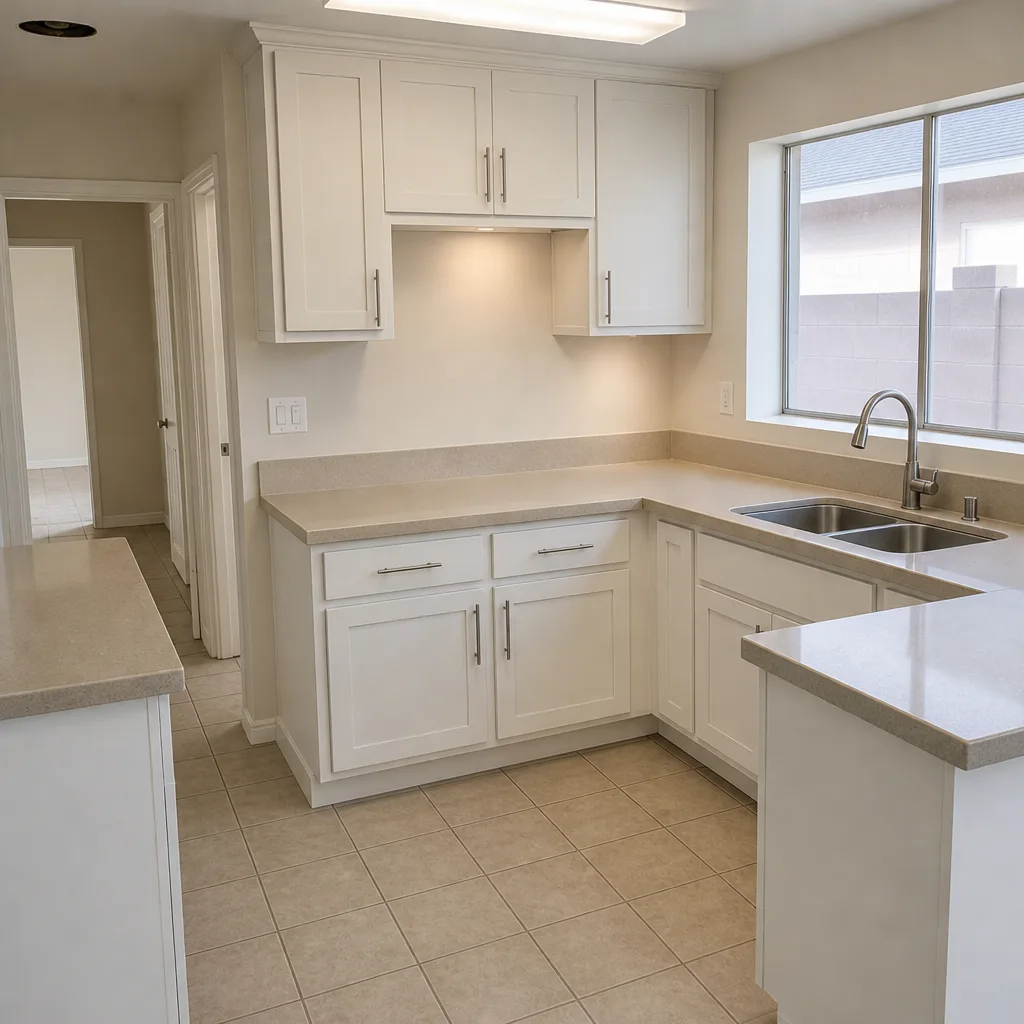
See the difference
 Before
 After
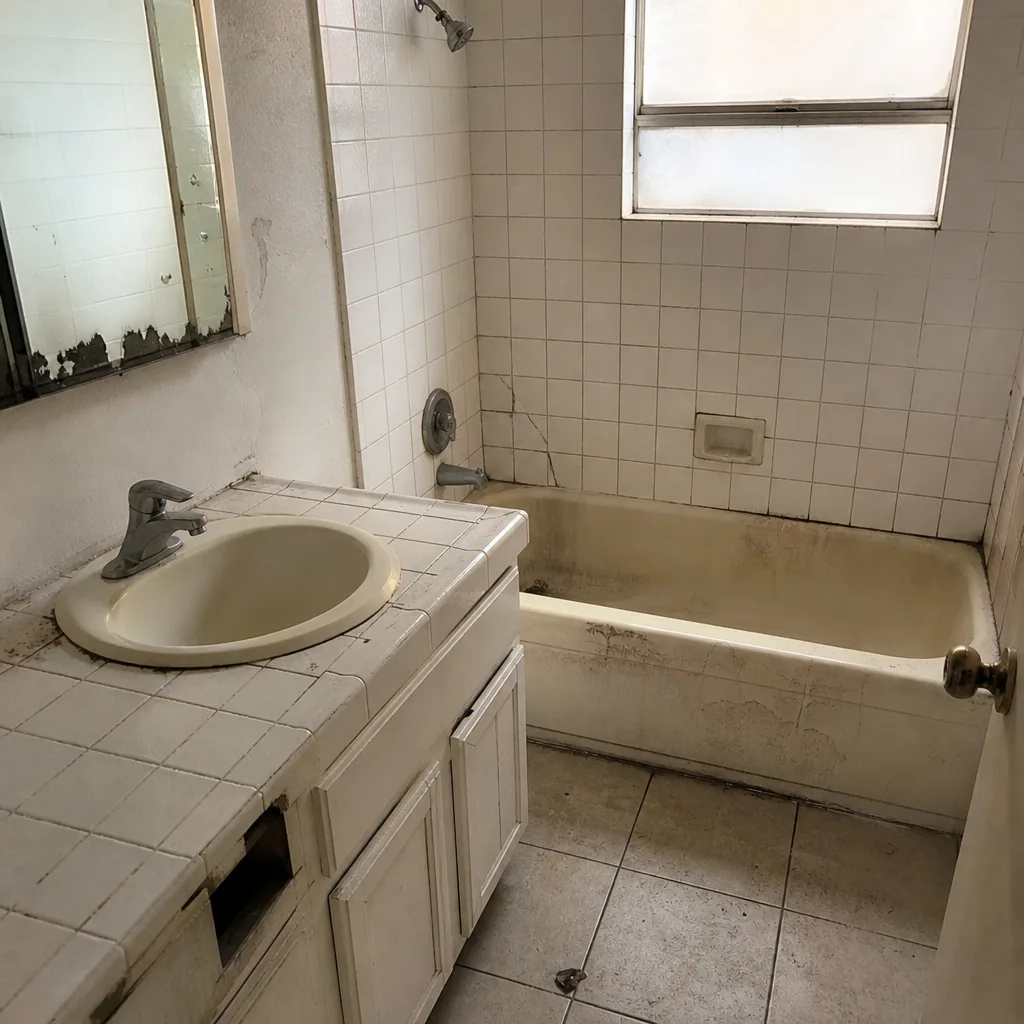 Before
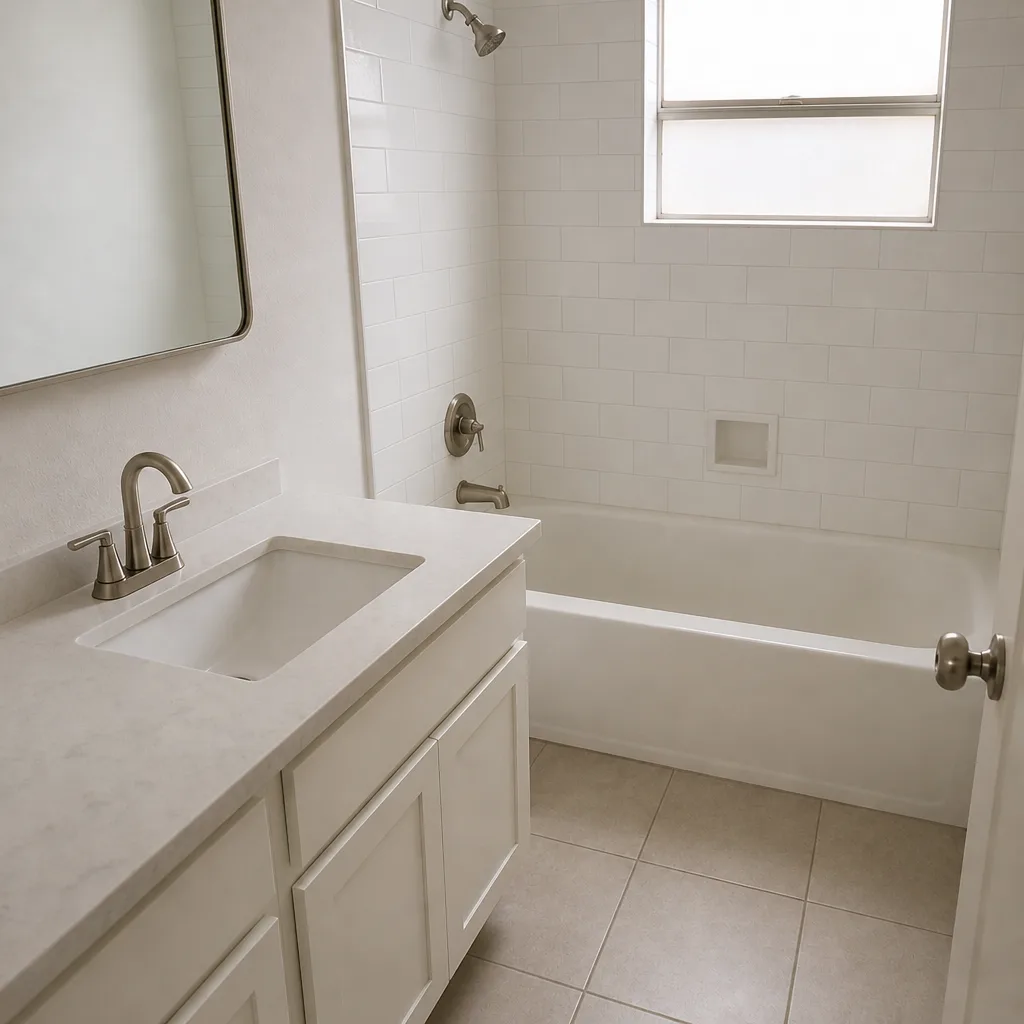 After
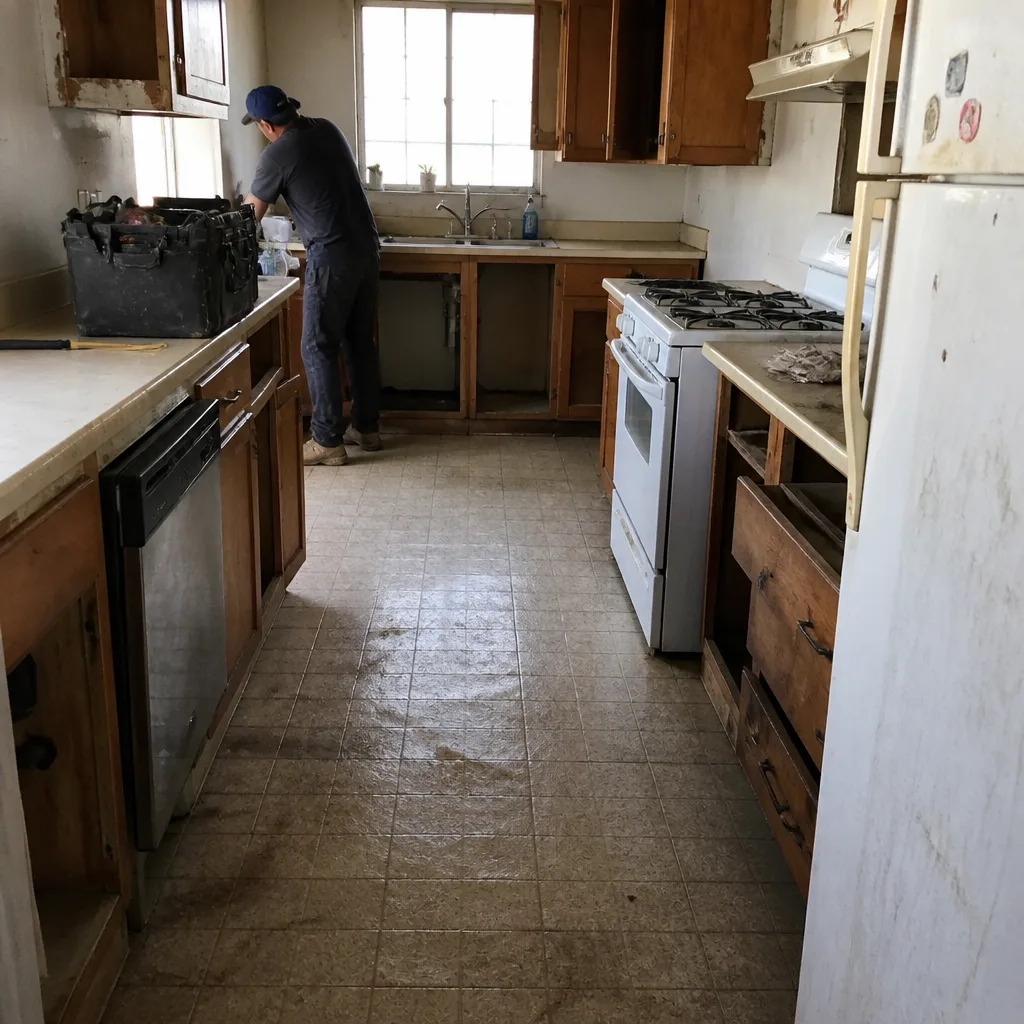 Before
 After
When to Call a Professional
Call a licensed contractor when the problem stops being maintenance and becomes a repair: rot, a loose or failed threshold, a sagging header, a foggy insulated glass unit, or a door frame that has twisted out of square. These are the five conditions from the section above, and each carries a safety or structural consequence if handled by guesswork. For anything involving a header or load-bearing wall, a trained professional should look at it before you touch it. Rowan Construction Group North Las Vegas offers free estimates in North Las Vegas – call (844) 708-4417. We come out, document what we find with a photo record, and give you a written scope and a written price before any work starts. If you’ve been quoted by another company, bring it and we’ll review it line by line at no charge.
Frequently Asked Questions

Once a year, ideally in April before the summer heat. Andersen’s warranty explicitly requires annual inspection and lubrication of all operating hardware, and in North Las Vegas the dust and grit make annual lubrication a practical necessity too. Call (844) 708-4417 for a free estimate if you’re not sure your hardware is operating correctly.
Dry PTFE for aluminum channels, silicone spray for vinyl tracks. Never use WD-40 as a long-term track lubricant – it’s a solvent that attracts dust and evaporates, leaving the track dry and gritty. Call (844) 708-4417 with questions about a sliding door that’s started to drag – estimates are free.
Yes. Andersen, Milgard, PGT, and Simonton all condition their warranties on reasonable maintenance – cleaning, lubrication, and weatherstripping replacement. Miss those tasks and a manufacturer can deny a claim on a failure that was unrelated to the maintenance you skipped. Call (844) 708-4417 for a free second opinion on any written estimate or window repair quote.
Yes, by replacing the failed insulated glass (IG) unit, not the whole window. A foggy pane means the seal between the two sheets of glass has failed, and the unit needs to be measured and replaced by a glazing professional. Call (844) 708-4417 to schedule a free estimate.
Check sills, thresholds, and flashings for water staining, then clear any weep holes that have clogged with grit. If you see moisture inside or below a window after a storm, that’s a repaired-water-intrusion job, not a caulk touch-up. Call (844) 708-4417 for a free estimate if you find water where it shouldn’t be.
Replace it when the bead is cracked, pulling away from the frame, or chalky to the touch; touch up only small, isolated gaps. In North Las Vegas, exterior caulk generally needs full replacement every 3 to 5 years because of the UV load. Call (844) 708-4417 for a free estimate if you’d rather have it done professionally.
The Bottom Line
The maintenance clause in your window and door warranty is a two-way contract, and the annual hardware inspection most homeowners skip is the part manufacturers hold you to. Build a dated calendar: April for pre-summer caulk and lubrication, October for post-monsoon sill and flashing checks, January for the weatherstrip compression test. Use silicone spray on vinyl, dry PTFE on aluminum, and never oil on a track. Photograph and log each task so a future warranty claim or resale disclosure has evidence behind it. And when you hit rot, a failed threshold, a sagging header, a foggy IG unit, or a racked door frame, stop and call a professional.
Rowan Construction Group North Las Vegas offers free estimates on every window, door, and exterior project in North Las Vegas – a written scope and a written price before any work begins. Call (844) 708-4417 to schedule yours. To see how we handle the exterior work around your openings, look at our driveway and pavers work in North Las Vegas.
Written by the team at Rowan Construction Group North Las Vegas.