Last updated November 18, 2026






Free written scope consultation - allowances, timeline, and change-order rules on paper before a single trade is scheduled
Bathroom Remodeling Maintenance Schedule: What to Do and When
Here’s a pattern we run into constantly: a homeowner calls us about cracked grout, and the installation notes say the floor was supposed to be re-sealed at the 12-month mark. It never was. Most grout failures our crews are called back to fix happen between months 11 and 14 after a remodel, and almost none of them trace back to bad material. They trace back to a calendar nobody kept. In this guide, we lay out the actual interval-based schedule for a renovated bathroom in North Las Vegas, with named products, tension-check procedures for hardware, and dollar ranges for each task so you can budget for them.
Quick Answer
A finished bathroom needs four maintenance passes in its first year: a 30-day check of caulk lines and door hardware, a 90-day seal on natural stone, a 6-month hardware tension check and drain cleaning, and a 12-month re-seal of grout and caulk joints. After year one, most tasks settle into a 6- to 12-month rhythm, and skipping the 12-month re-seal is the single most common reason installer warranties get denied.
Styles & brands we work with
- Kitchen remodeling
- Bathroom remodeling
- Home additions & ADU
- Roofing
- Windows & doors
- Driveway & pavers
- Fence
Table of Contents
- Warranty Tasks vs. Optional Longevity Tasks
- The First 12 Months: A Month-by-Month Schedule
- Sealers, Caulk, and Cleaners That Hold Up to North Las Vegas Water
- The 6-Month Torque Check: Shower Doors and Faucet Connections
- Five Signs It’s Time to Call a Licensed Pro
- Beyond Year One: Annual and Multi-Year Intervals
- The Maintenance Log: Why It Matters at Resale
Warranty Tasks vs. Optional Longevity Tasks
The first thing to sort out is which maintenance items are conditions of your installer’s warranty and which are just good practice. Most bathroom remodelers write a warranty that requires the homeowner to perform certain maintenance within a specified window. Skip those, and a callback that would have been covered gets billed to you. Optional tasks extend the life of the material but don’t affect coverage either way.
Here’s how the split usually falls:
- Warranty-mandated (do these on time): Re-sealing cementitious grout at the 12-month mark; re-caulking the tub perimeter and floor-to-wall joints when the caulk shows separation; keeping the shower pan clear of standing water; wiping down shower glass after each use if the coating is a factory-applied protectorant rather than a replaceable film.
- Warranty-mandated inspection: An annual check of the shower pan slope and drain flow. If the pan holds water or the drain runs slow, that needs to be reported before water damage compounds the issue.
- Optional longevity tasks: Sealing natural stone quarterly; polishing matte porcelain; lubricating cabinet hinges; replacing the aerator on the faucet; refreshing grout color on a floor that has faded from UV exposure.
We include a printed version of this split in the handoff packet on every bathroom remodel we complete, and we flag it during the walkthrough so nobody has to guess. Under the Haven Standard, the terms are documented in writing, not held in a verbal promise that disappears after the crew drives off. If you bought the house after the remodel was done, ask the seller for the handoff packet. It’s a reasonable request, and a contractor who documents its work will have something to hand over.
The First 12 Months: A Month-by-Month Schedule
The first year is where most of the warranty-relevant work happens. Here’s the interval schedule we recommend, and the intervals that line up with how our handoff documentation reads.
- Day 30: Inspect every caulk line. Tub perimeter, floor-to-wall joints, around the shower valve escutcheon, and at the base of the toilet. Run a fingernail along each joint; if it peels off or feels chalky, it cured poorly and needs removing and redoing. Cost if you have a pro do it: $85 – $175 for a small bathroom.
- Day 30: Check the shower door hardware and every exposed faucet connection by hand. No tools yet, just feel for wobble or weeping. A faucet packing nut that’s weeping at month one is a manufacturing adjustment, not a failure.
- Day 90: Seal natural stone. Marble, travertine, and honed limestone need a penetrating sealer after 60 – 90 days of cure, then every 6 – 12 months after that depending on water exposure. Cost to have a pro do a 40-square-foot vanity top: $150 – $300.
- Month 6: Tension check on shower door hinges and faucet packing nuts (procedure below). Clear the drain with a manual snake if flow has slowed. Replace the faucet aerator if mineral scale is visible.
- Month 9: Look at the grout in the shower floor for powdering or a chalky look. If you see it, the sealer is gone and the grout is absorbing water fast enough to degrade.
- Month 12: Re-seal all cementitious grout and cut out and re-caulk any joint showing separation. This is the single most important maintenance item in the first year, and the one most often skipped.
Our technicians have up to 19 years of experience servicing bathrooms across North Las Vegas, and the pattern is consistent: the homes that get the month-12 re-seal almost never need a shower pan repair in the following five years. The ones that skip it usually do.
Sealers, Caulk, and Cleaners That Hold Up to North Las Vegas Water
North Las Vegas water runs hard, typically in the 180 – 300 ppm total-dissolved-solids range depending on the source and the time of year. That hardness leaves calcium scale on every surface that sees water, and pH runs high enough on many properties that ordinary acidic bathroom cleaners etch stone quickly. High UV exposure is the other local factor: a north-facing window in a North Las Vegas bathroom still reaches light levels higher than a typical interior in a milder climate, and that fades grout and discolors caulk faster than most people expect.
Here’s the material list we actually specify on our jobs, and that holds up in this climate:
- Grout sealer: A penetrating solvent-based sealer, applied with a foam brush, 12-month reapplication interval. Not a topical film sealer; film sealers trap moisture and fail in high-UV environments.
- Caulk: A 100% silicone for wet joints (tub, shower pan), and a paintable siliconized acrylic for dry joints only. Never acrylic in a wet zone. GE, Loctite, and Sika all make a formula that will hold; match the formulation to the joint, not the label color.
- Cleaner for porcelain and tile: A neutral-pH tile and stone cleaner. Avoid vinegar, bleach-based sprays, and any “heavy-duty” bathroom cleaner on natural stone.
- Cleaner for glass: A squeegee is cheaper and more effective than any spray. If a spray is used, a pH-neutral glass cleaner; anything with ammonia attacks the factory shower-glass coating.
- Scale remover on fixtures: A citric-acid descaler on chrome fixtures, applied briefly and wiped, never left to dwell on stone or grout.
Fixtures installed during the remodel matter here too. Kohler and Toto both publish maintenance schedules for their finishes; the factory finish on a Kohler chrome faucet is warrantied for the consumer-owned lifespan of the fixture but only if a non-abrasive cleaner is used. Keep the spec sheet that comes in the box. It’s the reference you’ll want when a question comes up.
The 6-Month Torque Check: Shower Doors and Faucet Connections
This is the task almost every maintenance guide leaves out, and it’s the one that catches the most expensive failures before they happen. Loose shower door hardware is the leading cause of cracked glass in a renovated bathroom, and a weeping faucet connection under a vanity is the leading cause of cabinet damage. Both fail silently, months before they cause visible trouble, and both are checkable in about fifteen minutes.
Here’s the procedure we recommend at the 6-month interval, and again at month 12:
- Shower door hinges: With the door at a rest position, use a #2 Phillips head screwdriver and gently confirm snugness on each hinge-to-jamb screw. Turn the screw clockwise until it makes firm contact, then stop. Do not tighten hard enough to compress the glass gasket. Torque spec on most framed shower door hinge fasteners is 15 – 20 inch-pounds, and hand-snug on a screwdriver handle is close enough for a homeowner check.
- Door closer or pivot: Open and close the door slowly. If the glass contacts the frame at any point in the swing, the hinge has shifted and needs adjustment.
- Faucet supply connection: Turn off the water at the supply valve under the vanity. Dry the connection at the faucet body with a paper towel. Turn the water back on. Wait five minutes. Dry the connection again. Any moisture on the second wipe indicates a slow weep that needs attention.
- Packing nut on the faucet handle: Run the tap and observe the packing nut at the base of each handle during operation. A single drop visible is worth addressing; continuous seepage is a call now, not later.
- Drain connection: Fill the sink, drain it, and watch the p-trap and tailpiece joints with a flashlight. Any drip on the outside of the pipe is a loose slip nut, hand-tighten only.
A plumber’s service call to address a weeping connection costs $85 – $150 in North Las Vegas when it’s caught early. The same call after cabinet damage runs $400 – $1,200 or more depending on how much cabinetry was affected. It is a short list of tasks with an outsized payoff.
Five Signs It’s Time to Call a Licensed Pro
During a routine maintenance pass, five conditions should trigger a call rather than an attempt at home repair. These are the ones that indicate a problem has already progressed past what a homeowner should tackle:
- Flexible or hollow-sounding floor tile. A tile that moves underfoot has an adhesion failure. Grout cracking along a grout line that runs to a wall corner is almost always this condition, and resealing won’t fix it. A tile contractor needs to remove and reset the tile or the entire bond layer will fail.
- Standing water in the shower pan more than 30 minutes after the last shower. This is a slope or drain issue, not a maintenance one, and it’s the leading cause of moisture damage in the subfloor below. Call a licensed plumber or tile contractor within the week.
- Active drip visible on any supply or drain connection. A weep that doesn’t stop after a hand-tightening of a slip nut needs a plumber. Water under a vanity runs into cabinetry before it turns into a puddle you can see.
- Caulk failure that recurs within 60 days of a fresh application. If new caulk fails quickly, the substrate behind it is wet. Recaulking is treating the symptom.
- Any soft spot in drywall adjacent to the shower or tub. This is moisture wicking behind the tile assembly, and it’s the one time to stop scheduled maintenance and call for a professional assessment before the drywall fails entirely.
We see the fifth sign most often in North Las Vegas homes built before 2005 with original shower assemblies. Pre-2005 tile jobs often used a moisture barrier that has since aged past its service life, and the first place that shows the problem is the drywall behind the shower wall’s paint. This is not a “wait and see” situation.
Beyond Year One: Annual and Multi-Year Intervals
After the first-year pass, most bathroom maintenance settles into a predictable rhythm. The schedule below assumes a bathroom remodel done to current code and using a cementitious or epoxy grout, not a pre-mixed product. Every item is worth tracking; a handful affect warranty, most affect lifespan.
- Every 6 months: Shower door hardware tension check, faucet supply connection dry-wipe check, manual drain clearing.
- Every 12 months: Grout re-seal, caulk inspection and re-application on wet joints, aerator replacement, exhaust fan blade cleaning.
- Every 24 – 36 months: Natural stone re-seal, shower door gasket replacement, toilet wax ring inspection.
- Every 5 – 7 years: Caulk replacement in every joint (cut out, dry, reapply), shower glass coating refresh if a factory coating was present, exhaust fan motor replacement if the fan has lost airflow.
- Every 10 – 15 years: Toilet supply line replacement, shower valve cartridge replacement on any single-handle mixing valve.
Two of these deserve special mention in this climate. The exhaust fan matters more in North Las Vegas than most homeowners realize: without a working fan, shower moisture stays in the bathroom and gets pulled into adjacent rooms. A fan that has lost airflow after five years is common, and can be tested by holding a tissue against the grille. Second, the toilet wax ring: if the toilet has ever been removed or rocked, the ring may be compromised and won’t always leak visibly. If you see a faint sewage smell that has no other explanation, that’s the call.
Fans, gaskets, and cartridges are consumables. Budget $20 – $60 per year for the small items and $150 – $400 for a cartridge replacement at the 10-year mark, and the schedule stays predictable. This is worth saying plainly: the bathroom doesn’t need to be thought about between intervals, but it does need the intervals kept.
The Maintenance Log: Why It Matters at Resale
The single thing most homeowners neglect isn’t the maintenance task. It’s the record. A bathroom that has been well-maintained resells for more than an identical one that hasn’t, and the difference is fully documentable. When a buyer’s inspector looks at the shower and sees fresh, well-aged caulk versus a joint that’s been dry and cracking for years, the number comes back in the negotiation.
The format we recommend is a simple table. Columns for date, task completed, product used, and cost incurred. Print it and keep it with the handoff packet, or scan it into a folder. Here’s the checklist format that works:
| Date | Task | Product Used | Cost | Notes |
|---|---|---|---|---|
| Example: 06/12/2026 | Grout re-seal, shower floor | Penetrating solvent sealer | $45 | Applied by homeowner, 2 coats |
The log does three things for you. It documents the 12-month re-seal, which is the item your installer warranty needs a record of. It gives a buyer’s home inspector something to cite in your favor. And it makes the annual pass into a 10-minute task instead of a decision, because you already know what was done and when. For a homeowner in a neighborhood like Aliante or Centennial Hills, where home sales move quickly and the inspection often becomes the negotiating table, that documentation is worth as much as the maintenance itself.
Common Mistakes to Avoid
- Skipping the 12-month re-seal because the grout “looks fine.” Grout that has stopped absorbing water looks identical to grout that has stopped being sealed. The sealer degrades invisibly, and the 12-month interval is the moment to reapply, not to wait until failure shows.
- Using vinegar or bleach on natural stone. Both etch marble, travertine, and limestone. The stone can be refinished, but the cost to re-polish a 40-square-foot vanity top runs $300 – $600 and is not a warranty item.
- Recaulking a wet joint. New caulk laid over a moist substrate fails within weeks. The joint has to be cut out, dried for a full 24 – 48 hours with the fan running, and then re-caulked. This is the mistake that produces the slow leak into the cabinet below.
- Over-tightening shower door hinge screws. Snug is right. Compressing the glass gasket is how a tempered panel cracks, sometimes months later and with no other apparent cause.
- Assuming hard water is only a cosmetic problem. North Las Vegas water at 180 – 300 ppm scale deposits into the shower valve over time and can degrade the cartridge seal. An annual descale of the showerhead and valve body extends the life of the fixture by years.
- Ignoring the exhaust fan. A fan that turns on but has lost airflow is common after 5 – 7 years of use, and the moisture it fails to clear is what eats the drywall and paint in this climate. Test with a tissue every 6 months.
- Not keeping the handoff packet. When a warranty claim comes up, the specification sheet, product list, and photo record that came with the remodel are the evidence. Without them, the installer’s ability to help you is limited.
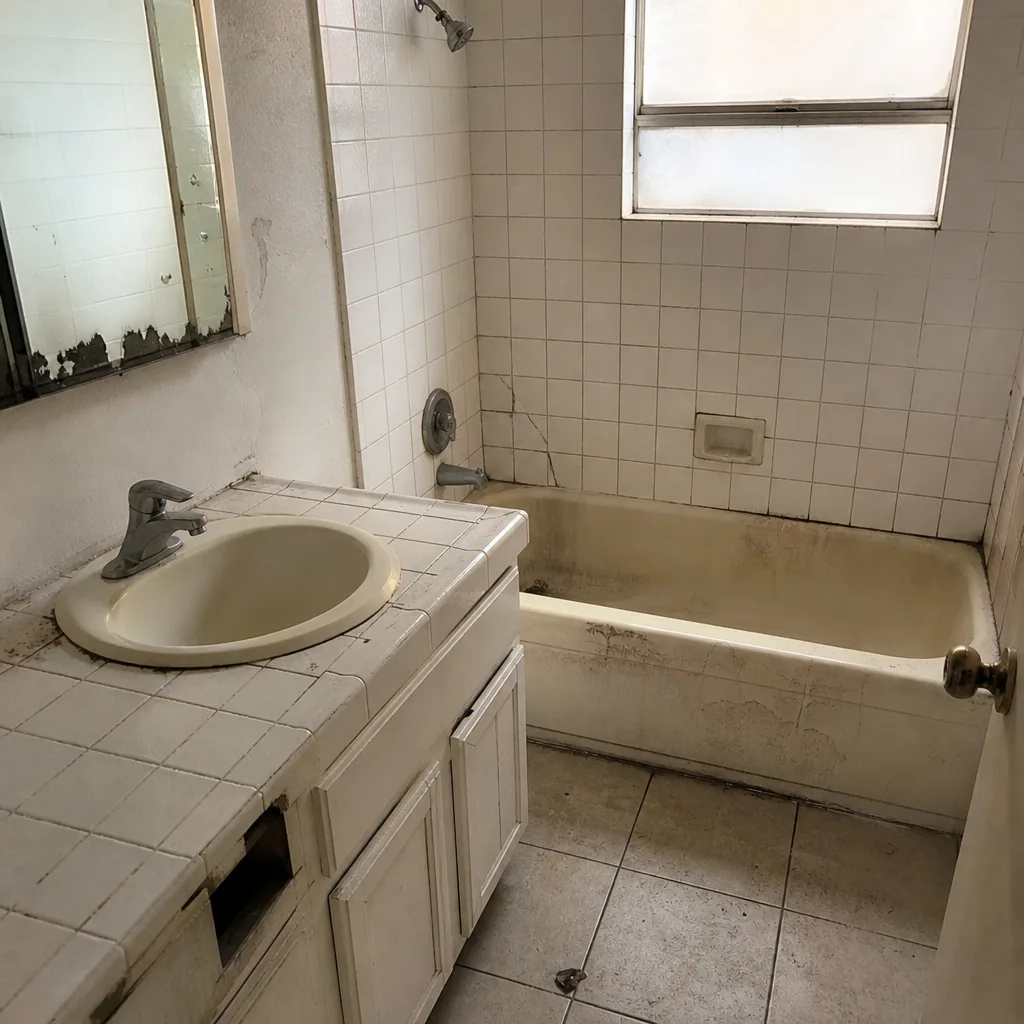
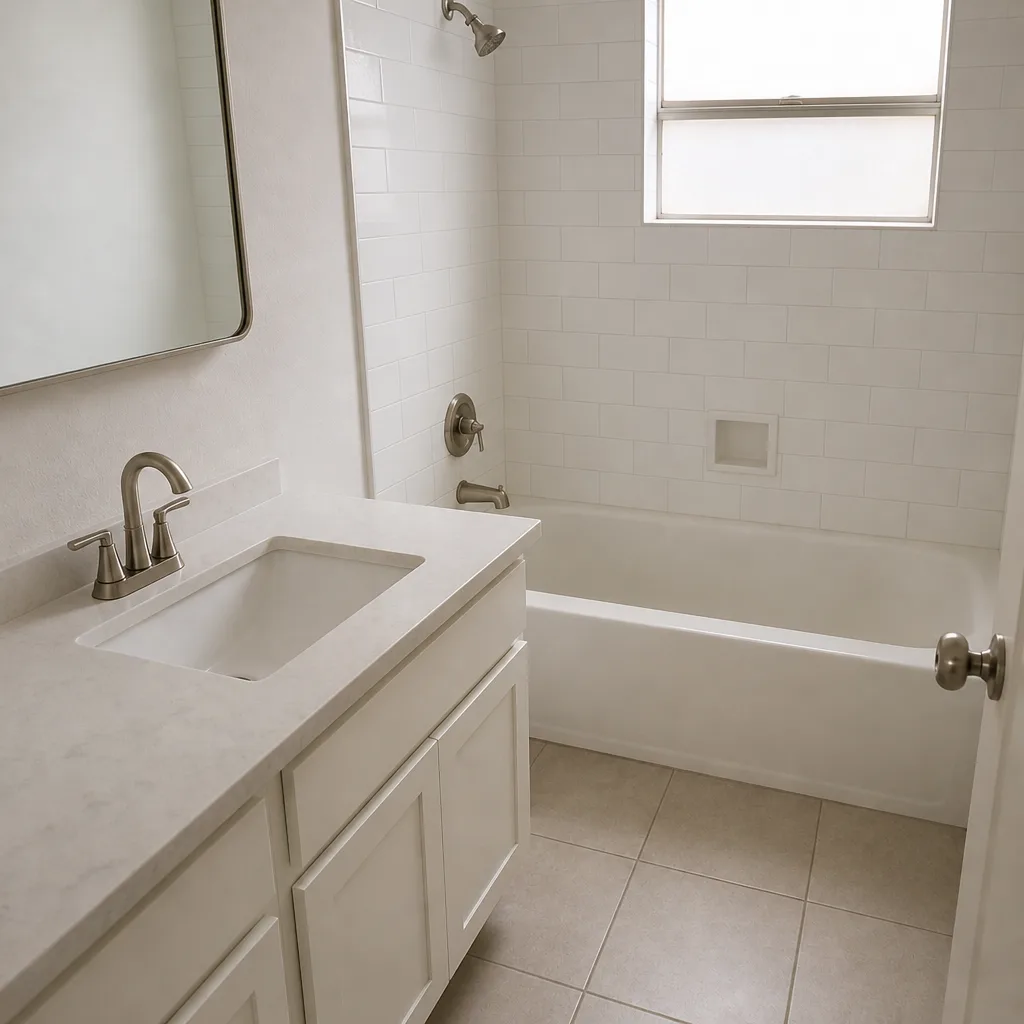
See the difference
 Before
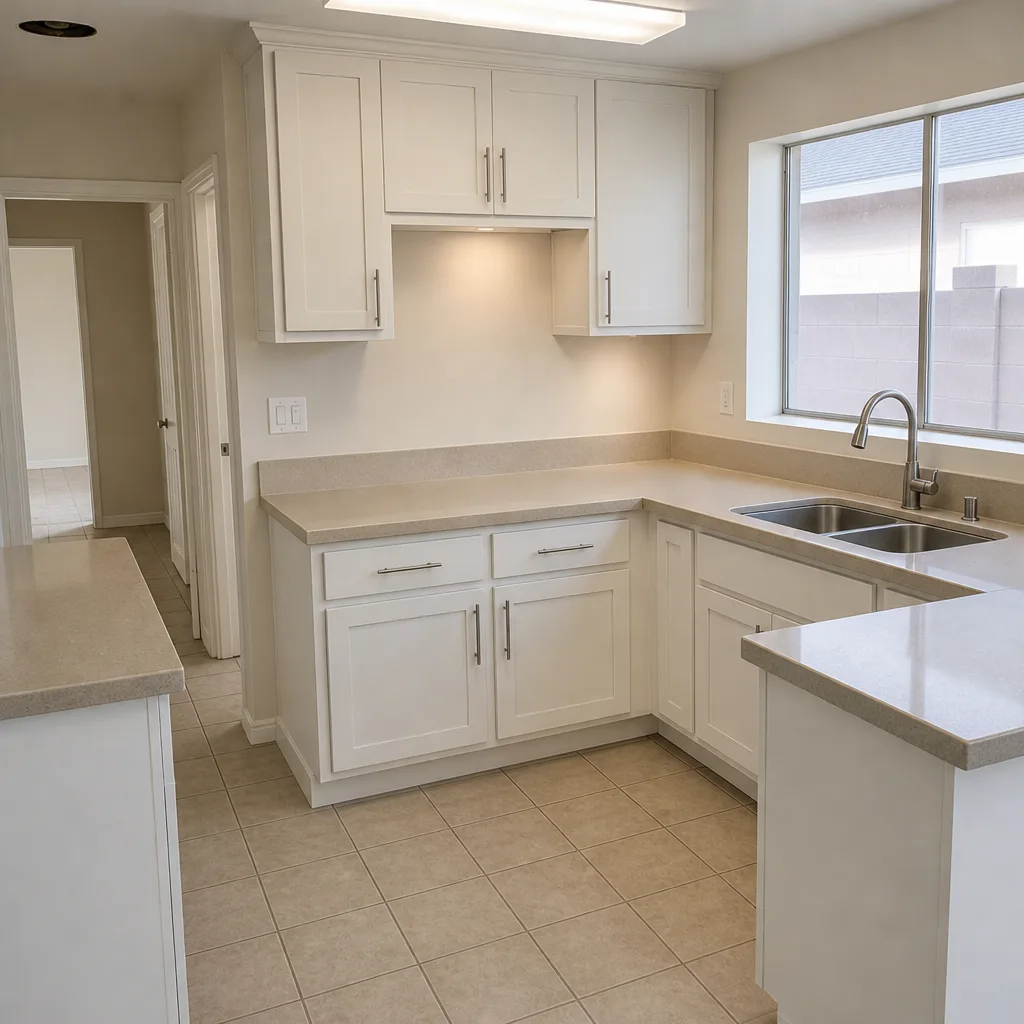 After
 Before
 After
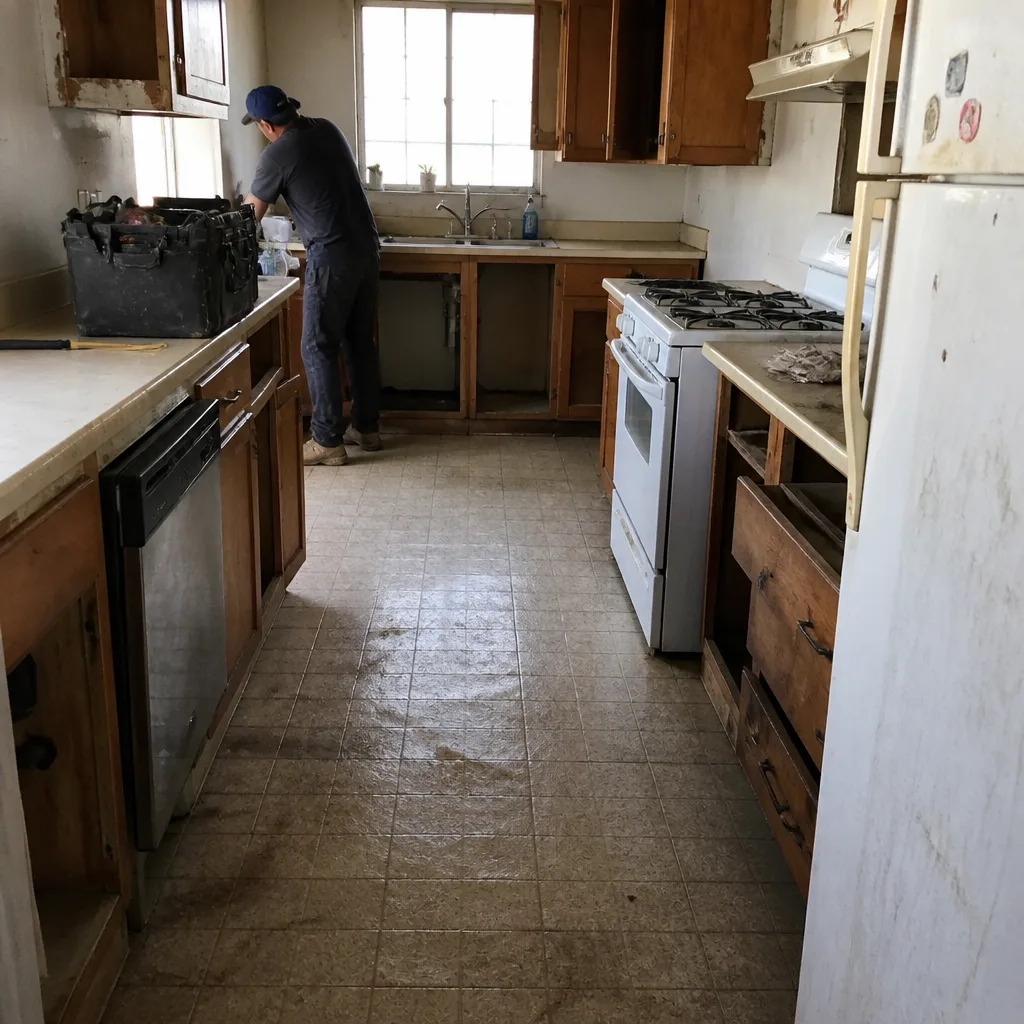 Before
 After
When to Call a Professional
Call a licensed plumber or tile contractor when you see a tile that flexes underfoot, standing water in the shower pan 30 minutes after use, a drain connection that weeps after hand-tightening, caulk failure that returns within 60 days, or soft drywall next to the shower. All five of those indicate damage that has moved past maintenance and needs a professional diagnosis before it compounds. Smaller items (a re-seal, a re-caulk, a faucet aerator) are honest homeowner tasks.
Rowan Construction Group North Las Vegas offers free estimates in North Las Vegas for any bathroom work that has moved past maintenance into repair or re-do, and our technicians have up to 19 years of experience. Call (844) 708-4417 to schedule a free estimate. Written pricing before any work starts is the standard on every job. If you’re already holding a competitor’s written estimate, we’ll review it line by line at no cost.
Frequently Asked Questions
Every 12 months for cementitious grout in a wet area, and every 6 – 12 months for natural stone. North Las Vegas water in the 180 – 300 ppm hardness range wears sealer faster than soft water, and high interior UV exposure fades grout pigment over the same interval. The 12-month pass is also the item your installer warranty typically conditions coverage on, so don’t miss it. Call (844) 708-4417 for a free estimate on re-sealing if you’d rather not do it yourself.
Run a fingernail along the joint. If the caulk peels away or feels chalky along the edge, it needs to come out. If it fails again within 60 days of new application, there’s moisture behind it and the underlying issue needs professional attention. Call (844) 708-4417 for an assessment if that’s the pattern you’re seeing.
The standard requirements are a 12-month re-seal of cementitious grout, prompt re-caulking of any wet joint showing separation, keeping the shower pan clear of standing water, and an annual shower pan inspection. Read the warranty document before assuming it covers a failure; the terms are the terms. If you don’t have your handoff packet, call (844) 708-4417 and we can walk you through what’s standard.
Chalky grout means the sealer has worn off and the grout is now absorbing water. It’s a maintenance condition, not a defect, and it’s correctable with a re-seal once the grout has dried out. If it’s accompanied by a hollow sound when tapped, the underlying condition may be more than surface wear. Call (844) 708-4417 for a free estimate on a re-seal or an assessment.
It’s degrading them, yes. At 180 – 300 ppm hardness, scale builds up in the shower valve and showerhead, which shortens cartridge life and cuts water flow. An annual descale with a citric-acid descaler, plus wiping fixtures after each shower, extends fixture life significantly. Kohler and Toto both publish maintenance schedules that hold up in hard water if the intervals are kept.
Keep a dated log with task completed, product used, and cost incurred, and keep the handoff packet that came with the remodel, including the specification sheets and the photo record. When a buyer’s inspector reviews the bathroom, that documentation supports the resale price. If you’re selling and don’t have a handoff packet, call (844) 708-4417 for a free assessment of the bathroom’s current condition before the inspection.
The Bottom Line
The bathroom you spent five figures remodeling will look the same in year eight as in year one only if the intervals get kept: the 30-day caulk check, the 6-month hardware tension check, the 12-month re-seal, and the annual shower pan inspection. Nothing on the list is expensive on its own. Skipping the 12-month re-seal is what turns a $45 maintenance item into a $400 shower pan repair, and every one of our jobs ships with a handoff packet that spells the schedule out so it isn’t left to memory. That, more than the brand on the tile, is what determines how long the bathroom lasts. If you’re not sure where your bathroom stands right now, call Rowan Construction Group North Las Vegas for a free estimate and a written scope before any work starts.
Written by the team at Rowan Construction Group North Las Vegas.
Need a written price before you commit? Call Rowan Construction Group North Las Vegas at (844) 708-4417 for a free estimate. Every job comes with the 365-Day Done Right Promise and a documented photo record on every visit. If you’re remodeling the full home, you can start with our Rowan Construction Group North Las Vegas home page, explore Home Additions & ADU in North Las Vegas, or handle the exterior at Driveway & Pavers in North Las Vegas and Fence Installation in North Las Vegas.