Last updated November 18, 2026

Free written scope consultation - allowances, timeline, and change-order rules on paper before a single trade is scheduled
DIY vs Professional Bathroom Remodeling: What’s Safe to Do Yourself
In Clark County, swapping out a toilet is a no-permit task a careful homeowner can finish in about two hours with a $12 wax ring and a shutoff wrench. Move that same toilet six inches to the left, and you’ve crossed into licensed-plumber territory: a permit, a rough-in inspection, and a paper trail the county expects to see at resale. That line trips up experienced DIYers every year in North Las Vegas, and it’s the whole reason this guide exists. We’re not going to tell you whether you’re handy enough. We’re going to map every common bathroom task to its actual risk category – permit exposure, warranty voidance, and trade licensing – so you can draw the line by scope instead of by confidence.
Quick Answer
Cosmetic work – paint, a like-for-like vanity swap, replacing a faucet, re-grouting, swapping a light fixture on an existing circuit – is generally safe to do yourself with no permit. Anything that touches the drain line, moves a supply stub-out, alters a load-bearing wall, or changes the location of a fixture requires a licensed trade and usually a Clark County permit. The dividing line is replacement in kind versus alteration, not how much you trust your own hands.
Styles & brands we work with
- Kitchen remodeling
- Bathroom remodeling
- Home additions & ADU
- Roofing
- Windows & doors
- Driveway & pavers
- Fence
Table of Contents
- The Clark County Permit Map: Replacement in Kind vs. Alteration
- Task-by-Task: What You Can Do Yourself and What Needs a License
- Which Manufacturer Warranties Get Voided by Non-Licensed Installation
- The Real Dollar Comparison: DIY vs. Licensed Contractor
- Three DIY Mistakes That Sink Water-Damage Insurance Claims
- A Decision Framework Based on Scope, Not Confidence
- How Long Each Path Actually Takes
- When to Call a Professional
The Clark County Permit Map: Replacement in Kind vs. Alteration
Nevada Revised Statute Chapter 624 governs contractor licensing in this state, and Clark County’s building department applies it with a straightforward logic: if you’re restoring something to the condition it was already in, that’s a repair. If you’re changing the location, capacity, or configuration of a plumbing, electrical, or structural system, that’s an alteration, and an alteration needs a permit pulled by a licensed contractor.
This matters more in North Las Vegas than people realize, because a huge share of the housing stock here was built between 1998 and 2008 in the master-planned corridors around Aliante and the older subdivisions off Craig Road. Those homes are now hitting the point where a 20-year-old shower pan fails or a vanity gives up. When homeowners in North Las Vegas call us after a DIY weekend has gone sideways, the issue is almost never craftsmanship. It’s that the job required a permit nobody pulled.
Here’s the distinction in plain terms:
- Replacement in kind (no permit): A new vanity in the same footprint, a new toilet in the same flange location, a faucet or shower trim swap on an existing valve, fresh tile over existing substrate if the substrate is sound, paint, caulk, a mirror, a light fixture on existing wiring.
- Alteration (permit + licensed trade): Moving a drain, relocating a supply line, adding a circuit or outlet, converting a tub to a walk-in shower, removing or modifying a wall, changing a window size, adding a vent fan on a new circuit.
The county’s inspection schedule exists because a shower that drains wrong shows up as a ceiling stain in the room below eight months later. Pulling the permit isn’t bureaucracy – it’s the record that a licensed plumber tested the rough-in before the tile went down.
Task-by-Task: What You Can Do Yourself and What Needs a License
Below is the split we walk North Las Vegas homeowners through on every free estimate. Use it as your checklist before you buy a single tool. Note that the licensed items cluster around water and structure – the two systems where a mistake compounds.
- Paint, primer, and drywall patching – DIY, no permit. Ventilation matters in North Las Vegas’s dry heat; use a bathroom-rated fan and open a window.
- Vanity replacement in the same location – DIY if you reconnect the existing supply and drain lines in place. Licensed plumber if you’re moving the drain stub or adding a second sink.
- Toilet replacement – DIY. Same flange, new wax ring, new supply line. Licensed plumber if the flange is broken or the toilet relocates.
- Faucet and shower trim swap – DIY. The valve body stays; you’re replacing the cartridge and handle. If the cartridge won’t budge and the valve body needs replacing, stop and call.
- Shower valve replacement (behind the wall) – Licensed plumber, permit required. This is the deepest water-system job in a bathroom, and it’s where the majority of insurance-relevant failures originate.
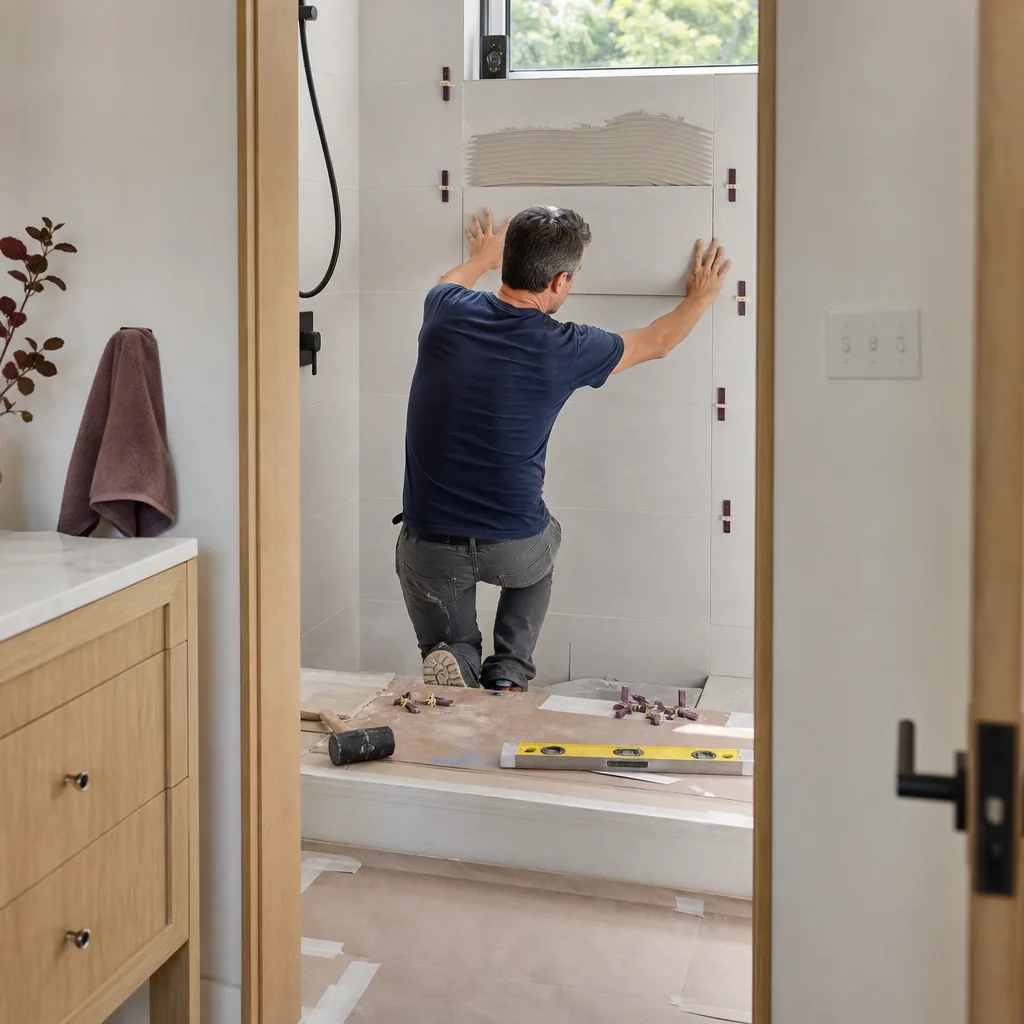
- Tile and waterproofing – DIY for cosmetic retiling over sound substrate. Licensed contractor for a full shower rebuild, because the waterproofing membrane and the slope to the drain are both code-governed.
- Electrical outlets, GFCI, and exhaust fan on a new circuit – Licensed electrician, permit required. Bathroom circuits are GFCI-protected by code, and adding a circuit means an electrical inspection.
- Removing or moving a wall – Licensed contractor plus structural review. Non-negotiable. Even a “small” wall between a bathroom and closet can carry load.
- Tub-to-shower conversion – Licensed contractor, permit required. This is an alteration by every definition; the drain, pan, and waterproofing all change.
Two to three of these are worth committing to memory. The shower valve and the tub-to-shower conversion are the jobs that separate a Sunday project from a four-figure repair, and they’re both on the licensed side.
Which Manufacturer Warranties Get Voided by Non-Licensed Installation
Here’s a fact most DIY guides skip: a manufacturer’s finish and function warranty is a contract between the manufacturer and the purchaser, and a lot of the top brands in this industry write licensed-installation language into the terms. Kohler’s and Moen’s limited warranties on fixtures and faucets increasingly require professional or licensed installation to hold for the lifetime-finish components, and Delta’s warranty terms similarly reference proper installation under applicable codes. The practical effect: if your DIY shower trim fails at year three and the finish is pitting, you may find the claim denied not on the defect but on the installation.
What this means for you in North Las Vegas is simple. On a $40 bathroom faucet, bet the purchase on yourself. On a $700 thermostatic shower valve or a $1,200 freestanding tub, read the warranty card before you open the box. If it names a licensed installer, the savings from DIY are already spent – you’re just choosing whether to discover that at failure or at purchase.
Our position at Rowan Construction Group is that fixtures are only as good as the install record behind them. That’s why every install we do ends with a documented photo record of what was found, what was installed, and how it was sealed. If a warranty claim comes up, the homeowner has evidence. This is a standard deliverable under The Haven Standard, not an add-on.
The Real Dollar Comparison: DIY vs. Licensed Contractor
This is where the emotional decision and the financial decision split. Below are realistic North Las Vegas numbers for three common bathroom jobs, comparing DIY material and tool cost against a licensed contractor flat price. We’re quoting ranges, not promises – every bathroom is different, and the only number that matters is the written one you get after an on-site walk.
- Tile a shower or floor (about 60 sq. ft.): DIY materials $400-$700 plus $150-$250 in tool rental (wet saw, mixer, knee pads, spacers). Add 15-20 hours of your time. Licensed flat price typically runs $1,800-$3,200 including membrane and setting materials.
- Vanity swap, like-for-like: DIY vanity $350-$900 plus $50-$100 in supplies. Two to four hours. Licensed flat price $600-$1,100 including haul-away and reconnection.
- Shower valve replacement (behind the wall): DIY is not a legitimate line item – the permit alone requires a licensed plumber. Licensed flat price runs $650-$1,400 depending on valve and access. The DIY “savings” here is the difference between a permitted job and an unpermitted one, which is a liability, not a discount.
Add the hidden DIY line the spreadsheets miss: a shower tile job that fails at the waterproofing layer usually costs $2,500-$4,000 to tear out and redo, plus drywall and paint below. That’s the risk-adjusted cost. On the tile and vanity jobs, a confident DIYer can genuinely come out ahead. On the wet-side work, the math rarely works in DIY’s favor once you price in the failure case – and it’s the failure case that a licensed contractor’s warranty exists to absorb.
If you’re pairing a bathroom refresh with larger exterior work, the same written-price discipline applies to our Rowan Construction Group North Las Vegas home services across all seven trades.
Three DIY Mistakes That Sink Water-Damage Insurance Claims
We’ve reviewed enough claims paperwork with homeowners in North Las Vegas to know the pattern. Insurers don’t deny on the grounds that the drywall looks amateurish. They deny on three specific failures, and all three are avoidable.
- Unpermitted plumbing alterations. If the claim adjuster finds an unpermitted drain or supply line change, the carrier can argue the work was never inspected and the failure is excluded. The permit is your proof of code compliance – it’s the first document the adjuster asks for.
- Missing or incorrectly installed waterproofing membrane. A shower pan without a proper sloped membrane lets water wick into the framing for months before it shows. By the time you see the ceiling stain, the claim is a remediation job, and the adjuster will ask who installed the pan.
- No shutoff valve on the new fixture. A toilet or vanity installed without a functioning angle stop means the next leak runs until someone finds the main. Carriers treat preventable water loss differently than sudden failures.
The fix is boring and cheap: pull the permit, photograph every stage before you close up a wall, and keep the record. Our crews photograph each visit for exactly this reason, and the file goes to the homeowner, not just our office. A Fence Installation in North Las Vegas or paver project can wait a season; interior water damage cannot, and the paper trail is what separates a paid claim from a denied one.
A Decision Framework Based on Scope, Not Confidence
Forget the question “am I handy enough?” Ask “what does this task touch?” The threshold shifts by system, and it shifts the same way for a first-time homeowner and a retired electrician.
- Cosmetic only: paint, tile, trim, mirror, vanity swap in place. DIY is fair game. Budget the time and rent the right tools.
- Touches the drain line or supply stub-outs: licensed plumber, likely a permit. No exceptions – this is the line that decides whether the job is protected.
- Touches a load-bearing wall or changes the room’s footprint: licensed contractor with structural review.
- Changes a fixture’s location: alteration, permit required, licensed trade.
- Adds electrical load or a new circuit: licensed electrician, permit required.
One task at the cosmetic level? Do it yourself and enjoy it. Two or more licensed items in the same bathroom? Bundle them into one written estimate – the flat price on three connected jobs is almost always lower than three separate visits, and the inspection schedule consolidates. That’s the kind of scoping our written price is designed to show you before anyone picks up a tool, and it’s why we call the upfront quote the whole point of the Haven Standard rather than a process step.
Homeowners planning a larger change to the room’s footprint should also look at our Home Additions & ADU in North Las Vegas services, since a bathroom expansion shares the same structural and permit review.
How Long Each Path Actually Takes
Time is a real cost, and the DIY time estimates get optimistic fast. Here’s what to expect on a mid-scope North Las Vegas bathroom refresh.
- DIY cosmetic refresh (paint, vanity, faucet, lighting): 2-3 weekends. Add a weekend if tile is involved and you’ve never set tile before.
- DIY tile shower rebuild: 4-6 weekends including cure time for the membrane and thinset. Cure time does not negotiate.
- Licensed full bathroom remodel, mid-scope: 3-5 weeks of calendar time including permit review and inspections. Most of that is waiting for the county, not hammering.
- Single licensed trade call (shower valve replacement): typically one day on site once the permit clears.
The permit timeline is the variable people underestimate. In North Las Vegas, plan review and inspection scheduling add calendar days that no amount of DIY enthusiasm removes. That’s not a reason to skip the permit – it’s a reason to start the permit clock early if you’re hiring, so the work can proceed once it clears.
Common Mistakes to Avoid
- Assuming “small” equals “no permit.” Moving a toilet six inches is small in the room and large in the code book. It’s an alteration, and it needs a licensed plumber and an inspection.
- Buying fixtures before checking the warranty language. Read the install terms on Kohler, Moen, and Delta products before you commit. If the warranty requires licensed installation, DIY voids the finish coverage.
- Skipping the waterproofing membrane to save a day. A shower with tile set directly on drywall is the most common DIY failure we see in North Las Vegas, and it fails silently for months.
- Removing a wall without verifying it’s non-load-bearing. In older North Las Vegas subdivisions, “partition” walls sometimes carry a beam. Confirm before demolition, not after.
- Not photographing the rough-in before closing the wall. The photo record is your insurance evidence. Take it at every stage, including drain slope and membrane seams.
- Adding a bathroom outlet on the existing circuit without GFCI protection. Bathroom receptacles need GFCI protection by code; an unprotected outlet is both a shock hazard and a claim denial waiting to happen.
- Reusing a 20-year-old supply line. Braided supply lines have a service life. If you’re keeping the fixture, replace the lines – they’re a few dollars and they’re a common failure point.
See the difference
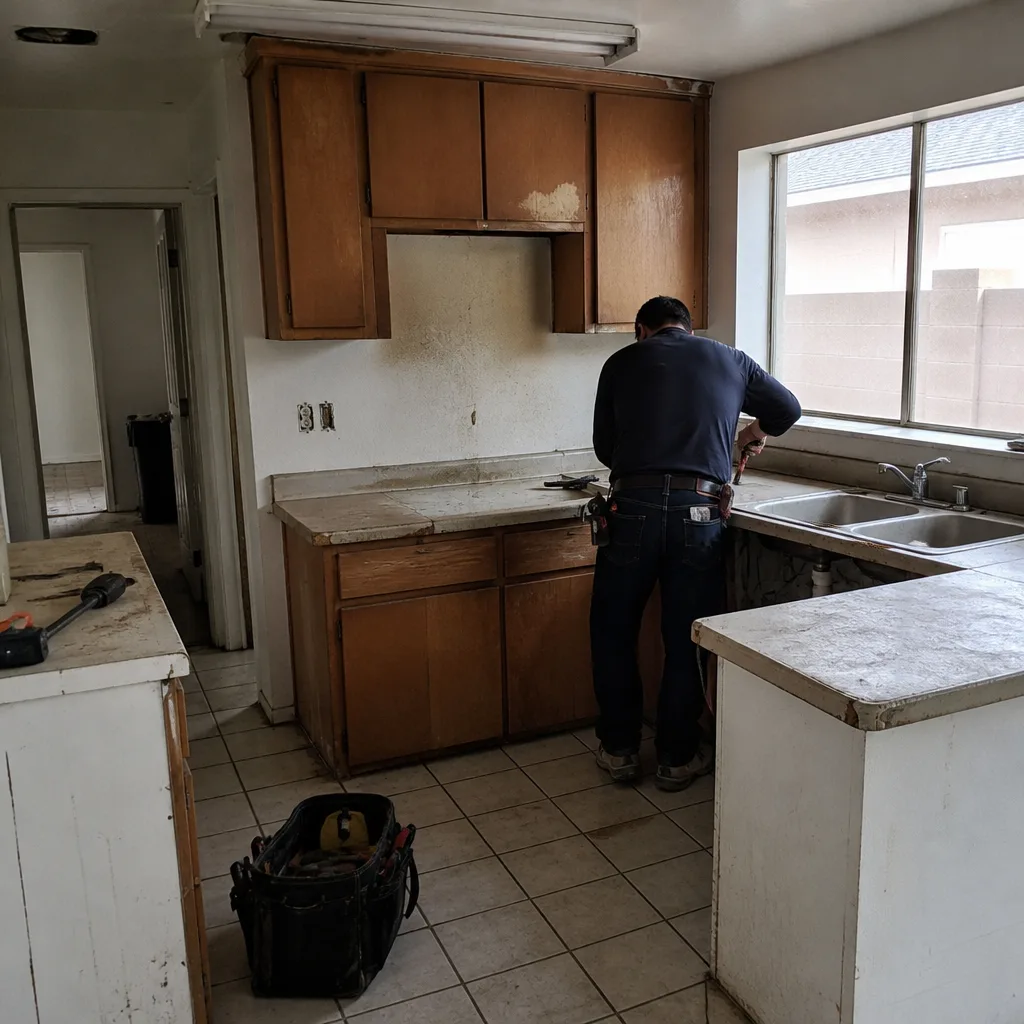 Before
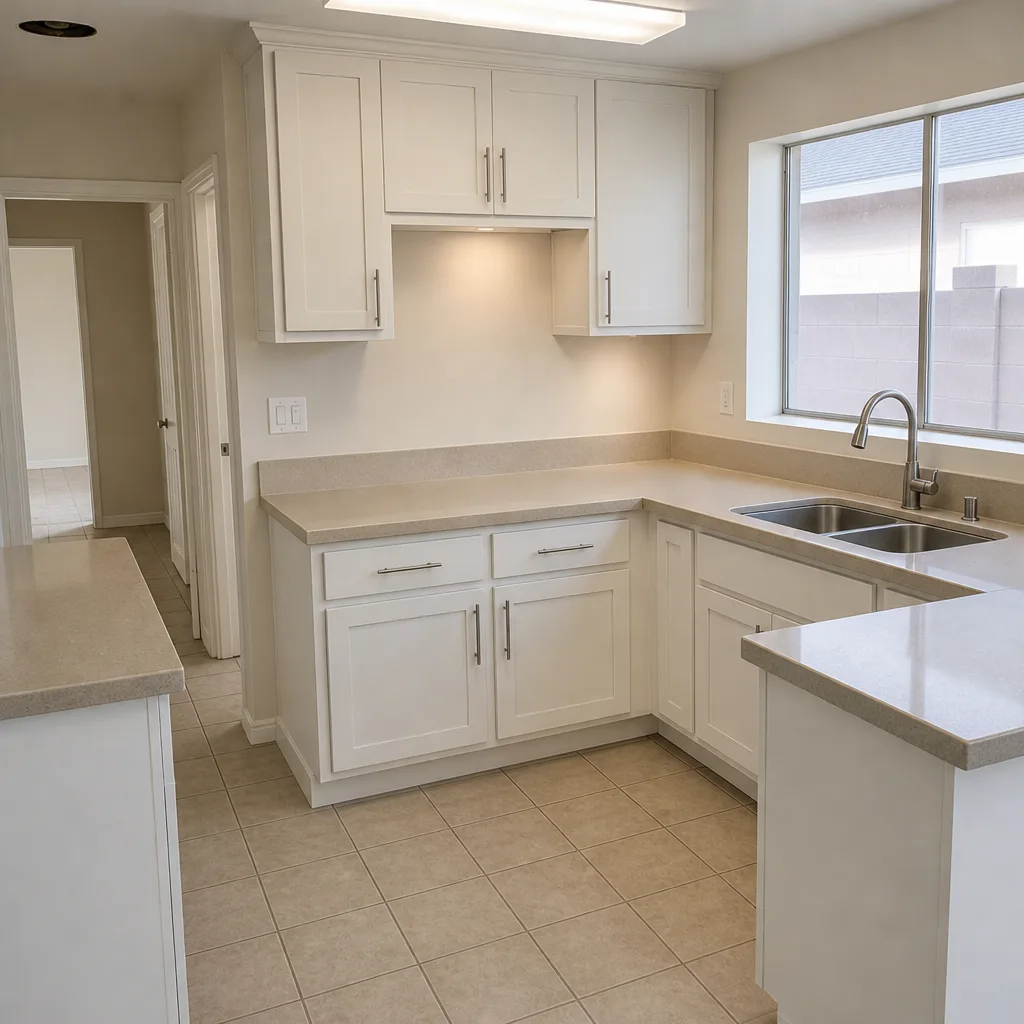 After
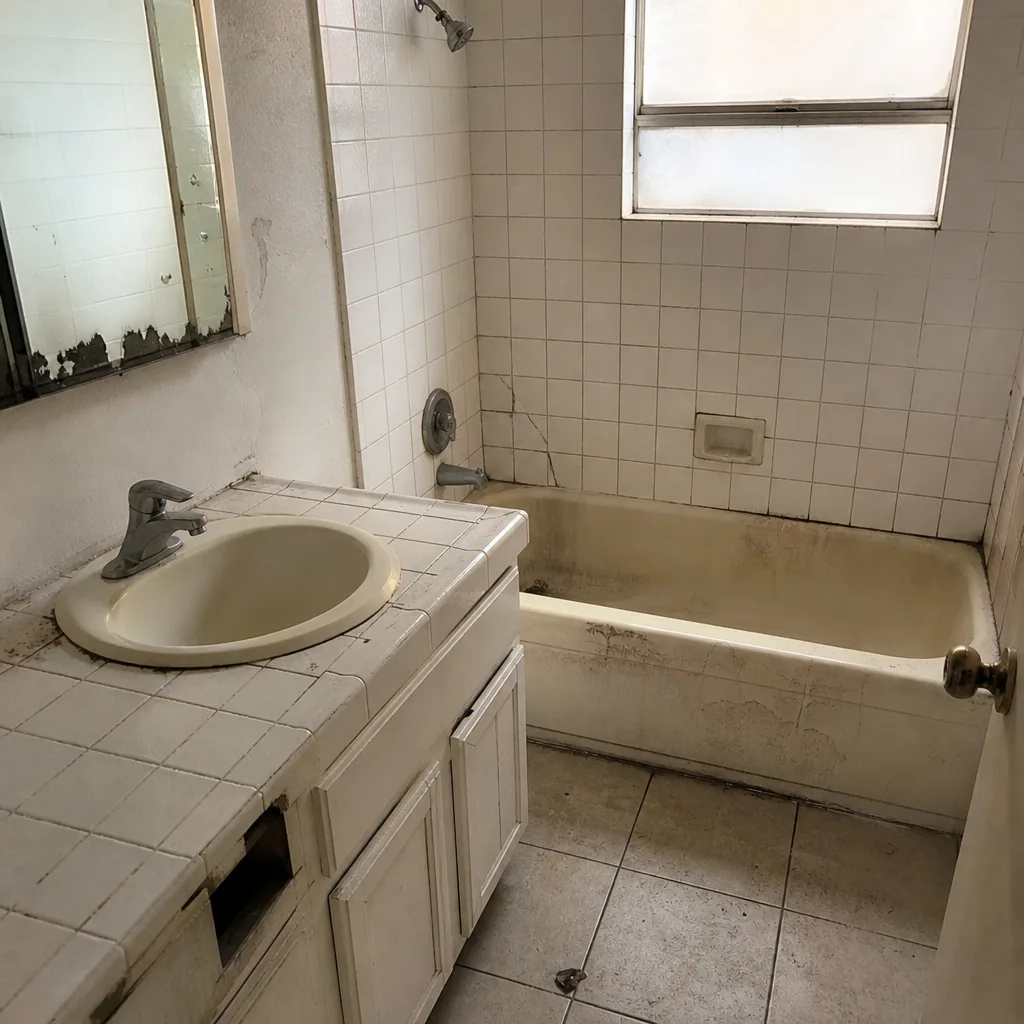 Before
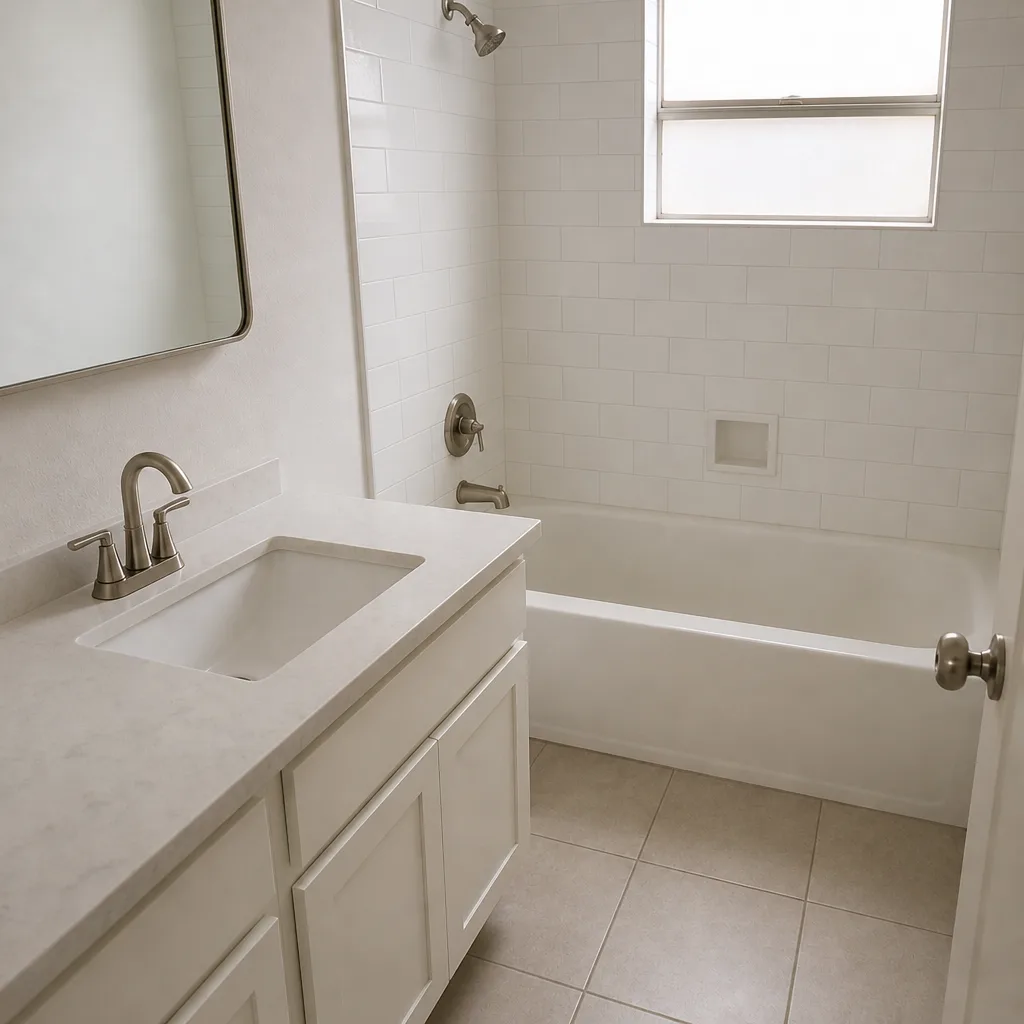 After
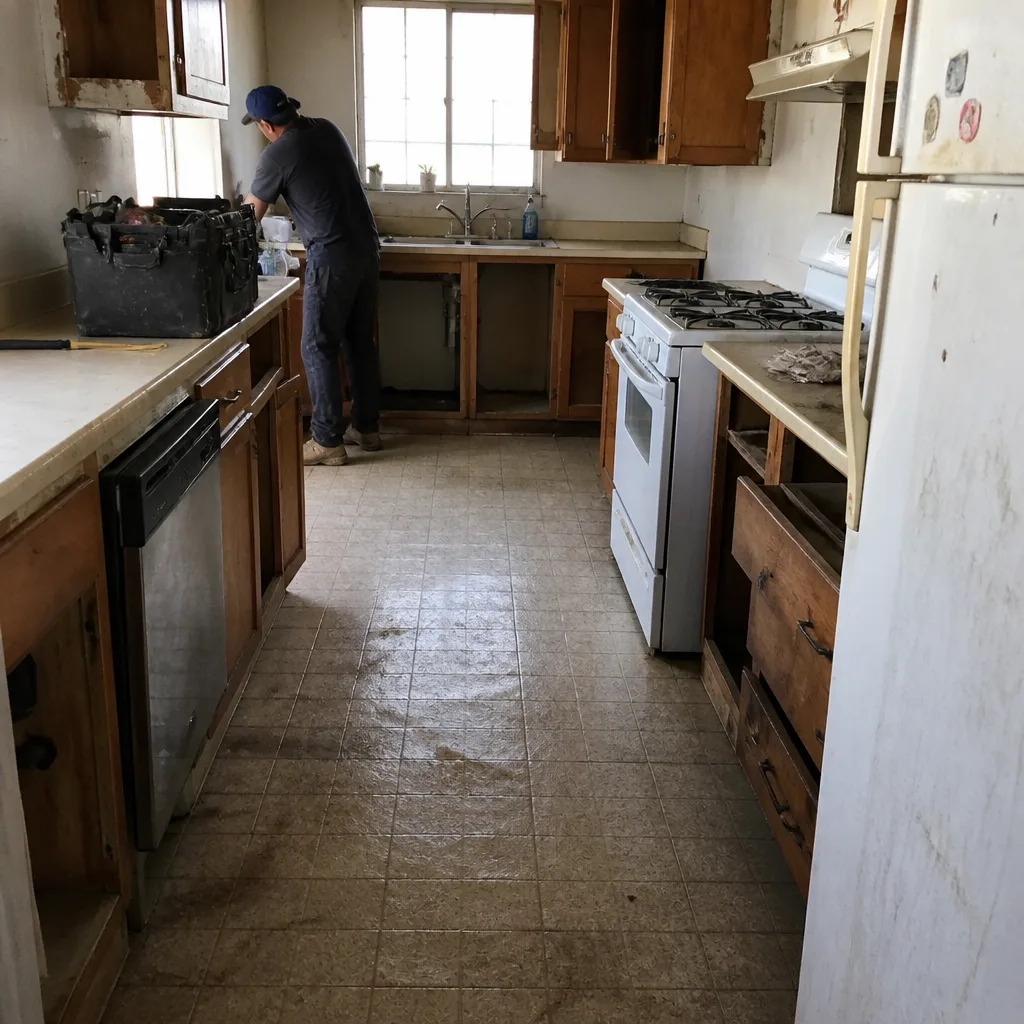 Before
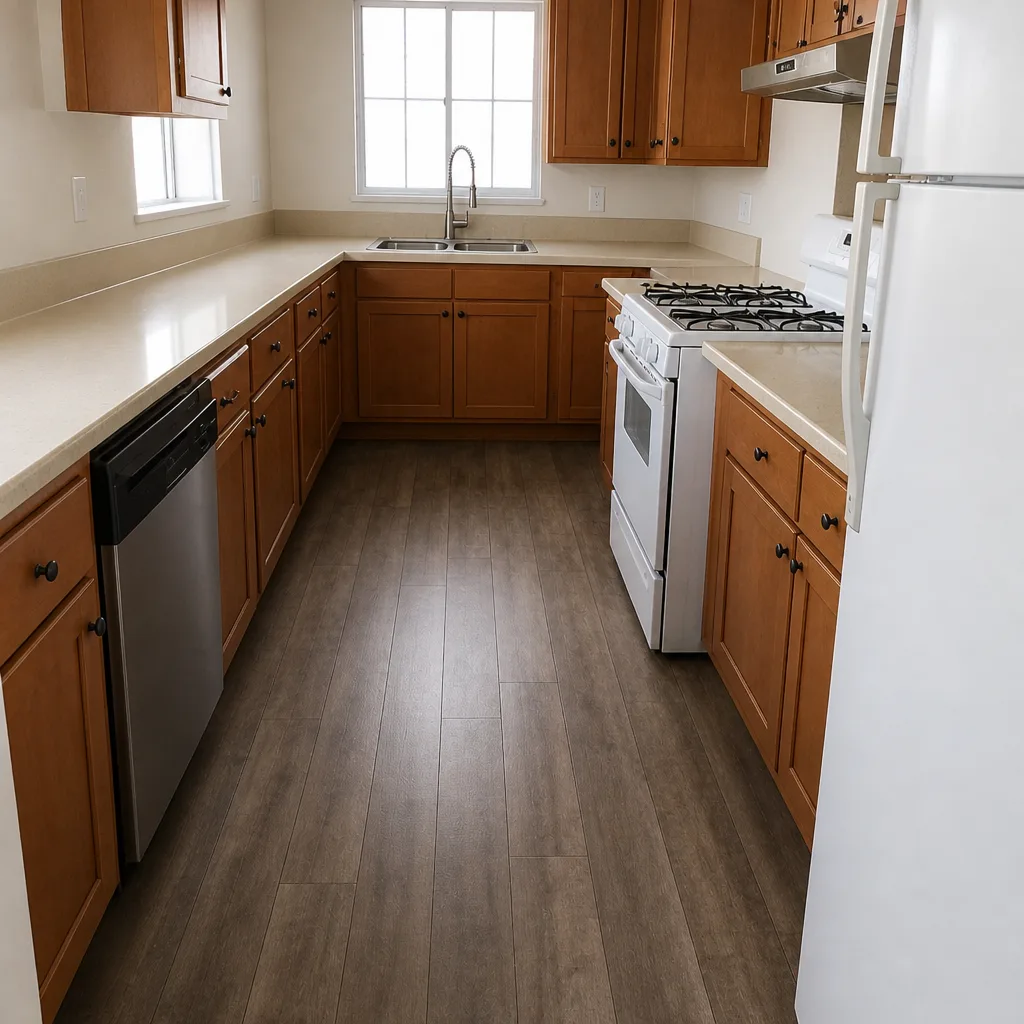 After
When to Call a Professional
Call a licensed professional the moment a task crosses into the drain line, the supply stub-outs, the electrical circuit, or a load-bearing wall. That covers shower valve replacement, tub-to-shower conversion, moving a fixture, adding a circuit, and any wall removal. It also covers any job where a manufacturer’s warranty requires licensed installation – the warranty is part of the value, and DIY erases it on the products that matter most. If you’re uncertain which side of the line a task sits on, that uncertainty is itself the answer: get the estimate, get the written price, and decide with a number in hand rather than a guess. Rowan Construction Group North Las Vegas offers free estimates in North Las Vegas – call (844) 708-4417, and bring a competitor’s quote if you have one; we’ll review it line by line at no charge as part of our Free Second Opinion offer.
Frequently Asked Questions
Yes. Replacing a toilet in the same flange location is a no-permit task under Clark County rules because it’s a replacement in kind, not an alteration. If the flange is broken, the toilet moves, or you need to change the drain line, that becomes a permitted plumbing job.
Yes. Relocating or replacing a shower valve body behind the wall is an alteration under NRS Chapter 624 and requires a permit pulled by a licensed plumber plus a rough-in inspection. Replacing only the trim and cartridge on the existing valve does not.
It can. Kohler, Moen, and Delta all write proper-installation language into their warranty terms, and several limits require licensed installation. Read the warranty card on the specific model before you decide – on a high-end valve or fixture, the license language is often what protects the finish coverage.
A licensed mid-scope bathroom remodel in North Las Vegas typically runs $12,000-$28,000 depending on scope. A DIY cosmetic refresh – paint, vanity, faucet, lighting – runs $800-$2,000 in materials. The gap closes on wet-side work, where a shower failure costs $2,500-$4,000 to redo. Call (844) 708-4417 for a written range specific to your bathroom.
It depends on the cause. Sudden failures are typically covered; preventable failures – unpermitted plumbing, missing waterproofing membrane, no shutoff valve – are the ones most often denied. Pull the permit and keep photos; the documentation is what the adjuster asks for first.
Yes. A tub-to-shower conversion changes the drain, the pan, and the waterproofing, which makes it an alteration. It requires a permit and a licensed contractor, and the inspection process is what verifies the pan slope and membrane were installed to code before the tile goes down.
The Bottom Line
The DIY-versus-professional decision is a scope question, not a skill question. Paint, tile over sound substrate, in-place vanity swaps, and faucet trim changes are genuinely yours to do. Anything that moves a drain, relocates a supply line, touches a load-bearing wall, or alters the electrical circuit needs a licensed trade and a Clark County permit – and on the wet-side jobs, the DIY savings rarely beat the failure cost once you price in insurance exposure and voided warranties. If you’re planning a bathroom project in North Las Vegas and want the price in writing before anyone picks up a tool, we’ll give you a flat number with a written scope and a written warranty. Honest numbers, no change orders without a signature, and a photo record you keep. Call (844) 708-4417 for a free estimate, and for exterior work around the same time, our Driveway & Pavers in North Las Vegas team can quote that in the same visit using brands like Techo-Bloc or Tremron so the materials match across the property.
Written by the team at Rowan Construction Group North Las Vegas.