Last updated November 18, 2026


Free written scope consultation - allowances, timeline, and change-order rules on paper before a single trade is scheduled
Driveway & Pavers Troubleshooting: Common Problems and How to Fix Them
Replacing a sunken paver without fixing the base under it turns a $400 repair into a $4,000 problem. The new paver feels solid for a few months, then the first heavy rain of the monsoon season drops it right back where the old one sat. In our experience across North Las Vegas, the visible failure is almost never the real failure. A low spot blamed on “cheap pavers” is usually a collapsed base layer. A white crust read as a stain is usually water moving through from below. This guide works backward from symptom to cause, and tells you which fixes you can do in a weekend and which need a plate compactor and a laser level.
Quick Answer
Most driveway paver problems trace to the layer under the pavers, not the pavers themselves. A sunken or rocking section almost always means base failure (poor compaction, a washed-out subgrade, or tree roots lifting the subbase), not defective stone. Efflorescence is a cosmetic salt bloom that rinses away; chalky white lines that keep returning are a drainage signal that needs excavation, not a stain remover. Fix the cause and the surface stays put for years. Patch the surface and you’ll be back in the same spot within one wet season.
Styles & brands we work with
- Kitchen remodeling
- Bathroom remodeling
- Home additions & ADU
- Roofing
- Windows & doors
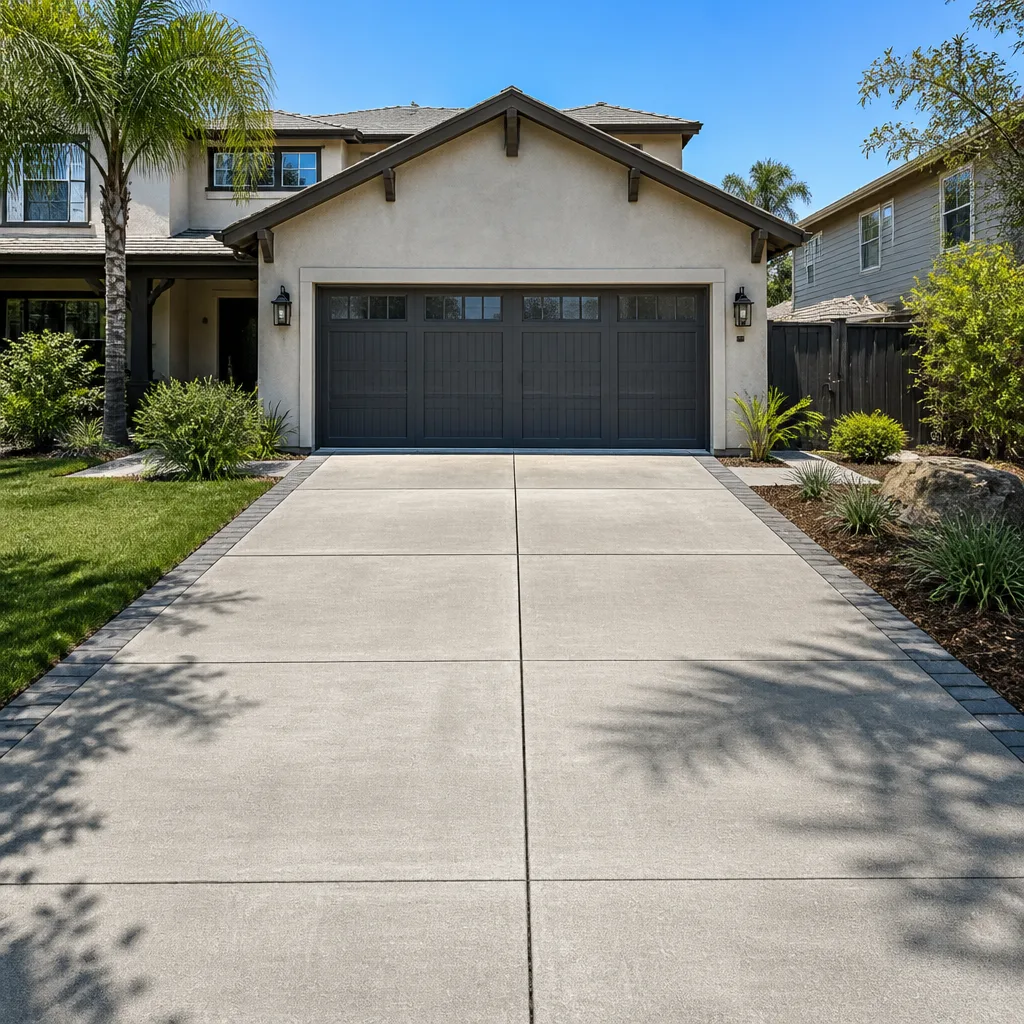
- Driveway & pavers
- Fence
Table of Contents
- The Symptom-to-Cause Diagnostic Tree
- Sunken and Uneven Pavers: What the Pattern Tells You
- Efflorescence vs. Subsurface Moisture: Telling Them Apart
- Edge Restraint Failure and Why Your Pavers Are Spreading
- What a Cracked Paver Actually Means
- Weekend Repairs vs. Pro-Only Repairs
- North Las Vegas Soil, Heat, and Monsoon Conditions
- Preventing the Problem From Coming Back
The Symptom-to-Cause Diagnostic Tree
Before you call anyone or buy a bag of sand, read the driveway like a map. Each pattern points to a different cause, and each cause has its own repair scope and price. This is the same sequence we work through on an initial walk of any property in North Las Vegas.
- Single low spot, edges still tight. Points to localized base settlement under that section. Small area, moderate repair.
- Dish-shaped depression across the middle of the driveway. Compaction failure over a broad area or a soft subgrade. The whole affected field comes up.
- Pavers spreading outward at the edges, joints widening. Edge restraint has let go. Often fixable without lifting the field.
- Rocking pavers that “pump” water when you step on them. Sand migration plus trapped water. Needs the joint sand recharged and drainage checked.
- Lifted or heaved pavers in a line. Tree roots lifting the subbase, or freeze/thaw and clay heave. Roots need cutting and a root barrier.
- White powdery bloom, fades after rain. Efflorescence. Cosmetic, cheap to treat.
- Persistent white lines along the base course or joints. Water wicking from underneath. Drainage problem, not a cosmetic one.
Write down which pattern matches your driveway before you spend a dollar. Most homeowner mistakes happen when a symptom gets treated as a stain or a loose stone when it’s actually a base or drainage story. The same logic applies whether you’re diagnosing pavers or inspecting a fence installation in North Las Vegas after a wind season: the visible cosmetic issue is a symptom, and the cause sits one layer down.
Sunken and Uneven Pavers: What the Pattern Tells You
Settlement is the number one call we get about pavers in North Las Vegas, and it splits into three distinct causes. Getting the cause right determines whether the repair is a few hundred dollars or a few thousand.
- Base failure. The compacted aggregate base under the pavers wasn’t compacted in proper lifts (typically 2 to 4 inches at a time), or the subgrade was soft when it was laid. Result: broad, dish-shaped settlement, often with rocking pavers. Fix: remove the pavers, remove and replace the failed base, recompact in lifts with a plate compactor, re-bed in sand, re-set the pavers. This is the $400-to-$4,000 repair the opening of this guide warns about.
- Sand migration. Joint sand washes out, pavers lose interlock, and they rattle and settle slightly. Result: uneven joints, minor rocking, but the overall field stays level. Fix: refill the joints with polymeric joint sand, recompact, and check that water is actually draining off the surface.
- Tree root intrusion. Roots from a nearby ficus, palm, or mesquite lift the subbase and push pavers up in a line. Result: a ridge, not a dip. Fix: cut the roots, install a root barrier under the edge, rebuild the base in that section. Removing the lifted pavers without a barrier just delays the return.
The rule to carry away: a dip means base, a ridge means roots, and rattly joints mean sand. If a contractor quotes you a “sand top-up” for a dish-shaped depression, that’s not a repair, that’s a delay. A written scope should name the depth of excavation, the base material, and the compaction method, not just “re-level pavers.”
Efflorescence vs. Subsurface Moisture: Telling Them Apart
Efflorescence is a white, powdery salt bloom that appears on the surface of concrete pavers when soluble salts migrate to the surface and crystallize as the moisture evaporates. It’s cosmetic. It does not damage the paver. A diluted muriatic acid wash (commonly sold around $12 a gallon at hardware stores) mixed to the label ratio, scrubbed on and rinsed off, will lift most surface efflorescence. Follow the label; it’s an acid and it will etch concrete if left too long.
Subsurface wicking looks similar but behaves differently, and this is the distinction that gets missed. Watch for these signs:
- The white reappears in the same lines within weeks of treatment, usually along joint lines or the base course.
- Dark damp patches a day or two after rain that don’t match the weather.
- Loose joint sand that refills and then washes out again.
- Efflorescence that’s heaviest at the low edge of the driveway, the side where runoff collects.
When you see that combination, the problem is water moving up through the base from a saturated subgrade, not salt sitting on the surface. The fix is drainage and slope correction, not another acid wash: re-grade the subbase away from the house, clear the base of fines, and in some North Las Vegas yards, add a perforated drain at the low edge. Treating wicking efflorescence as a stain is one of the most common money-wasters we see on paver driveways here.
Edge Restraint Failure and Why Your Pavers Are Spreading
Pavers interlock, and interlock only works if the field is held under compression at its edges. When the edge restraint fails, the pavers creep outward, joints widen, and the field slowly opens up. This is the single most common cause of paver spreading, and it’s often misdiagnosed as bad pavers.
Two kinds of restraint cause trouble in North Las Vegas soil. Plastic spike-down edging, the cheap kind sold at most home centers, relies on spikes driven into the ground. In caliche, that calcium-carbonate hardpan common in Las Vegas Valley yards, the spikes can’t be driven deep enough to hold, or they crack the hardpan and lose grip. Under a hot car tire in July, the plastic gets brittle and the spikes work loose. Concrete soldier-course edging, a course of pavers set in a concrete curb along the perimeter, doesn’t rely on spikes at all, which is why it works where plastic doesn’t.
Signs your edge restraint has failed:
- Gaps between pavers opening up at the outer edge.
- The outer row sitting higher or proud of the field.
- Visible gap between the paver edge and the curb or wall.
- Soil washing out from under the edge after rain.
A repair here is often less expensive than it looks. The edge can be reset or replaced with a concrete soldier course without lifting the whole field, and re-sanding the joints afterward restores the interlock. Ask for the fix in writing, including the restraint type and the spec, before anyone starts.
What a Cracked Paver Actually Means
Not every crack is a problem. Thermal cycling, the daily expansion and contraction of pavers in desert heat, produces hairline surface cracks that are cosmetic and normal. A hairline crack on a paver in a North Las Vegas driveway after a decade is not a sign of failure.
A full-face fracture, a crack running through the paver’s thickness, is different. It means one of two things:
- A point-load problem. A jack, a heavy vehicle, or a point-loaded downspout landed on that paver. The paver cracked because a load concentrated, not because the paver was weak. Fix: replace the cracked paver, then check that the base under it is sound.
- Undersized paver thickness for vehicular traffic. Driveway pavers carrying cars and trucks should be at least 2.375 inches thick (60mm). Patio pavers (around 2 inches / 50mm) are sometimes installed on driveways because the homeowner picked them from a patio sample board. Under a car, they crack. That is not a defect; it’s the wrong product for the load. Fix: replace the cracked section with 60mm pavers, or accept ongoing spot repairs.
If you’re replacing a run of cracked pavers, name the spec in the written quote. Materials like Belgard and Techo-Bloc pavers come in both patio and driveway thicknesses, and the two look similar from a photograph. The quote should say 60mm, vehicular-rated. For a broader look at getting the material right the first time, our page on Driveway & Pavers in North Las Vegas covers material selection, drainage, and the specs we ask for in every written scope.
Weekend Repairs vs. Pro-Only Repairs
Some paver repairs are genuinely homeowner-friendly. Others need equipment and a working knowledge of base construction. Here’s the honest split.
Repairs a homeowner can do with rented tools
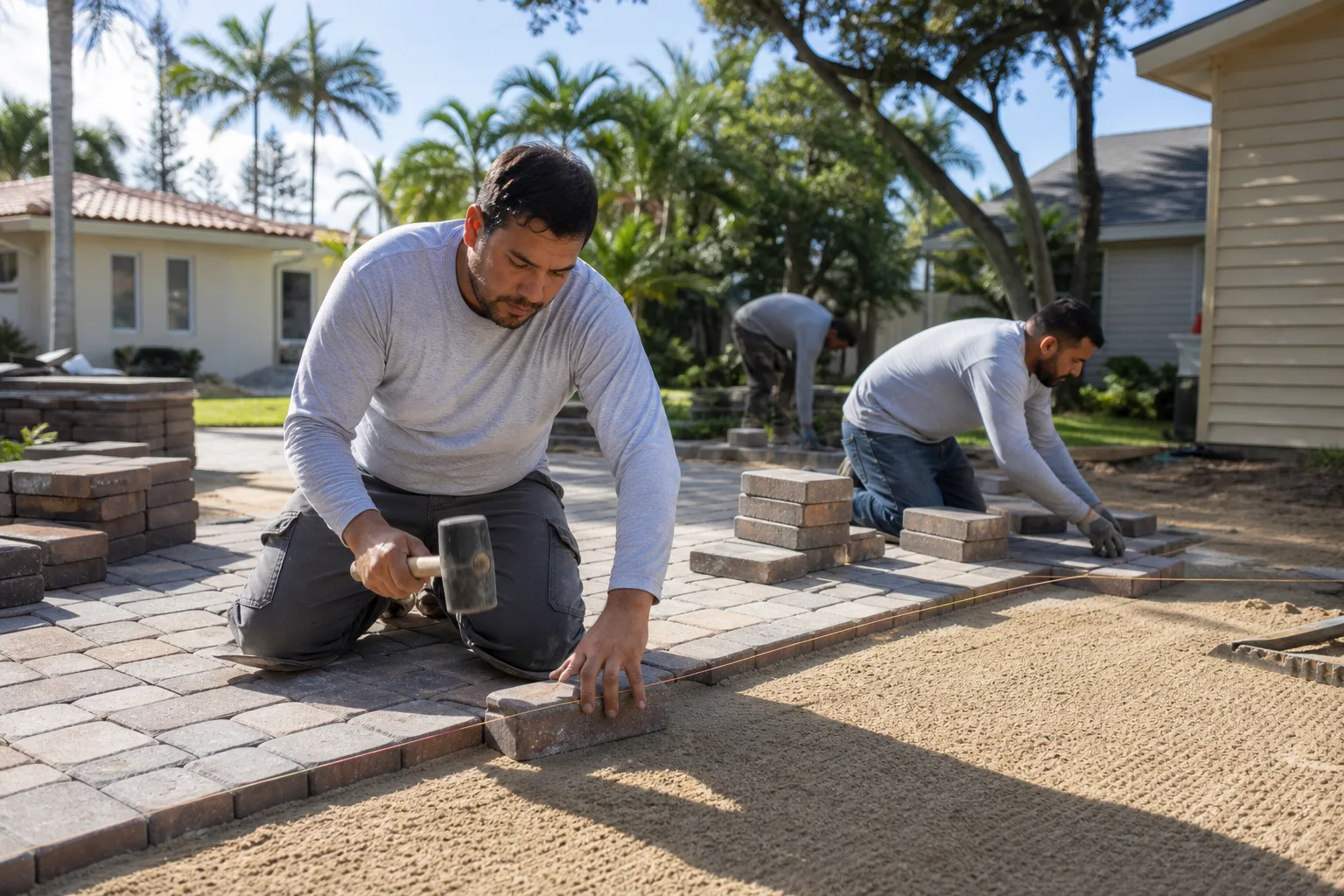
- Replacing a single cracked paver. Pry it up with two flat bars, tap in a replacement, re-sand the joints. A half-hour job.
- Refilling joints with polymeric sand. Sweep in, mist to activate, let cure. Follow the humid weather instructions on the bag, especially in summer.
- Rinsing and light acid treatment of surface efflorescence. Diluted muriatic acid, gloves, eye protection, hose.
- Resealing a small area. Apply per the label, work in the cool part of the day.
Repairs that need a plate compactor, laser level, and new base material
- Lifting and rebuilding a settled field. Remove pavers, excavate the failed base, add new aggregate, compact in 2-4 inch lifts with a plate compactor, set the laser level for slope (typically 1-2% away from the house), re-bed, and re-set.
- Replacing plastic edge restraint with concrete soldier-course edging. Requires forming, pouring concrete, and setting pavers into it.
- Cutting tree roots and installing a root barrier. The right cut depends on the tree species and root position; a bad cut kills the tree and a shallow barrier just delays the return.
- Correcting drainage slope at the subbase. This is where the homeowner budget usually meets its limit. Get a written scope that names the slope and the base spec.
The distinction is not about skill; it’s about equipment and ground truth. A homeowner can replace a paver. Rebuilding the base under a settled field requires compacting in lifts with a plate compactor and setting the slope with a laser level, and a write-up that says exactly that. Under Clause 1 of the Haven Standard, the price is written before anyone starts, so the written scope is where the split should already be clear.
North Las Vegas Soil, Heat, and Monsoon Conditions
Driveways here fail in specific ways because of the conditions, and a repair that works in a milder climate may not hold in North Las Vegas. The three factors worth naming:
- Caliche. The calcium-carbonate hardpan common in valley yards is unforgiving. Water doesn’t drain through it, so it pools above the hardpan until the base saturates. That’s exactly the wicking mechanism behind persistent efflorescence. Repairs that re-grade the subbase to drain over the hardpan hold; repairs that simply re-bed pavers in sand don’t.
- Summer heat. Surface temps on unshaded pavers climb high enough to make pavers expand, and the cycle back down overnight stresses edges, joints, and plastic restraint. Concrete soldier-course edging and proper joint sand hold up; spike-down plastic often doesn’t.
- Monsoon season. When rain does come, it comes hard. Compaction matters more here than in a mild climate because a poorly compacted base washes out in a single storm. When we walk a North Las Vegas driveway after a monsoon season, we’re looking at the low edge first; that’s where the water tells you what the base is doing.
The same soil-and-water logic shows up across the trades. Foundation and hardscape work in North Las Vegas both depend on knowing what the ground does when it saturates. If you’re planning changes that affect drainage or grading near the house, it’s worth reading our overview of Home Additions & ADU in North Las Vegas, which covers how site drainage gets handled before excavation.
Preventing the Problem From Coming Back
A correctly built paver driveway doesn’t need heroics. It needs a few simple habits, and the habit that matters most is checking the joints and edges before water does the checking for you.
- Top up joint sand once a year, more often after monsoons. Polymeric sand is the better choice here; it resists washout.
- Walk the edges each spring. Look for gaps between pavers and the edge restraint. Catch a failing edge early and the repair stays small.
- Keep water moving off the surface. Roof downspouts should discharge onto the landscape or a splash block, not onto the driveway’s low edge.
- Avoid resealing too often. Over-sealing traps moisture and makes efflorescence worse. Two to three years between sealers is plenty.
- Reconsider the vehicle load. A heavy truck parked on the same spot of a 50mm patio paver field will crack it. If you drive over the driveway every day, name 60mm pavers in the spec.
And when a repair is beyond a weekend, get a written scope that names the base depth, the compaction method, and the restraint type. That’s not a formality; it’s the difference between fixing the cause and the symptom.
Common Mistakes to Avoid
- Re-bedding settled pavers without fixing the base. It looks right for one monsoon season, then settles in exactly the same spot. Lift, excavate, and recompact, or the repair is a delay, not a fix.
- Treating wicking efflorescence as a stain. Another acid wash on persistent white lines wastes money and leaves the water source unchecked. Look at the low edge and the joints, not the surface.
- Using plastic spike-down edging in caliche. It doesn’t hold in North Las Vegas hardpan. Concrete soldier-course edging is the fix that lasts.
- Installing patio pavers (around 50mm) on a driveway. Cars crack them. Driveway spec is 60mm (2.375 inches) minimum.
- Sealing a driveway that hasn’t fully dried. Sealing traps moisture and brings the white bloom back faster than no sealer at all. Follow the label’s dry-time.
- Ignoring a sunken section because “it’s just a little dip.” Water collects, base erodes, and a $400 repair becomes a $4,000 field rebuild.
- Cutting tree roots without a root barrier. The roots return, and the same pavers heave in the same line next year.
See the difference
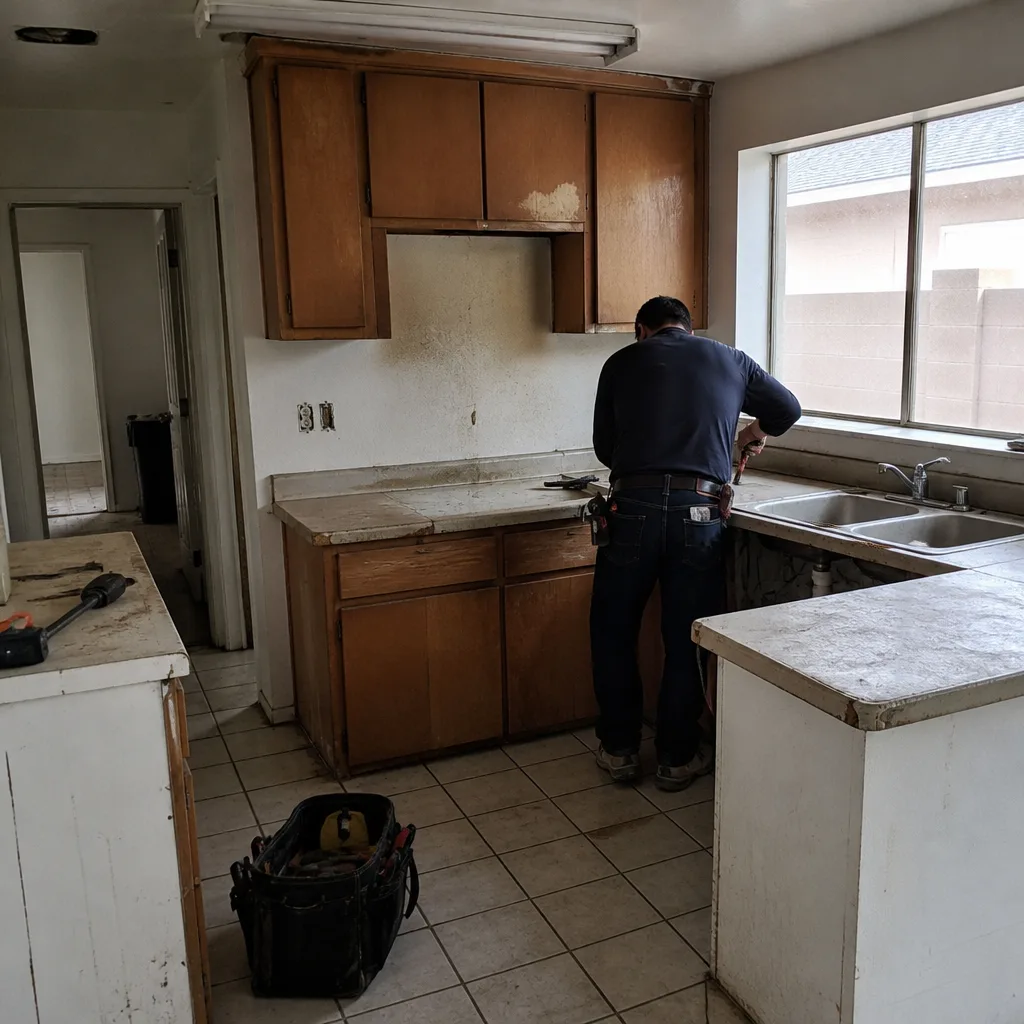 Before
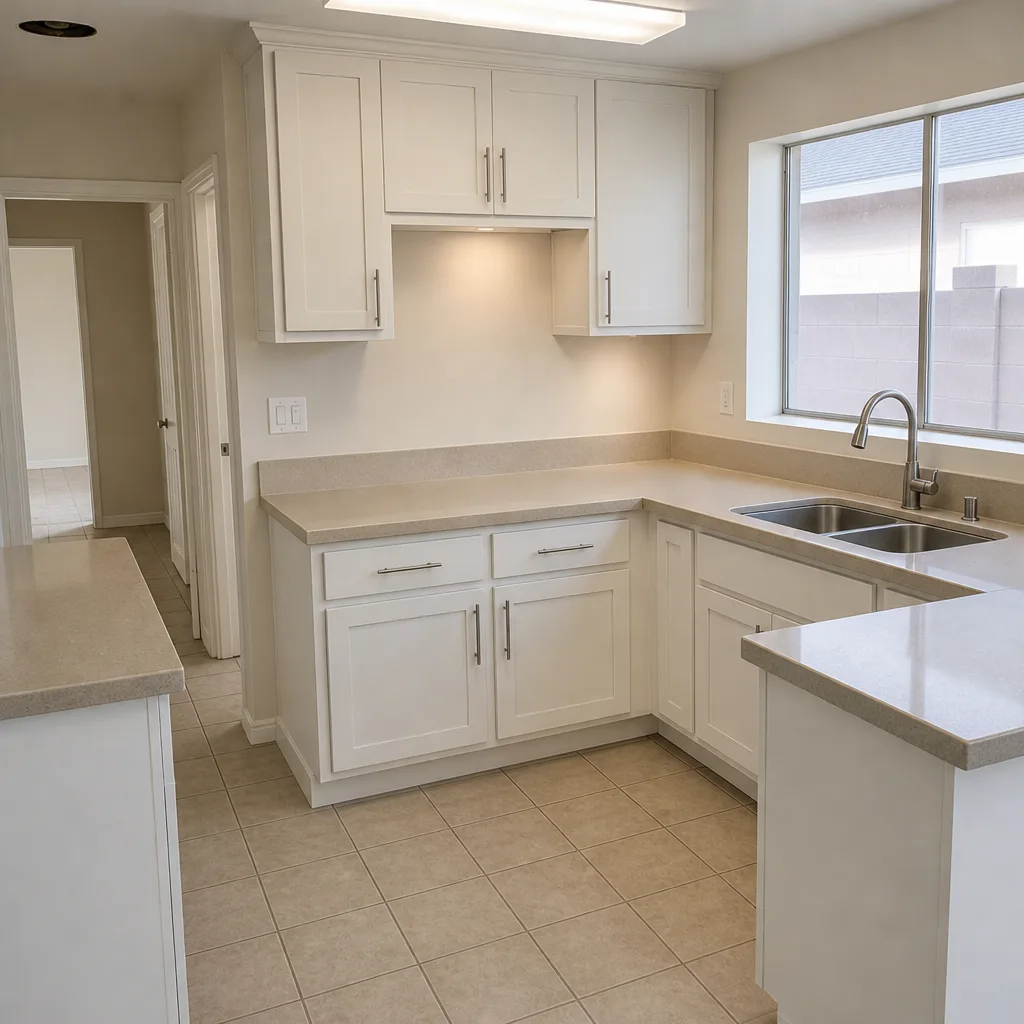 After
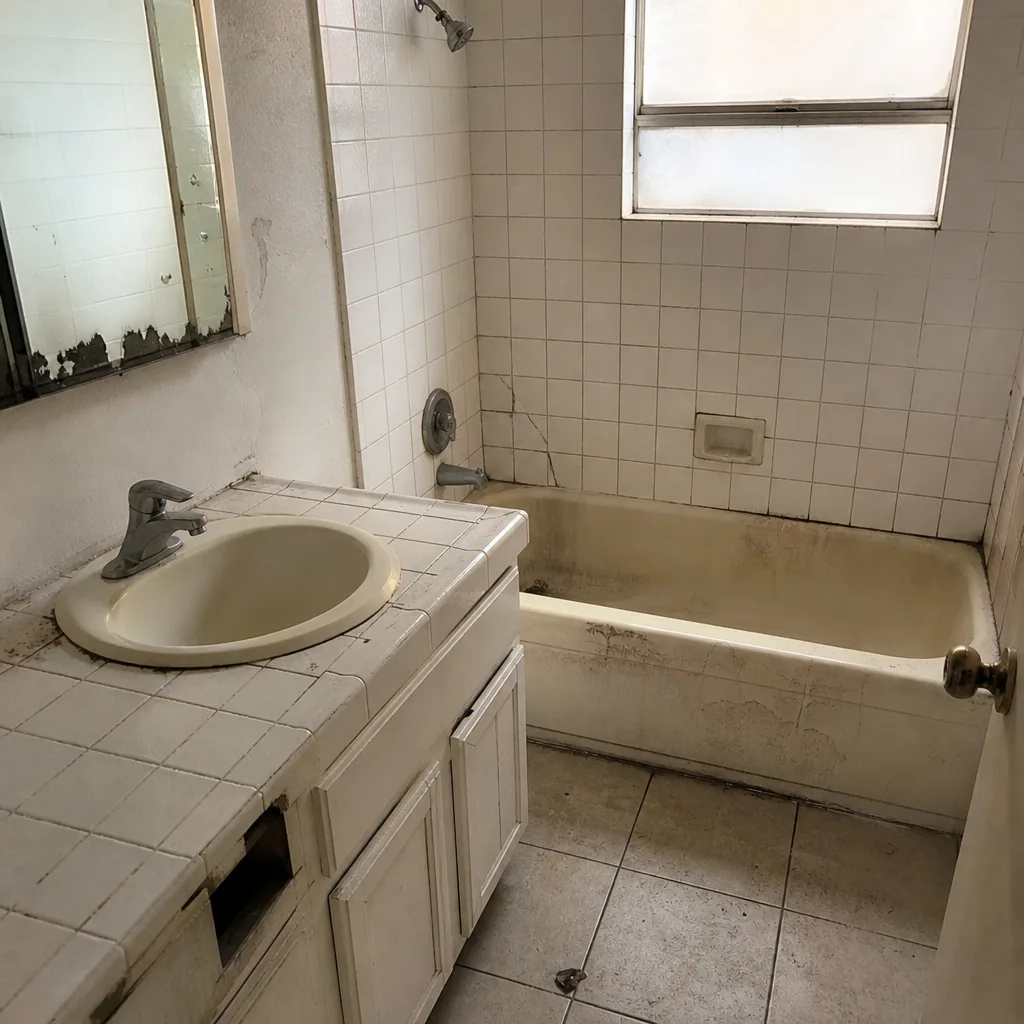 Before
 After
 Before
 After
When to Call a Professional
Call a professional when the problem is under the surface. If pavers are rocking in a broad depression, if the white lines keep coming back after treatment, if the field is spreading at the edges, or if a full-face crack pattern suggests undersized pavers, the fix is a rebuild of the base or a drainage correction, and those need a plate compactor, laser level, and a written scope. In our experience, most pavers in North Las Vegas that look “ruined” are actually a fixable base or drainage problem; it’s the diagnosis that gets skipped. Rowan Construction Group North Las Vegas offers free estimates in North Las Vegas. We’ll walk the driveway, name what we found in plain terms, and hand you a written price before any work starts: call (844) 708-4417. If you already have a quote from someone else, we’ll review it line by line at no charge as a second opinion.
Frequently Asked Questions
In almost every case, the base under the pavers has failed, not the pavers themselves. That means the aggregate wasn’t compacted in proper lifts, the subgrade was soft, or water has washed out the base over time. A quick fix re-beds the pavers in sand and looks fine until the next rain, when the section settles again. The lasting repair removes the pavers, rebuilds the base, and recompacts in lifts. Call (844) 708-4417 for a free estimate if you want the cause confirmed before you spend on materials.
A single cracked-paver replacement or a joint-sand top-up is often a few hundred dollars or less, while a rebuilt section of failed base runs a few hundred to a few thousand depending on square footage. A broad field rebuild or a drainage correction can go higher. Get it in writing before anyone starts; the scope should name the excavation depth, the base material, and the compaction method. Call (844) 708-4417 for a free written estimate on your particular driveway.
It’s efflorescence, a salt bloom that migrates to the surface as moisture evaporates. Surface efflorescence is cosmetic and rinses away with a diluted muriatic acid wash (commonly around $12 a gallon) mixed to the label ratio. If it keeps coming back along the same joint lines or the low edge, that’s a subsurface moisture signal, a drainage problem rather than a stain, and the fix is re-grading and drainage work, not acid. If the bloom keeps returning, call (844) 708-4417 to have the source checked.
No. Pavers on a driveway sit on a compacted aggregate base, typically 4 to 8 inches of crushed stone compacted in 2 to 4 inch lifts, with a thin sand bedding layer on top. The restraint at the edge is what can be concrete: a concrete soldier-course edging holds the field in compression. What pavers don’t need is a re-bed on sand over a failed base, which is the repair that doesn’t last.
Edge restraint failure is the usual cause. When the edging lets go, the outer pavers creep outward and the joints widen. In North Las Vegas soil, plastic spike-down edging often fails because the spikes can’t hold in caliche hardpan; concrete soldier-course edging doesn’t rely on spikes and holds up under the heat. Ask for the restraint type in the written scope, and call (844) 708-4417 for a free estimate if the field has already opened up.
Replacing a single cracked paver, refilling joints with polymeric sand, or rinsing efflorescence is doable with rented tools and a bit of patience. Rebuilding a settled base, resetting edge restraint in concrete, correcting drainage slope, or cutting tree roots and adding a barrier needs a plate compactor, laser level, and a written scope, and that’s the work we’d recommend hiring out. If you’re unsure which side of that line your repair falls on, call (844) 708-4417 for a free estimate. We’ll tell you what we found.
The Bottom Line
Most paver problems on North Las Vegas driveways start one layer down. A dip means base failure. A ridge means tree roots. Rattly joints mean sand migration. Edges spreading apart mean restraint failure. Persistent white lines mean water wicking from below, not a stain. Read the pattern first, and you’ll spend money once instead of three times. Surface repairs on base problems are the expensive mistake. When the cause is under the surface, get a written scope, a compacted base in named lifts, and 60mm pavers for vehicular traffic. That’s how a paver driveway stays put through a Las Vegas summer and a monsoon season.
We’ve spent our working life watching pavers in North Las Vegas fail for the same handful of reasons, and diagnose straight from the symptom to the fix. Our crews are background-checked and uniformed, calls are answered by a live person 24/7, and every visit includes a documented photo record as a standard deliverable. The 365-Day Done Right Promise backs the work: if it isn’t done right, we make it right. No work proceeds on a change until the change order is signed, and the written price arrives before anyone picks up a tool.
If your driveway is telling you one of these stories, call (844) 708-4417 to schedule your free estimate. Bring a competitor’s quote if you have one; we’ll review it line by line at no charge. You can also start with our Rowan Construction Group North Las Vegas home page to see the seven trades and how a written price works here.
Written by the team at Rowan Construction Group North Las Vegas.