Last updated November 18, 2026
Free written scope consultation - allowances, timeline, and change-order rules on paper before a single trade is scheduled
Home Additions & ADU Troubleshooting: Common Problems and How to Fix Them
The most expensive surprise in a home addition isn’t the thing you budgeted for. It’s the unpermitted work from a previous owner that a crew uncovers the day they open a wall. That discovery can trigger a mandatory bring-to-code requirement that adds $8,000 to $22,000 to a project already underway, and it happens in North Las Vegas more often than most homeowners expect, because this valley grew fast through the 1990s and 2000s and a lot of it was built fast too. This guide walks through the problems we see most often on additions and ADUs, how to tell a cosmetic flaw from a structural one, and the documented fix path for each.
Quick Answer
Most home addition and ADU problems trace back to four root causes: inadequate or undersized footings on expansive valley soils, an electrical service that fails load calculation once the new space is added, unpermitted prior work exposed when walls are opened, and flashing failures at the tie-in between new and existing structure. Each has a known remediation path with a written scope, a permit, and a documented inspection – which is why the fix is usually more predictable than the panic suggests.
Styles & brands we work with
- Kitchen remodeling
- Bathroom remodeling
- Home additions & ADU
- Roofing
- Windows & doors
- Driveway & pavers
- Fence
Table of Contents
- Unpermitted Work Discovered Mid-Project
- Foundation and Footing Failures in Las Vegas Valley Soil
- Undersized Electrical Service and the Load Calculation
- Moisture Intrusion at the Tie-In Point
- Neighbor Survey Disputes and Setback Encroachment
- Crack Patterns: What’s Cosmetic and What Isn’t
- What Documentation You Should Receive
Unpermitted Work Discovered Mid-Project
When a contractor opens a wall and finds a previous owner’s unpermitted remodel – a moved wall, a relocated drain, a subpanel tapped off a dryer circuit – the trigger is the “repair to current code” requirement. In practical terms, this means that any portion of the existing structure that a new permitted addition touches must be brought up to current code as a condition of the permit. You cannot simply close it back up. The building department has to be told.
What a contractor must document and report to the building department, versus what can be enclosed, depends on scope. As a general rule:
- Must be reported: structural alterations, any electrical or plumbing changes that affect load or drainage, removal of load-bearing walls, and any work that changes the building’s footprint or egress.
- Must be brought to code: smoke and CO alarm placement in the affected area, window egress in sleeping rooms, and any structural element the new addition bears on.
- Can typically be enclosed without a separate permit: cosmetic finishes, non-structural interior partitions that don’t affect egress or load, and surface-level electrical repairs made by a licensed electrician on the permitted scope.
We’ve seen a North Las Vegas project where a wall opened for an ADU tie-in revealed a relocated laundry drain and an unbonded gas line. The remediation ran $14,000 and added five weeks. That’s the realistic range when undiscovered work surfaces. A contractor who won’t put the “discovery remediation” allowance in writing before the wall opens is a contractor who will surprise you later. Under our process, no work proceeds on a discovered condition until a change order is signed, so the price stays a number you agreed to.
Foundation and Footing Failures in Las Vegas Valley Soil
Las Vegas Valley soil is a specific problem. The upper layers often contain caliche – a cemented calcium carbonate layer that’s hard as low-grade concrete and can force footing excavation to go deeper than plan. Below that, expansive clay pockets swell when they get wet and shrink as they dry. Add a summer monsoon and a foundation that wasn’t designed for differential movement, and you get cracks that are structural, not cosmetic.
Watch for these patterns specifically:
- Diagonal cracks running from the corners of windows or doors: these follow the stress line at the weakest point in the wall and often indicate differential settlement.
- Stair-step cracks in CMU block walls: the crack follows the mortar joints in a staircase pattern, which is the classic signature of one side of the footing settling faster than the other.
- Horizontal cracks in a foundation stem wall: treat these as structural until a licensed engineer says otherwise.
- Map cracking or hairline cracks: these are usually shrinkage from concrete curing and are cosmetic.
The fix depends on the diagnosis. For differential settlement, the documented remediation path is:
- Geotechnical report or engineer’s foundation evaluation to determine cause.
- Underpinning (helical piers or push piers) to stabilize the settled portion.
- Footing redesign for the new addition – often deeper than the existing footing, with a specified bearing depth below the caliche layer.
- Permitted repair and inspection sign-off before the addition framing goes up.
Costs for underpinning a typical residential footing run $12,000 to $30,000 depending on pier count and depth. An engineer’s evaluation runs $800 to $2,500. Skipping the evaluation to save the fee is the most expensive mistake we see in North Las Vegas additions.
Undersized Electrical Service and the Load Calculation
An existing 100-amp panel feeding a house plus a new addition plus a detached or attached ADU will almost always fail load calculation once the ADU’s range, water heater, dryer, and HVAC are added. The National Electrical Code load calculation worksheet is not optional – the building department will require it as part of the electrical permit. Too many homeowners discover this after demolition.
The documented upgrade path looks like this:
- Licensed electrician runs the load calculation using the NEC Article 220 method: general lighting load, small appliance circuits, laundry, the largest motor, and demand factors for ranges and dryers.
- Panel upgrade permit is pulled with the City of North Las Vegas for the new service size – typically 200-amp, occasionally 320-amp for a larger ADU with heat pump and EV charger.
- NV Energy coordination for the service disconnect and reconnect, scheduled around the utility’s timeline (often two to four weeks out).
- Meter main and grounding electrode system installed to current code, inspected by the city, and the utility re-energizes.
Current cost range in the North Las Vegas market: $3,200 to $6,500 for a 200-amp panel upgrade including permit and utility coordination; $6,000 to $11,000 for a 320-amp service. ADU subpanel work adds $1,400 to $3,200. If the existing service is 100-amp and a new ADU is in the plan, budget the panel upgrade into the initial written price. Discovering it after framing is a change order, and change orders cost more than planned scope, always.
Moisture Intrusion at the Tie-In Point
Where new construction meets old, water finds the gap. The tie-in point – the roofline, wall junction, or slab interface between the addition and the existing structure – is the single most failure-prone detail in an addition. It’s also the detail most frequently done wrong because it’s where the new roof meets the old roof, and the two roof systems have to be integrated with flashing that drains correctly.
The products that prevent tie-in failure:
- Peel-and-stick membrane: self-adhering waterproofing membrane applied over the roof deck at the junction of new and existing, lapped a minimum of 6 inches on the existing side. Brands like Owens Corning and CertainTeed both manufacture these under their own product names.
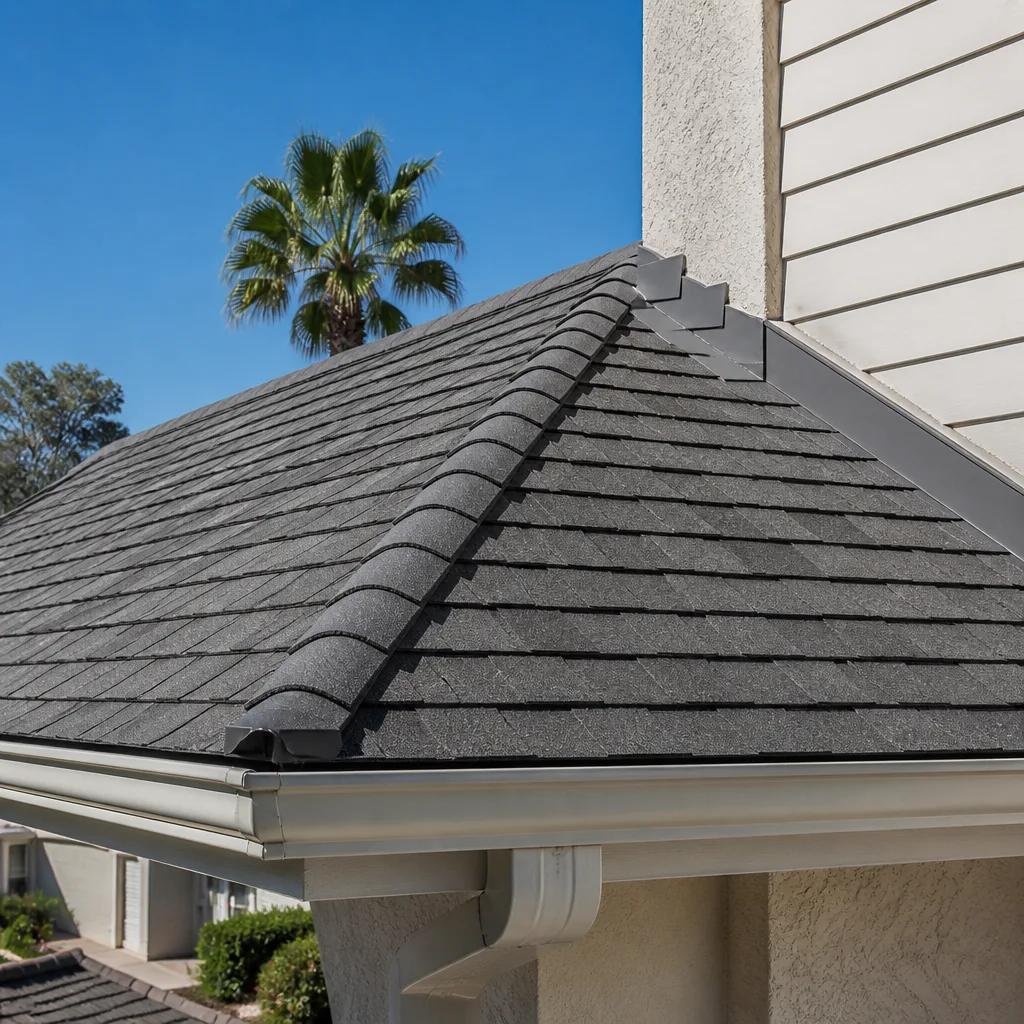
- Through-wall flashing: metal flashing that penetrates the exterior wall at the roofline and weeps water out below the cladding. This is the detail that prevents water from tracking down the inside of the wall cavity.
- Kick-out flashing: a small diverter at the bottom of the roof-to-wall junction that pushes water away from the corner. Missing kick-out flashing is a top cause of stucco and drywall rot at tie-ins in the valley.
- Counter-flashing at the roof-wall intersection: the metal cap that covers the top edge of the sidewall flashing, sealed into the wall sheathing.
To inspect an existing tie-in for signs of compromise, look for stucco separation at the wall-roof junction, paint bubbling on the interior near the ceiling line, and dark staining on the fascia board. If you see any of those, an inspection is warranted before the new addition worsens it. A roofing contractor using an Owens Corning or CertainTeed system can flash the junction to manufacturer spec, and the manufacturer’s warranty will actually apply because the spec was followed.
Neighbor Survey Disputes and Setback Encroachment
Here’s a scenario that plays out more than you’d think: an addition gets built, the city inspection passes, and three months later a neighbor’s survey shows the new structure encroaches on the required setback. Maybe the original property survey was inaccurate, or an old fence line was never the property line. Whatever the cause, the fix runs through the City of North Las Vegas Board of Zoning Adjustment, which hears variance requests.
The process, in order:
- Get a current licensed land survey. This is not a mortgage survey; it’s a boundary survey with the new structure located on it. Cost: $800 to $2,200.
- Determine which setback the structure is in. Front, side, and rear setbacks each have their own code requirements in the North Las Vegas municipal code, and a variance is requested for a specific encroachment.
- File a variance application with the city including the survey, a site plan showing the encroachment, and a letter explaining the hardship. Filing fees run $400 to $1,200.
- Attend the Board of Zoning Adjustment hearing. Neighbors within the noticing radius are notified and can speak. A good submittal with an accurate survey and a documented reason for the encroachment (topography, existing structures, California-style lot geometry) has a better chance of approval than a bare minimum application.
Approval isn’t guaranteed. If the variance is denied, the remedies are demolition, relocation, or a negotiated easement with the neighbor. The best fix is prevention: always have a boundary survey done before design, not after construction. That $800 to $2,200 spent up front is the cheapest insurance an addition has.
Crack Patterns: What’s Cosmetic and What Isn’t
Homeowners ask us about cracks more than any other single question. Not all cracks are structural, and the pattern tells you which you’re looking at.
- Hairline cracks in drywall at corners: drywall shrinkage from curing or seasonal movement. Cosmetic.
- Map cracking in concrete slabs: curing shrinkage. Cosmetic unless the slab is heaving.
- Diagonal cracks more than 1/8 inch wide running from window or door corners: differential settlement. Structural until proven otherwise.
- Stair-step cracks in CMU or brick: differential footing movement. Structural.
- Vertical cracks in a poured concrete foundation: sometimes cosmetic shrinkage, sometimes indicative of settlement. Width matters – under 1/16 inch is often cosmetic, wider needs evaluation.
- Horizontal cracks in a foundation wall: usually indicates lateral soil pressure. Structural.
If a crack pattern could go either way, an engineer’s letter costs a few hundred dollars and settles it. In our experience, homeowners who call for an inspection at the first diagonal crack spend less than those who wait a year.
What Documentation You Should Receive
The difference between a manageable addition and a chaotic one is the paperwork. From the day work starts, you should be receiving and reviewing these documents – not just signing them and filing them.
- A written scope and a flat written price before any work begins. Not a range, not an estimate “subject to change” – a number with a scope behind it.
- Signed change orders before any change in price or scope. Every additional dollar has a signature and a reason.
- The permit and the inspection card. Tracked at every stage, from footing to final.
- The load calculation worksheet for the electrical permit, and the engineer’s letter for any structural modification. Keep copies.
- A photo record of every visit showing the conditions found, the work done, and any condition flagged for review.
- The written warranty covering workmanship, plus manufacturer warranties on tile, roofing, and mechanical equipment.
For homeowners beginning an addition in North Las Vegas, this is where Home Additions & ADU in North Las Vegas is the parent service page. And because additions often come with a new driveway approach or additional parking slab, our Driveway & Pavers in North Las Vegas scope is a common companion. When a new property line gets established after a survey, Fence Installation in North Las Vegas is the next conversation. For the bigger picture on our approach, start with Rowan Construction Group North Las Vegas home.
Common Mistakes to Avoid
- Building before the survey. The most expensive setback error in North Las Vegas is a designer or contractor who trusts a plot plan rather than a licensed boundary survey. Spend $800 to $2,200 on the survey before design, not $20,000 on a variance or demolition.
- Skipping the geotech report to save $1,500. Valley soil varies lot to lot. An addition footed on shallow assumptions meets caliche at depth and either cracks in a year or gets rebuilt.
- Not running the electrical load calculation until after demolition. Do it at design. The panel upgrade cost is the same either way; the change order premium isn’t.
- Accepting a verbal “we’ll take care of it” on discovered unpermitted work. Every change needs a signature. A verbal workaround is a future inspection failure.
- Letting the contractor self-inspect the tie-in flashing. Call the roofer out to inspect before the wall is closed. Once stucco goes up, the fix triples.
- Assuming an ADU is just a guest house. North Las Vegas has specific ADU code, setback, and owner-occupancy requirements that affect design and permitting timeline. Know them before you buy materials.
- Taking a quote without a written scope. The price is only meaningful against a specific written scope. Two $90,000 quotes for the “same” addition can be $30,000 apart in what they include.
See the difference
 Before
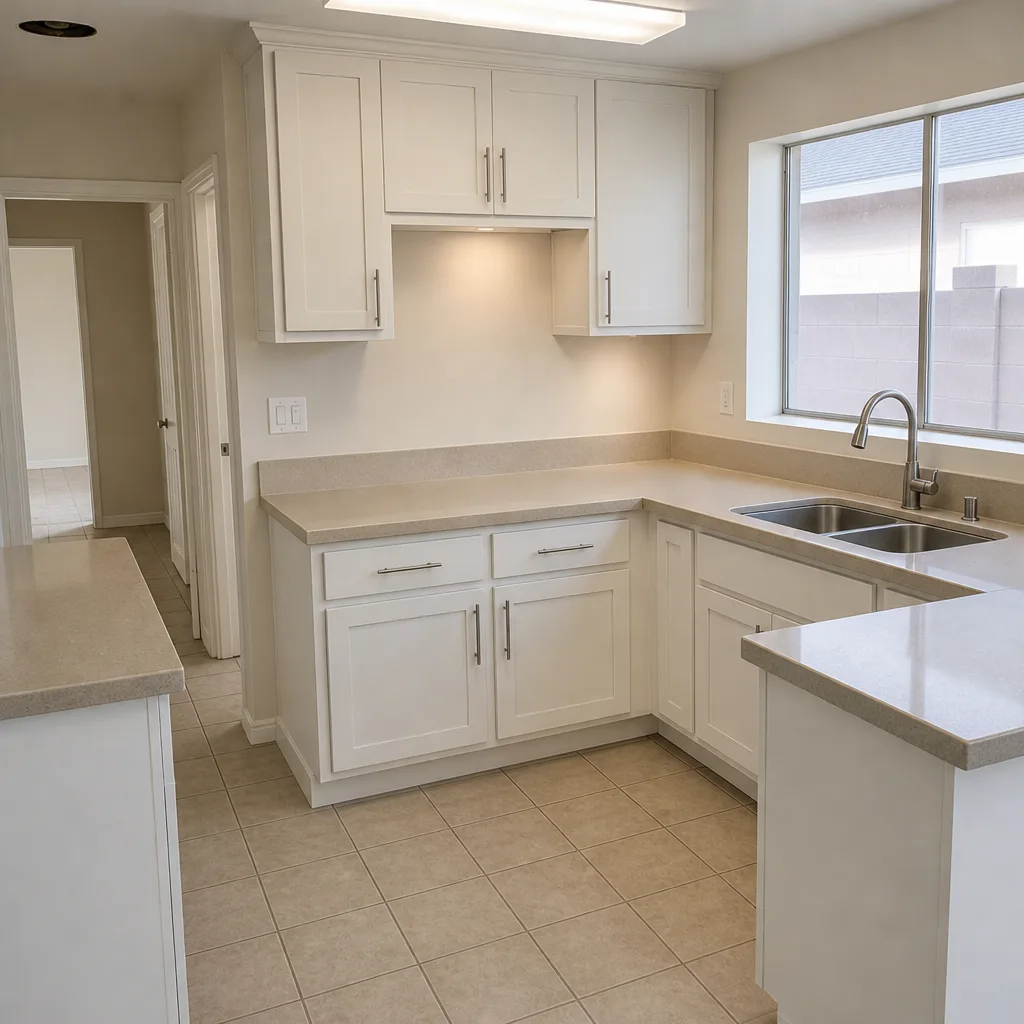 After
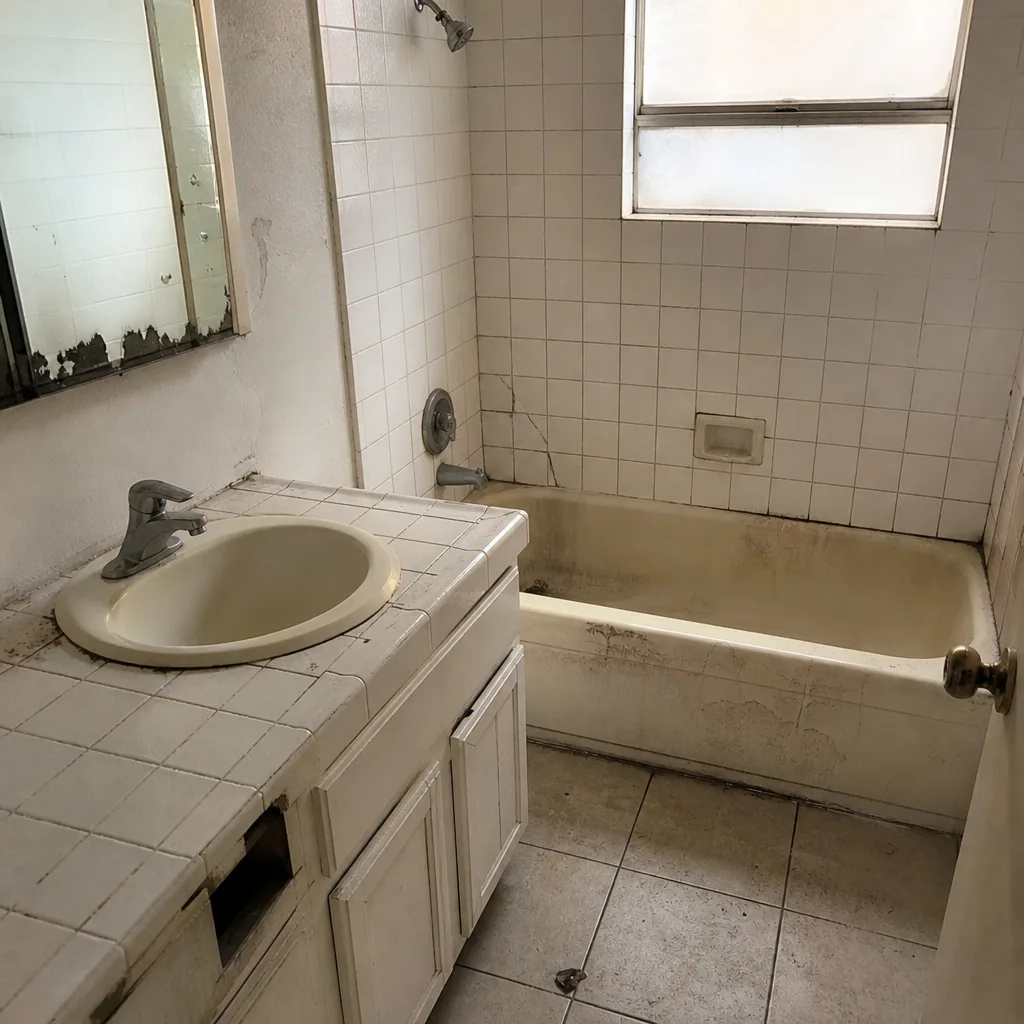 Before
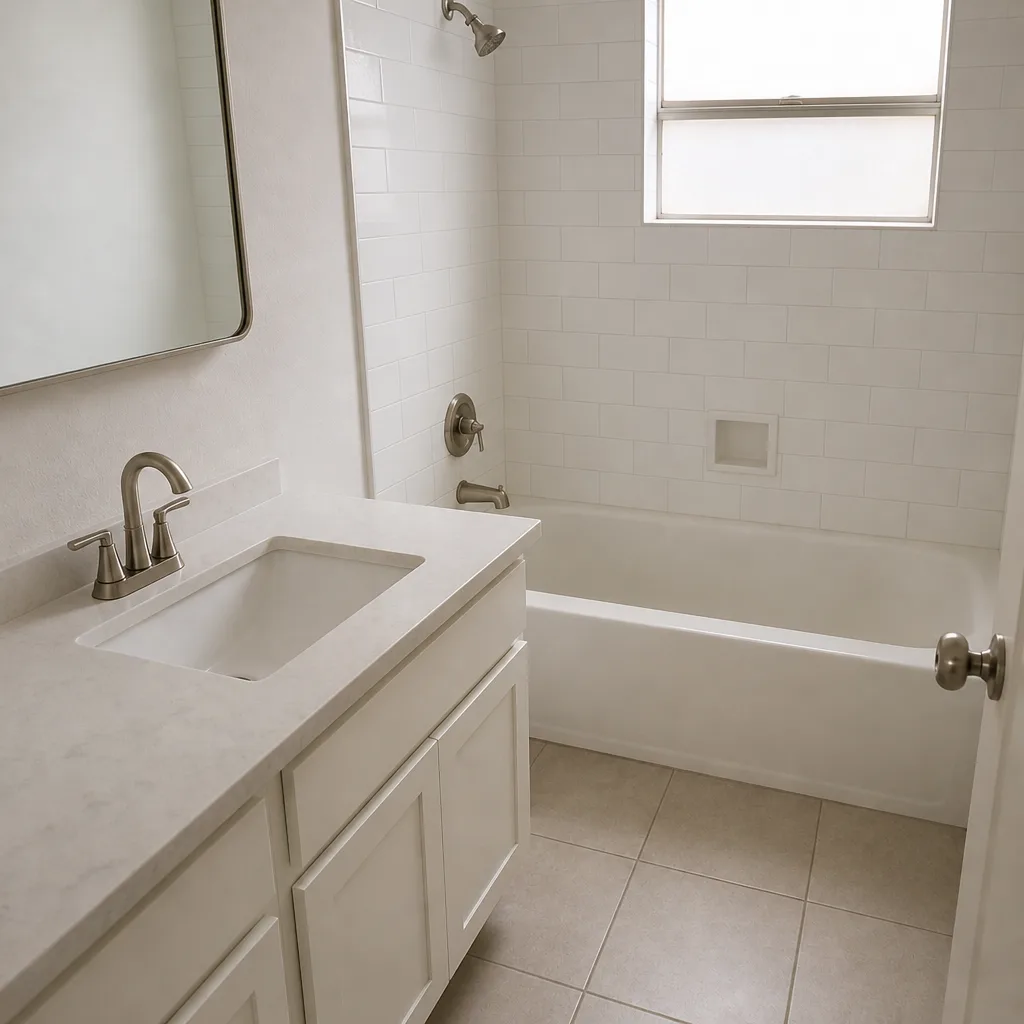 After
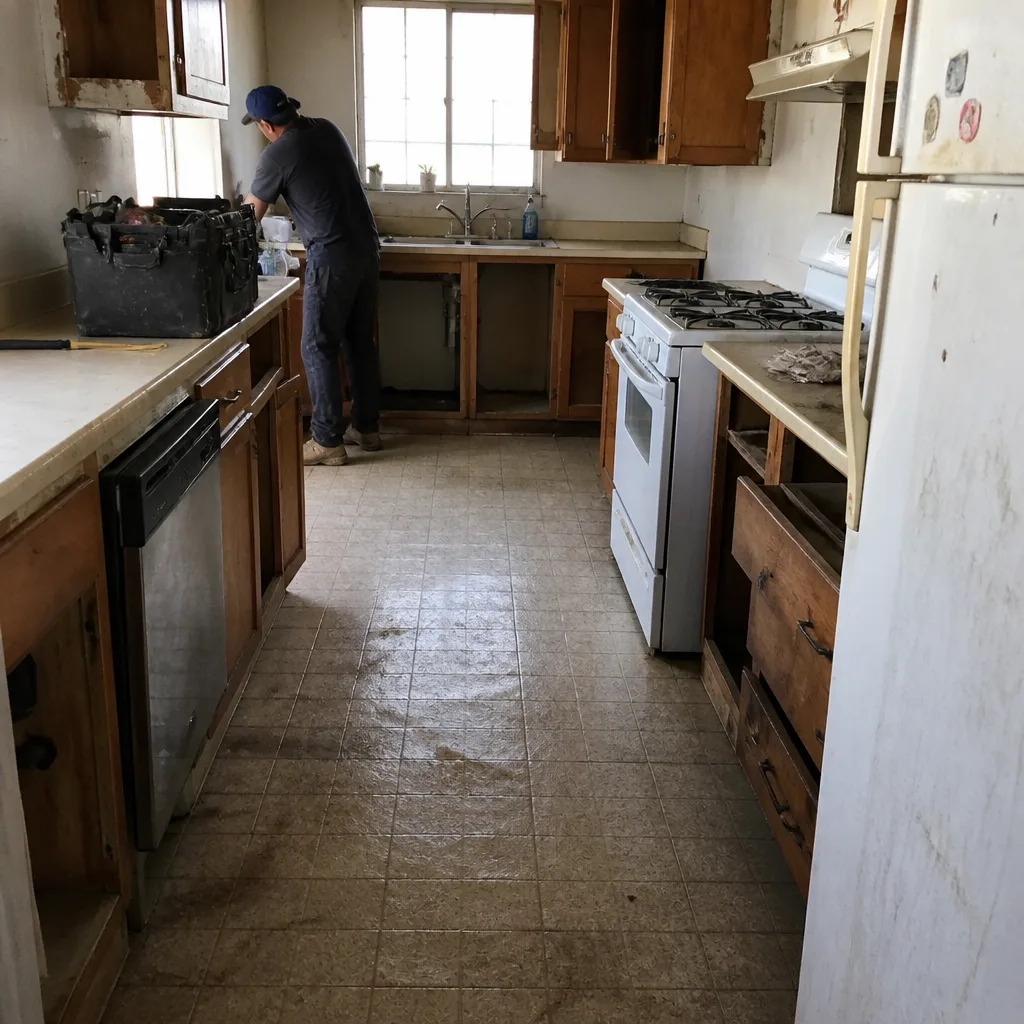 Before
 After
When to Call a Professional
Some of what we’ve described can be handled by a competent homeowner with the right calls. But specific scenarios warrant bringing in a licensed general contractor and a licensed engineer before anyone touches a tool. Call a professional the moment you see a diagonal crack wider than 1/8 inch, discover unpermitted prior work during a renovation, plan to add more than 400 square feet or an ADU, or are within a month of a permit deadline you can’t miss. Call an engineer specifically for any crack pattern that could be structural, any footing repair, and any variance application. Call an electrician immediately if your panel has been double-tapped beyond code, if you smell burning at the panel, or if the service is 100-amp and you’re considering an ADU. Rowan Construction Group North Las Vegas offers free estimates in North Las Vegas – call (844) 708-4417 to schedule a walkthrough and a written price.
Frequently Asked Questions
Remediation of discovered unpermitted work typically runs $8,000 to $22,000 depending on what’s found – structural corrections, electrical and plumbing code corrections, and permit fees. The final number depends entirely on scope, which is why a written scope and a signed change order before work proceeds keeps the price predictable. Call (844) 708-4417 for an exact quote – estimates are free.
Yes. The City of North Las Vegas requires a National Electrical Code load calculation as part of the electrical permit for any addition or ADU that adds circuits or load. A 100-amp panel feeding an existing house plus a new ADU will almost always fail the calculation, which means a panel upgrade to 200-amp or 320-amp is typically required, at a cost of $3,200 to $6,500 for a 200-amp upgrade. Call us for a line-item estimate.
Diagonal cracks over 1/8 inch wide running from window or door corners, stair-step cracks in CMU block, and horizontal cracks in a foundation wall are structural until an engineer says otherwise. Hairline cracks from curing shrinkage and map cracking in a slab are almost always cosmetic. When in doubt, an engineer’s letter is $300 to $900 well spent. Call us to schedule an inspection and a written assessment.
Missing or improperly installed kick-out flashing at the roof-to-wall junction is the leading cause of water intrusion at addition tie-ins, followed by peel-and-stick membrane that wasn’t lapped the required 6 inches onto the existing roof. Either failure shows up as interior staining near the ceiling line within one to two monsoon seasons. We inspect and document the flashing spec before the wall goes closed – call for a free tie-in inspection.
You’ll need a licensed boundary survey (typically $800 to $2,200), a variance application to the City of North Las Vegas Board of Zoning Adjustment ($400 to $1,200 in filing fees), and a hearing before the board. Approval isn’t guaranteed – if denied, remedies include demolition, relocation, or a negotiated easement. Call (844) 708-4417 to review your options before filing.
Weekly walkthroughs are standard for a home addition, with an immediate call on any discovered condition that changes the scope. You should be receiving a written scope, a signed change order for every price change, and a documented photo record on every visit. If your contractor isn’t delivering those, that’s the call to make first.
The Bottom Line
Most addition and ADU problems fall into four buckets: unpermitted prior work, footing failures on valley soils, undersized electrical service, and tie-in flashing failures. Each has a known remediation path, and each is much cheaper caught at design than discovered mid-project. Two rules cover almost everything: get a boundary survey and a geotechnical report before design, and never accept a verbal workaround for a condition that affects code. Keep the written scope, the signed change order, the permit card, and the photo record – those are the documents that turn a chaotic addition into a predictable one. For a written price and a free second opinion on any estimate you already have, call Rowan Construction Group North Las Vegas at (844) 708-4417.
Written by the team at Rowan Construction Group North Las Vegas.