Last updated November 18, 2026



Free written scope consultation - allowances, timeline, and change-order rules on paper before a single trade is scheduled
Construction Emergency Preparedness Guide for North Las Vegas Homes
FEMA designates the Las Vegas Valley as a moderate flash-flood risk despite the desert on the postcard. In North Las Vegas, that risk lands on drainage infrastructure that predates the city’s rapid 2000s expansion, which means a one-inch-per-hour rain event in August can flood streets and slabs in neighborhoods that have never taken on water before. The emergencies we get called to in North Las Vegas are not random. They follow a pattern: a monsoon overwhelms a compromised drainage system, a heat spike buckles a flat roof membrane that was already cracked, or a foundation crack that was “monitored” for two summers propagates during a rare freeze. What separates a two-day repair from a two-week insurance fight is usually one thing: whether the homeowner had a documented inspection record before the event. This guide lays out the four scenarios most likely in North Las Vegas, the pre-season documentation protocol that shortens both contractor response and claim processing, and the emergency file every home should hold before anything goes wrong.
Quick Answer
Construction emergency preparedness for a North Las Vegas home means documenting baseline conditions on your roof, drainage, foundation, and exterior walls before monsoon season, then knowing the triage order to follow when something fails. Most North Las Vegas emergencies fall into four categories in probability order: monsoon drainage failure, roof membrane breach, exterior wall water intrusion, and foundation movement after a freeze-thaw cycle. The homeowner who has photographed those systems, stored permit records and insurance limits in one file, and identified which contractor to call first will recover faster than one who starts from zero during a regional weather event.
Styles & brands we work with
- Kitchen remodeling
- Bathroom remodeling
- Home additions & ADU
- Roofing
- Windows & doors
- Driveway & pavers
- Fence
Table of Contents
- Scenario 1: Monsoon Drainage Failure
- Scenario 2: Roof Membrane Breach
- Scenario 3: Exterior Wall Water Intrusion
- Scenario 4: Foundation Movement After a Freeze
- The Pre-Season Documentation Protocol
- Emergency Contractor Triage Sequence
- Temporary Mitigation You Can Legally Perform
- What Goes in Your Construction Emergency File
Scenario 1: Monsoon Drainage Failure
This is the most probable construction emergency in North Las Vegas, and it is entirely a landscape function, not a rainfall function. The valley’s soil is caliche and compacted desert fill, which absorbs almost nothing once saturated. When a monsoon band drops an inch in an hour, the water does not soak in. It runs. In North Las Vegas neighborhoods built between 2000 and 2015, the drainage system was designed to a 10-year storm standard. Events exceeding that standard produce localized flooding along grading swales, at driveway aprons, and against west-facing rear walls where the slope of the lot pushes water toward the house.
The physical mechanism is simple. Water pools against the slab edge, finds the vapor barrier or the exterior finish seam, and wicks upward into the wall cavity. Drywall on the interior face absorbs it within hours. By the time a homeowner notices a stain, the wall has already been wet long enough to support mold growth in the 48-to-72-hour window.
What tends to be compromised before the storm:
- Grading that has settled. Standard production grading around North Las Vegas foundations is often 6 inches of fall across the first 10 feet. After a decade of irrigation and thermal cycling, that fall can go flat or reverse, holding water against the wall.
- Clogged area drains. Curb inlets and lot drains collect desert debris and landscaping rock. A drain half-full of gravel moves a fraction of its rated capacity.
- Failed window and door seals. Sealant joints on exterior openings have a service life. A twenty-year-old joint on a two-story elevation is a straight path for wind-driven rain.
- Missing or underbuilt swales. Some North Las Vegas lots have grading that channels neighbor runoff across a side yard without an engineered path to the street.
Roof drainage compounds the ground problem. A cracked downspout or a splash block that discharges against the foundation turns a roof’s worth of water into a foundation’s worth of water. Check every downspout termination and confirm it discharges at least 4 feet from the wall on a positive slope.
Scenario 2: Roof Membrane Breach
The second most likely emergency in North Las Vegas is a roof breach during the summer heat spike. Desert temperatures routinely exceed 110°F, and flat or low-slope membrane – TPO, modified bitumen, or built-up – expands and contracts daily at rates that open seams over time. A seam that was marginal in May becomes a breach in July when the temperature swing peaks. Polyurethane sealant, the material most often used on flashings, has a service life measured in years, not decades, under that thermal cycle.
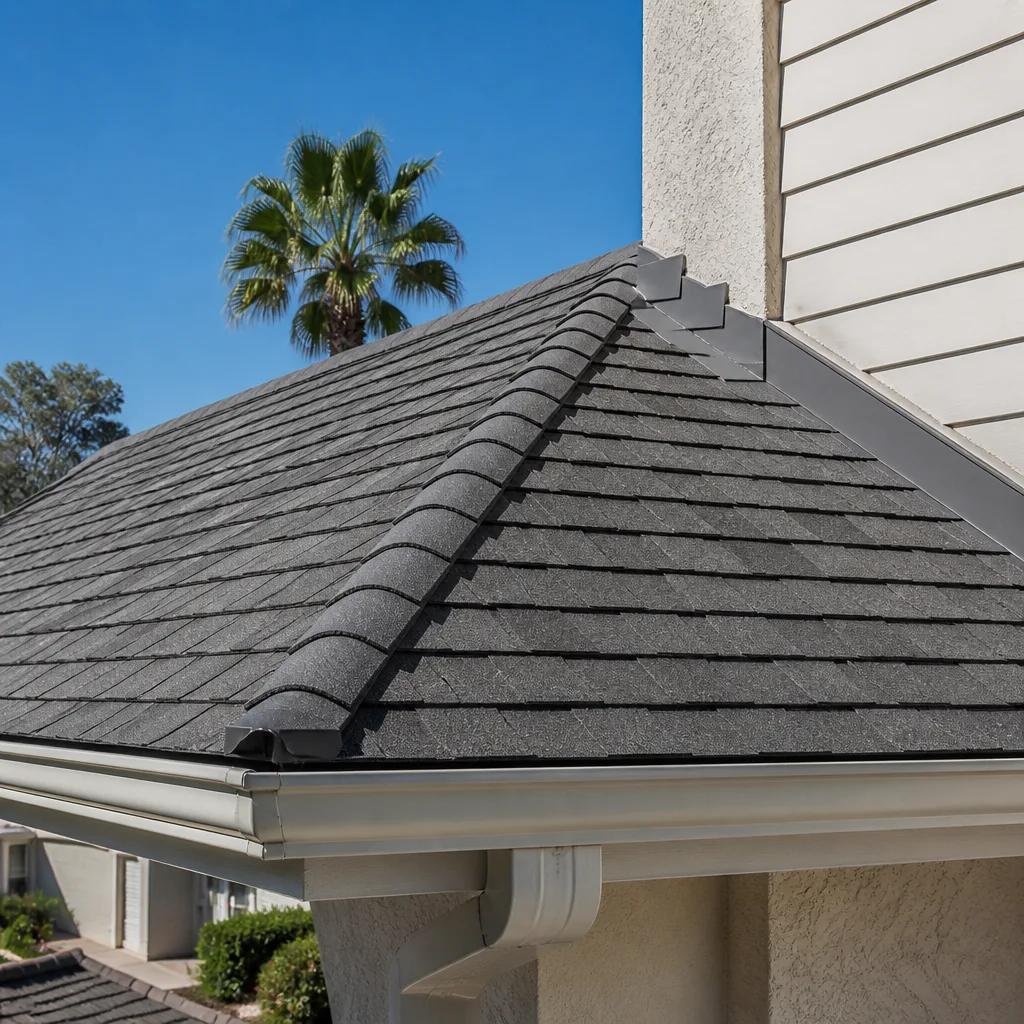
What we find on North Las Vegas roofs depends on the system. Asphalt shingles installed to GAF or Owens Corning specifications typically fail at the flashing and penetrations before the field shingles do, because the sealant at pipes, vents, and skylights ages faster than the shingle mat. Flat membranes fail at seams and at the perimeter edge metal. Tile roofs fail at underlayment, which is the waterproof layer beneath the visible tile and carries a service life closer to 20 years than the 50 the tile itself will last.
Signs a breach is developing, in the order they usually appear:
- Interior ceiling stains that reappear after rain, even faintly. A faint ring is an active leak path, not a historical one.
- Granule loss visible in gutters or at downspout discharges. Significant granule loss on a three-tab shingle means the asphalt is aging faster than the mat.
- Daylight visible at the roof sheathing from inside an attic. That is a direct opening.
- Curling or lifting shingle tabs on a south-facing slope. The south slope takes the most UV in the valley.
- Seam separation on a flat membrane, usually visible as a raised edge along a lap.
When any of these appear, document them with a dated photo before the next monsoon. A roofer with a certaintTeed or GAF product line can match the existing system and give you a written scope; a pre-season photo turns a vague “my roof is leaking” call into a specific repair request that can be priced accurately.
Scenario 3: Exterior Wall Water Intrusion
Water intrusion through the exterior wall is the quiet emergency in North Las Vegas. It rarely announces itself with a flood. It shows up as a bubble in the paint on an interior wall, a soft spot at a baseboard, or a musty smell in a closet that backs onto an exterior elevation. The physical mechanism is stucco. Most North Las Vegas homes built after 1990 use a three-coat stucco system over a weather-resistive barrier, and the system relies on a weep screed at the base of the wall to let moisture drain out. When the weep screed is buried by landscaping or the drainage plane behind the stucco is compromised at a penetration, water enters and cannot leave.
The interior wall cavity then holds moisture against the drywall paper and the wood framing. Mold colonization can begin within 48 hours at typical interior temperatures. The repair scope grows from sealant and paint to drywall replacement and possibly framing remediation. That is a $400 problem becoming a $4,000 problem.
The most common entry points, in order of frequency we see in North Las Vegas:
- Window and door perimeter sealant joints that have shrunk and pulled away from the frame.
- Utility penetrations – hose bibs, dryer vents, electrical conduit – where the sealant has failed.
- Roof-to-wall intersections where the step flashing or counter-flashing has failed.
- Stucco cracks wider than 1/16 inch, usually at corners of openings and at floor-line transitions.
- Blocked weep screeds at the base of the wall behind raised planters or added hardscape.
- Decks or patio covers attached through the wall without a proper flashing detail.
Any of these can be inspected from the ground with a pair of binoculars and a ladder set safely on firm ground. Document the condition with dated photos before the wall is wet. A contractor who reviews that record can move straight to a written repair scope instead of spending a service-call fee on diagnosis.
Scenario 4: Foundation Movement After a Freeze
North Las Vegas freezes are rare, but they happen, and a hard freeze of two or more consecutive nights below 28°F can be the event that propagates a foundation crack that was previously stable. The mechanism is soil moisture. Desert soil that has been irrigated for landscaping one month and then frozen the next expands as the water in the pore spaces turns to ice. That expansion lifts and shifts the slab or the footing, and a hairline crack that has been “monitored” for three summers suddenly widens to a quarter inch.
The signature of a freeze-propagation event, in our experience, is a diagonal crack radiating from a corner of a window or at the midpoint of a long wall, coupled with a door that has started to stick within a week of the freeze. That combination – new crack plus new binding – is the pattern that warrants a structural evaluation rather than a wait-and-see.
What to record before and after a freeze event:
- Photograph every visible crack at the slab edge and exterior wall with a coin or a tape measure in frame for scale.
- Mark the crack ends with a pencil or a small impact mark and date the photograph so movement can be measured later.
- Check every interior door and window for new binding; note the month it started.
- Check the floor for new slope or deflection by rolling a marble across a clear span.
- Note any new separation at the wall-floor joint or at the ceiling line.
Foundation work in North Las Vegas requires permits and engineering. A homeowner cannot and should not attempt stabilization. The value of the documentation is that it lets a structural contractor or an engineer give you a written scope that matches the observed movement, rather than quoting the worst-case repair because the history is unknown.
The Pre-Season Documentation Protocol
This is the single highest-return task in this entire guide. A complete baseline record of your home’s condition before an event shortens two timelines at once: the contractor’s response time, because the scope conversation starts from known condition rather than unknown, and the insurance claim process, because the adjuster can distinguish pre-existing wear from event-caused damage. Both improvements measure in days, not hours.
Do this once a year, in April or May, before the monsoon window opens in July. Store the file in the cloud, not on a single phone.
- Roof, wide and close. Four wide photos from each corner of the lot showing the full roof plane. Then close photos of every penetration, flashing, and seam. Include the make and model of the shingle or membrane if visible on a bundle wrapper or a label in the attic.
- Drainage, from ground level. Photograph every downspout termination, splash block, area drain, and swale. Note the slope direction in a written caption. Photograph any pooled debris line left from a prior rain.
- Foundation perimeter. A continuous photo walk of the slab edge or stem wall, one photo every 6 feet, with a tape measure taped to a corner for scale. Photograph every crack with a coin in frame.
- Exterior walls. Photograph every window, door, utility penetration, and stucco crack. Include wide shots that locate the detail in the elevation.
- Mechanicals. Photograph the water heater, HVAC condensate line, and any exterior electrical panel, and note the install date from the data plate.
- Written index. One page listing the date of the photo set, the contractor who installed each major system (name and license), and the brand of each major material. This page is what the adjuster reads first.
The whole protocol takes about 90 minutes on a typical North Las Vegas single-family home. It is the difference between a claim that moves in 5 days and one that stalls for 3 weeks waiting on condition evidence.
Emergency Contractor Triage Sequence
During a regional weather event, demand spikes and response times climb. The homeowner who knows the call order and has the documentation ready moves to the front of the schedule. The order depends on the scenario, but the principle is consistent: stop the water first, then evaluate structure, then handle the claim.
For a drainage or water intrusion event:
- Water mitigation first. Interior water extraction and drying equipment, usually through a restoration firm. This is what prevents mold.
- Plumber, if a supply line or drain is involved. A licensed plumber isolates and stops the source before any wall or floor work begins.
- Roofer, if the water is entering from above. A GAF or Owens Corning certified roofer can assess the roof and provide a written condition report for the claim.
- Structural contractor, if any framing, slab, or load-bearing wall is affected. This is when the scope crosses from repair into reconstruction.
- Public adjuster or insurance claim contact, started in parallel with step 1 if the damage is likely to exceed the deductible.
For a foundation or structural event:
- Stop the source of any water reaching the foundation (irrigation, downspout, plumbing leak).
- Call a structural contractor for an evaluation, and a licensed engineer if the crack is wider than 1/8 inch or movement is ongoing.
- Document everything before any repair begins. Insurance and engineering both require pre-repair evidence.
- Contact the insurer once you have the documented evaluation in hand.
Response time reality during a North Las Vegas regional event: a roofer with a full book may run 3 to 7 days for a non-emergency assessment, and same-day response usually requires a priority account. The documentation file is what moves you up the list, because a contractor can scope a documented job in one visit instead of three.
Temporary Mitigation You Can Legally Perform
While you wait for the professional, there are steps a Nevada homeowner can legally take without a contractor license. The dividing line is simple: you can stop water and protect property, but you cannot alter building systems or perform work that requires a permit.
What you can do:
- Tarp a roof breach. Use a UV-rated tarp at least 6 mil thick, overlap the ridge by 12 inches, and weight the edges with sandbags or lumber. Never screw or nail through the tarp into the roof surface; that creates new penetrations and can void a warranty.
- Divert interior water. Move furniture and electronics out of the affected zone. Use towels at the base of a wall and a wet-dry vac to keep the water from spreading. Photograph the water line before you remove it.
- Place sandbags. Stack bags in a pyramid against the direction of flow, with the long axis across the slope, at least two rows deep for any flow over 3 inches. Do not overfill; a two-thirds-full bag seats against the one below it.
- Shut off water at the main if a supply line is involved. Know where the main shutoff is before the emergency.
- Document continuously. Photograph and video the event as it is happening. Time-stamped phone footage is the strongest evidence in a claim.
What not to do:
- Do not open walls to inspect for moisture unless a restoration professional has authorized it. Unauthorized opening can void coverage and exposes you to mold.
- Do not cut or alter drainage paths in the yard or on the lot. Grading changes can create liability for downstream neighbors and are often prohibited by HOA or city code.
- Do not perform structural repairs of any kind. A homeowner permit may exist for some minor work, but foundation and framing repair require a licensed contractor and engineering.
- Do not discard damaged materials before the adjuster has seen them. Removed carpet or drywall without documentation can reduce a payout.
Under Clause 1 of our standard, the price is written before anyone starts. During an emergency, that discipline matters more, not less. If a mitigation quote arrives without a written scope, decline it and call a contractor who provides one.
What Goes in Your Construction Emergency File
This is the physical or digital file you assemble before anything happens. It is what you hand a contractor at the door and what you upload to your insurer on day one. Every North Las Vegas home should have one.
Contractor records:
- Name and Nevada license number of every contractor who has worked on the home, with the work performed and the date.
- Written scopes and signed change orders for every prior project. A written scope is the record that a repair was built to the agreed standard.
- Photo records from every prior visit. If a prior contractor provided a documented photo record, keep it; it becomes the baseline for the next emergency.
Insurance records:
- Homeowners policy declaration page with coverage limits, deductible, and any separate flood or water damage coverage. Standard policies in North Las Vegas do not cover flood, and flash-flood damage requires separate coverage.
- The claims phone number and policy number in one visible spot.
- A written inventory of major systems and materials: roof brand and install year, HVAC brand and install year, water heater brand and install year, window brand and install year, paver or concrete installation year.
Permit and property records:
- Copies of every building permit and final inspection for work on the home, including any additions, ADU conversions, or major structural work. These are typically retrievable from the city building department if the originals are lost.
- The original builder’s plans or a survey of the lot, if available.
- HOA rules on storm damage and external repairs, if the home is in an association.
Documentation protocol results:
- The annual pre-season photo set, indexed and dated.
- A one-page list of who to call in what order, with names and numbers.
Reading this list, the preparation looks modest. In practice, the difference between a homeowner who has it and one who does not shows up as days – sometimes weeks – of difference in the recovery. Our crews have walked into both kinds of homes after the same monsoon event. The documented one is scoping in an afternoon. The other is scoping across three visits, because half the conversation is reconstructing what the house looked like before.
Common Mistakes to Avoid
- Assuming a desert home cannot flood. FEMA rates the Las Vegas Valley at moderate flash-flood risk, and a North Las Vegas lot with reversed grading will hold water against a wall after a single heavy August afternoon. Treat drainage as a year-round system, not a rain-season curiosity.
- Opening walls to “see how bad it is.” Water damage assessment is a restoration-specialist task. A homeowner opening a wall without authorization can void the coverage that would have paid for the repair.
- Waiting for the drip to get worse before calling. By the time a ceiling stain grows, the moisture has been in the assembly for days. Call at the first reappearing stain.
- Discarding a contractor’s written scope from a prior repair. That document is your baseline condition record. When a new event overlaps with old work, the prior scope is what lets the contractor and the adjuster separate pre-existing condition from event damage.
- Letting landscaping bury the weep screed. Raised planters and paver borders installed against an exterior wall without a drainage gap trap moisture in the wall. Keep a visible gap between any hardscape and the stucco.
- Skipping the flood endorsement because “it hasn’t flooded here.” The drainage infrastructure in parts of North Las Vegas predates the city’s expansion, and a neighborhood that has never flooded is exactly the kind that can. Confirm whether your policy covers flood, or add it.
- Hiring the first contractor who shows up after an event. Regional events draw out-of-state contractors. Ask for a Nevada license number, a written scope, and a written warranty before any work starts. If any of the three is missing, keep calling.
See the difference
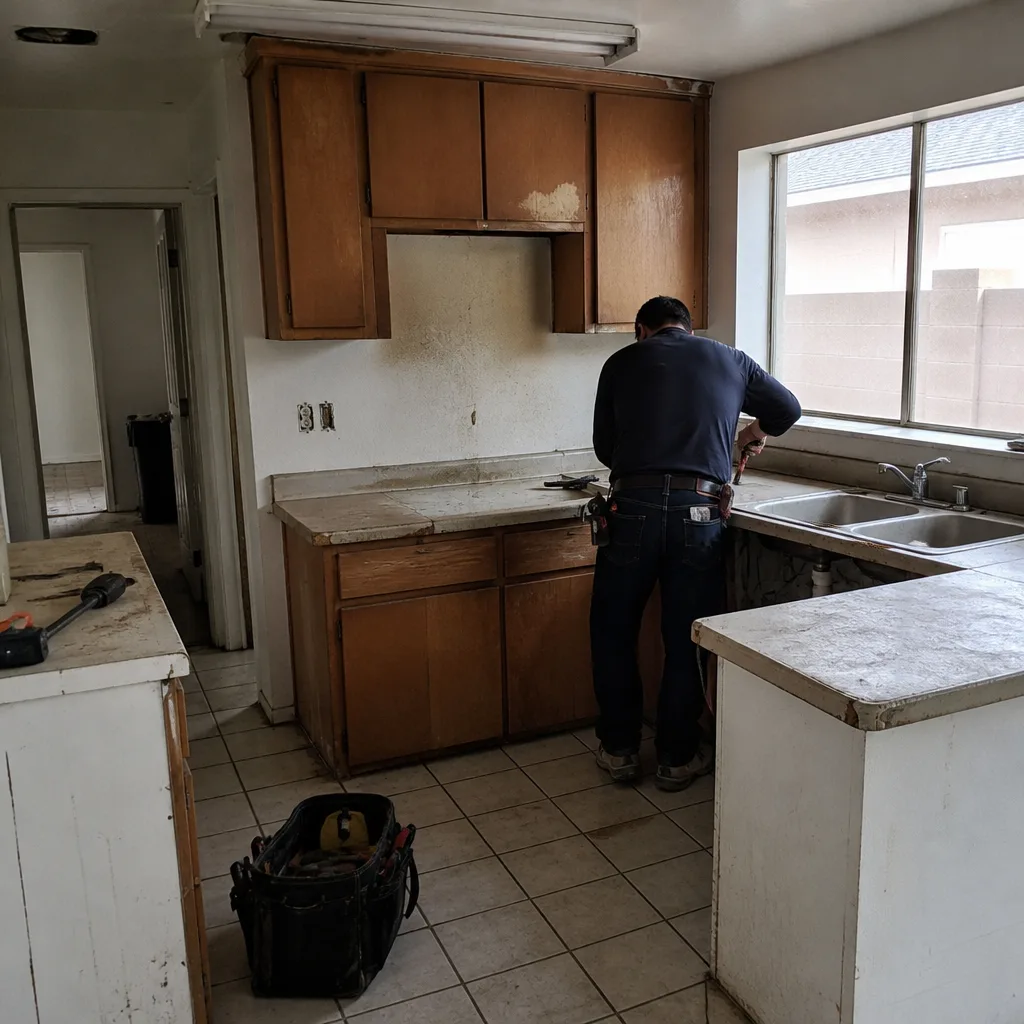 Before
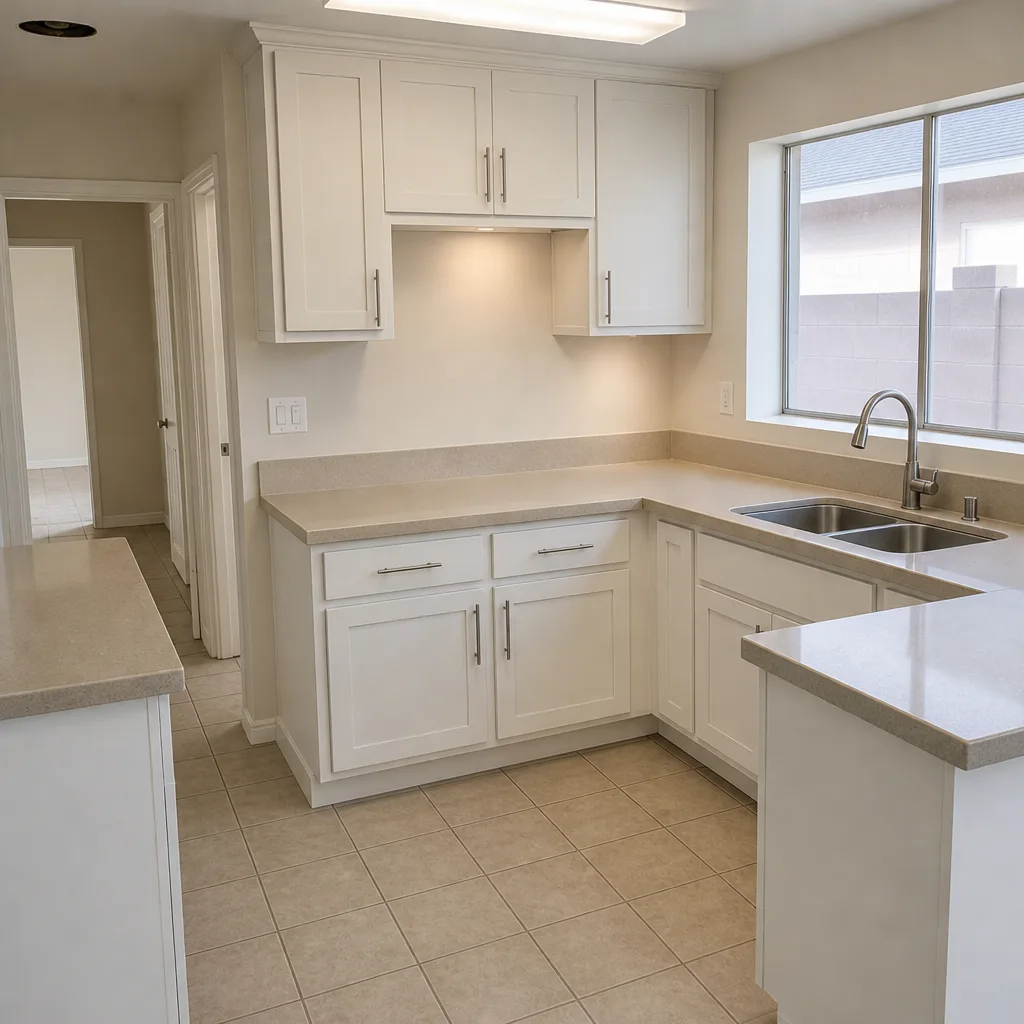 After
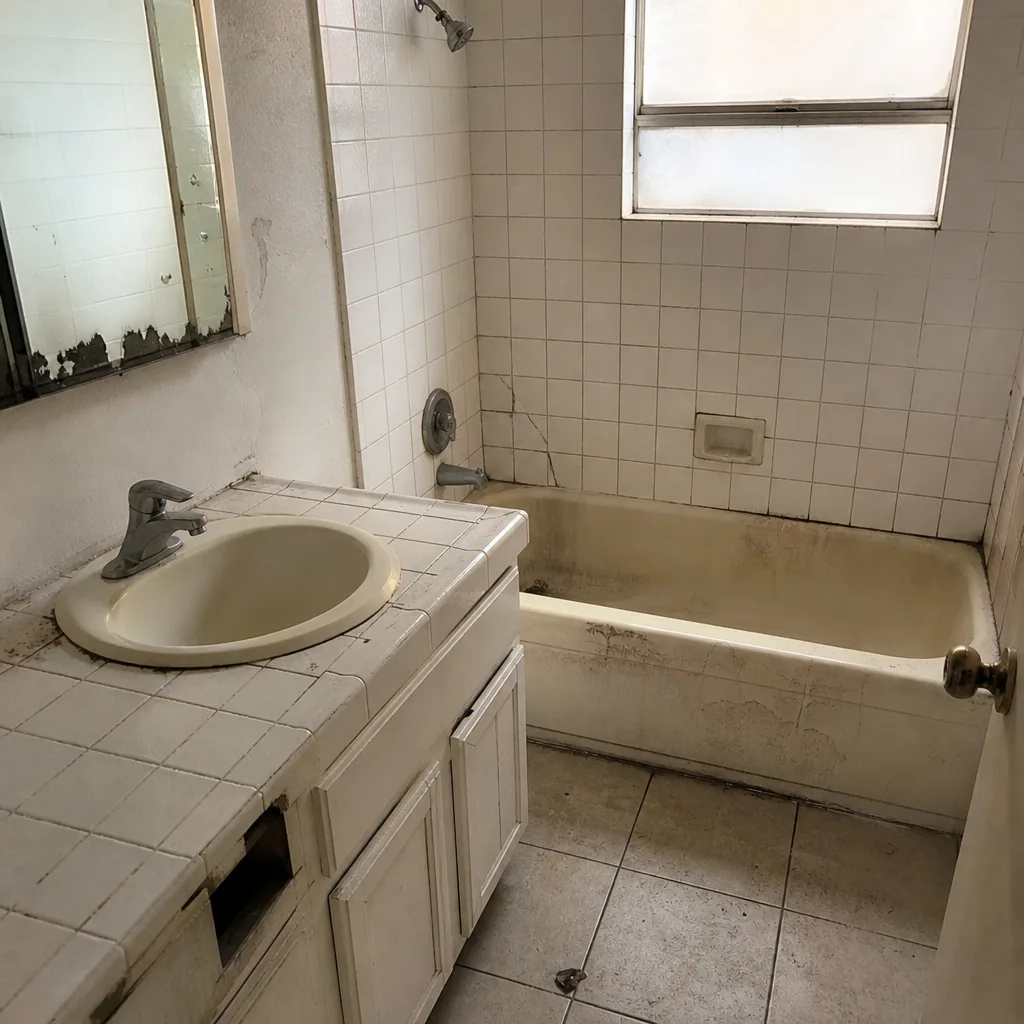 Before
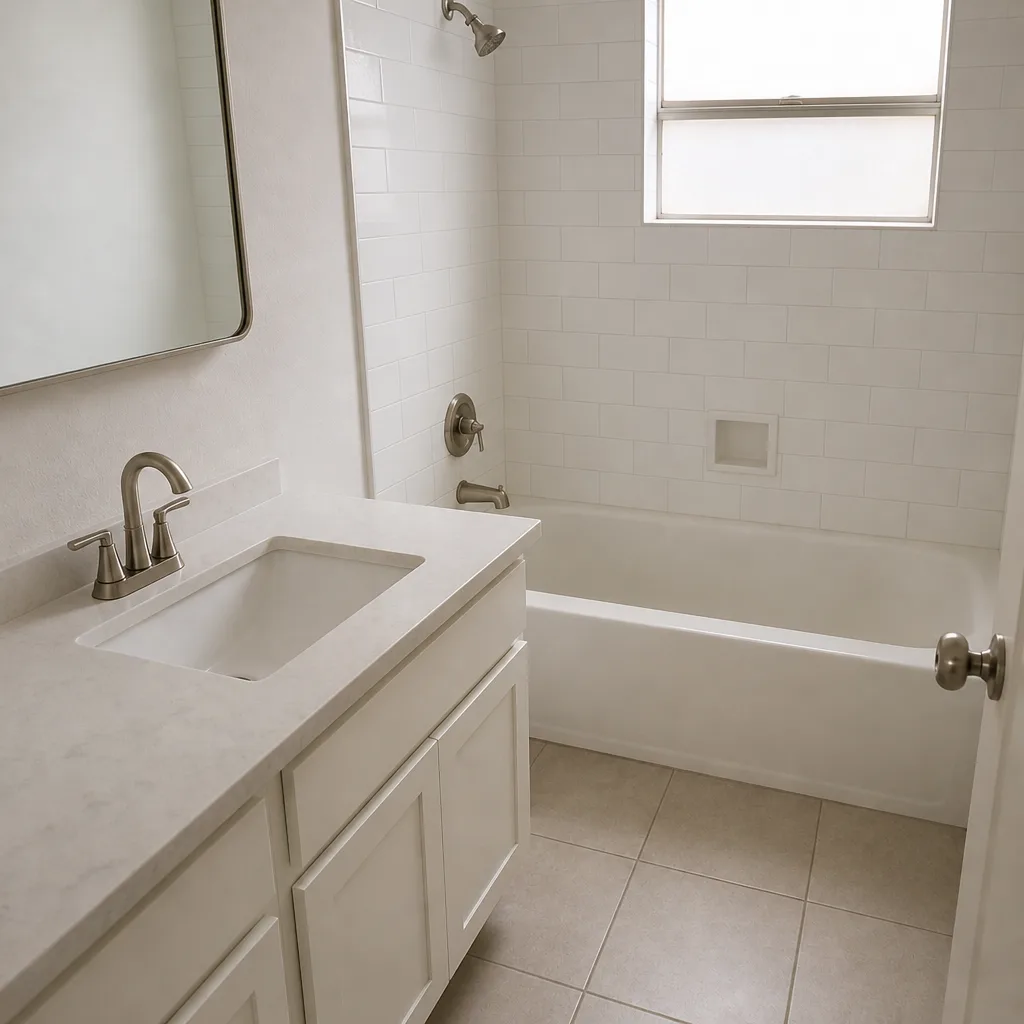 After
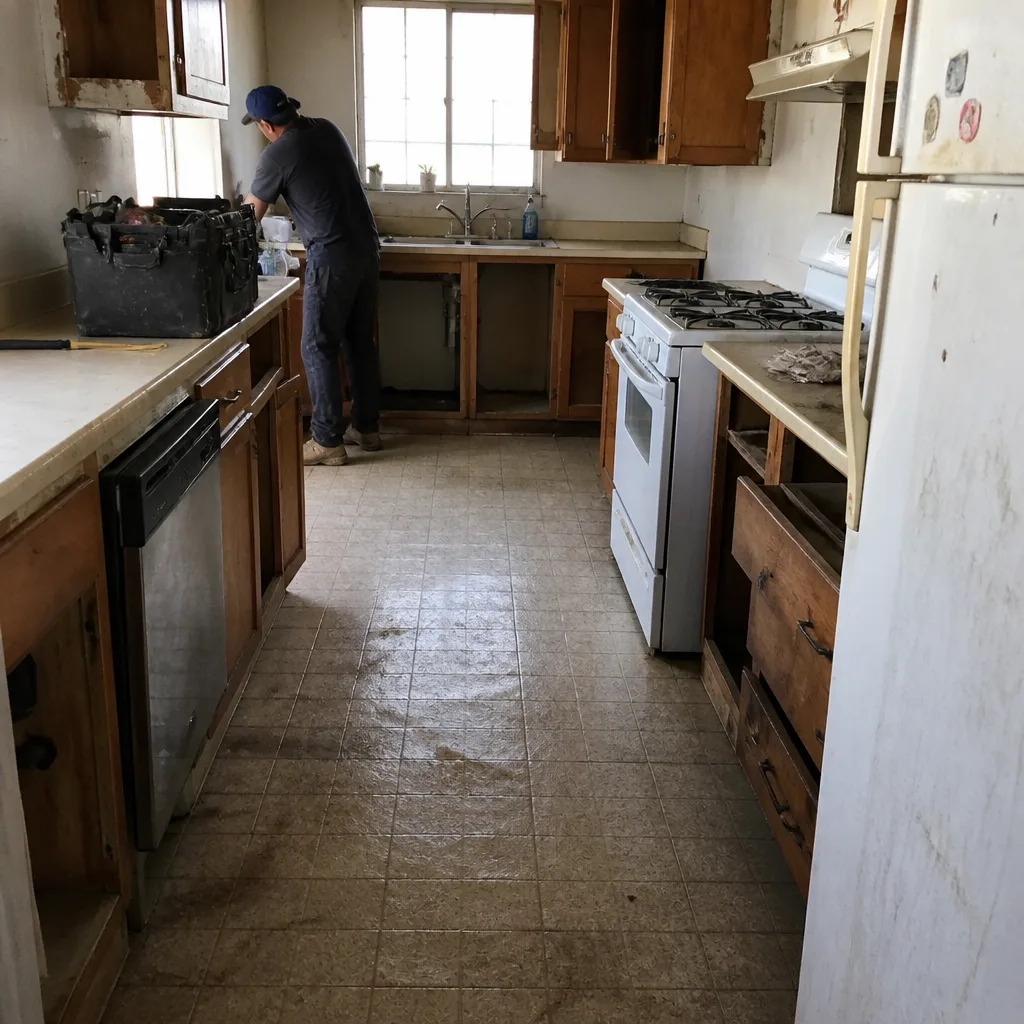 Before
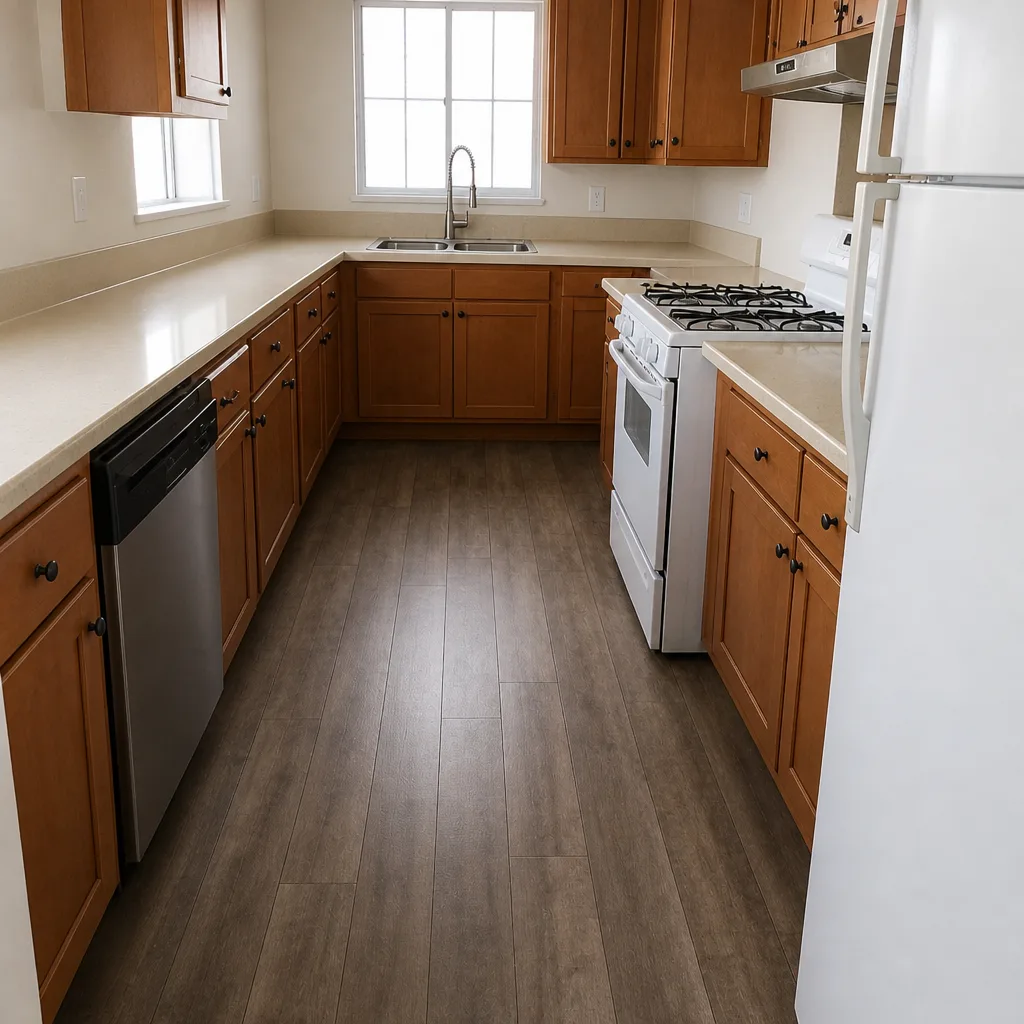 After
When to Call a Professional
Call a professional the moment water enters the building envelope, because the 48-hour mold window does not pause while you decide. Call immediately if a roof breach is active and the ceiling is sagging or the drywall is holding water; that is a structural concern, not a repair. Call if a foundation crack has widened within a week of a freeze, if a door has started binding within days of one, or if the slab-edge crack shows a measurable step. Call if your drainage is failing repeatedly, even without visible interior damage, because repeated water against a foundation is the slow path to a large repair. And call before you sign anything from a storm-chaser contractor who shows up unsolicited. Rowan Construction Group North Las Vegas offers free estimates in North Las Vegas – call (844) 708-4417. We provide a written price and a written scope before any work starts, and we include a free second opinion on any written estimate you have from another contractor. Our technicians have up to 19 years of experience, and every visit comes with a documented photo record as a standard deliverable.
Frequently Asked Questions
Monsoon drainage failure is the most likely, because the valley’s caliche soil absorbs almost nothing once saturated and a one-inch-per-hour rain event can overwhelm drainage designed to a 10-year storm standard. Water pools against slab edges, wicks into wall cavities, and reaches the interior drywall within hours. Call (844) 708-4417 for a free drainage and water intrusion assessment before the next monsoon window.
Standard homeowners policies in North Las Vegas do not cover flood damage; that requires a separate flood endorsement or a flood policy. Water that enters from outside the building envelope is usually flood, while water from a burst supply line is usually covered under the homeowners policy. Read your declaration page to confirm the coverage limit and the deductible, and call (844) 708-4417 if you need a written scope to submit with a claim.
Yes. A homeowner in Nevada can tarp a roof breach as a temporary measure, provided the tarp is UV-rated at 6 mil or thicker, the ridge is overlapped by 12 inches, and the edges are weighted with sandbags or lumber rather than screwed or nailed through the roof surface. Never walk a wet or steep roof; call (844) 708-4417 for a written roof assessment once it is safe.
Have the pre-event photos of the affected system, any prior written scope or permit for that system, your insurance policy number and coverage limit, and the address. A documented condition record lets a contractor scope the job in one visit instead of three. Rowan Construction Group North Las Vegas provides a written price and written scope before work starts, and a free second opinion on any written estimate you already have – call (844) 708-4417.
A stable foundation crack can remain stable for years, but it can propagate within a week after a rare freeze-thaw cycle when irrigated desert soil expands and shifts the footing. Measure and photograph the crack with a coin in frame for scale, and mark the ends. If the width grows past 1/8 inch or a door starts binding, call (844) 708-4417 for an evaluation.
Cosmetic repairs like paint and sealant generally do not require a permit, but drywall replacement, structural repair, and any work behind the exterior wall almost always do. A licensed contractor pulls the permit and passes the inspection as part of the written scope. Ask for the permit number in the written quote – call (844) 708-4417 for a free estimate.
The Bottom Line
The emergencies that hit North Las Vegas homes are predictable, and so is the preparation. Monsoon drainage failure, roof membrane breach, exterior wall water intrusion, and freeze-propagated foundation movement account for nearly every urgent call we receive, and every one of them gets cheaper and faster to repair when the homeowner has a documented baseline. Build the emergency file this spring: photo walk the roof, drainage, foundation, and walls; store permit records, insurance limits, and material brands in one place; and write down who to call in what order. Keep the number that provides a written scope before work starts. Call (844) 708-4417 for a free estimate from Rowan Construction Group North Las Vegas. Preparing today is a 90-minute task. Preparing after the water is already inside takes weeks.
Written by the team at Rowan Construction Group North Las Vegas.