Last updated November 18, 2026

Free written scope consultation - allowances, timeline, and change-order rules on paper before a single trade is scheduled
Construction Warning Signs: A North Las Vegas Homeowner’s Reference Guide
Stair-step cracking in a block wall is the call we get most often from North Las Vegas homeowners. The crack zigzags up the mortar joints like a staircase and looks like the wall is coming apart, and in the majority of cases it’s mortar joint shrinkage that has been sitting there since the wall cured. Repair cost if we’re right: two or three hundred dollars. Repair cost if we’re wrong and it’s active movement: three thousand and up. The two look identical to an untrained eye, and the difference lives in where the crack sits, how wide it is, and what the soil under the block wall has been doing. This guide walks through the defects North Las Vegas homes show disproportionately, what each one means, and which ones you can watch versus which need a licensed assessment.
Quick Answer
In North Las Vegas, most construction warning signs trace back to three local conditions: caliche soil movement, alkali groundwater, and rapid-build subdivision construction from the 1990s through the 2000s. Hairline cracks under 1/8 inch in stucco or block are usually cosmetic shrinkage. Stair-step cracks wider than 1/8 inch, horizontal cracks at the foundation, door bind that appears suddenly, and efflorescence that returns after dry brushing all warrant a written assessment within 90 days. Anything that lets daylight through or moves more than a quarter inch in a season is a stop-using-the-space situation. A geotechnical report costs $500 to $1,200 in the North Las Vegas market and settles the question faster than any amount of staring at a crack.
Styles & brands we work with
- Kitchen remodeling
- Bathroom remodeling
- Home additions & ADU
- Roofing
- Windows & doors
- Driveway & pavers
- Fence
Table of Contents
- The Crack Taxonomy: What Each Type Actually Means
- Caliche and Settlement: What North Las Vegas Soil Does to Homes
- Efflorescence vs. Active Water Intrusion on Block
- Roofing Warning Signs Specific to North Las Vegas
- The Triage Matrix: Green, Yellow, Red
- What You Can Monitor Yourself
- Common Mistakes to Avoid
- When to Call a Professional
The Crack Taxonomy: What Each Type Actually Means
Not all cracks are the same problem, and the location matters as much as the shape. We’ve walked hundreds of North Las Vegas properties, and the pattern is consistent: the same crack shape means different things depending on whether it’s in stucco on the fascia, in the block fence, or in the slab foundation.
Hairline cracks (under 1/8 inch). These appear in stucco, drywall, and concrete driveways as part of normal curing and thermal movement. North Las Vegas swings from desert nights near freezing to summer afternoons above 105 degrees, and that range works on exterior stucco every year. Hairline cracks in stucco are cosmetic unless water is getting behind them. Hairline cracks in a slab-on-grade driveway are cosmetic unless they widen.
Stair-step cracks. The zigzag pattern follows mortar joints in block walls. This is the most common shape we see in North Las Vegas block fences, and most are mortar shrinkage from the cure. Stair-step cracks become structural when they’re wider than 1/8 inch, when they appear suddenly, or when the wall section on one side of the crack is offset from the other. Mortar shrinkage sits there unchanged for years. Active movement gets worse on a timeline.
Horizontal cracks. A horizontal crack in a foundation wall or a retaining wall is the one to take seriously. Horizontal cracks indicate lateral pressure pushing the wall inward, which often relates to expansive soil pressing against the back of the wall or water not draining. These don’t come from shrinkage and they don’t fix themselves.
Diagonal cracks. A diagonal crack radiating from a window or door corner usually points to stress concentration at the opening. A diagonal crack running from a slab edge into the field of a floor indicates differential settlement, meaning one part of the foundation is dropping faster than another.
Through-wall cracks. If you can see daylight through a crack, or if you can slip a credit card into it, the wall is no longer doing its job. Through-wall cracks in block walls, stucco, or foundations are red-category and need a licensed structural assessment.
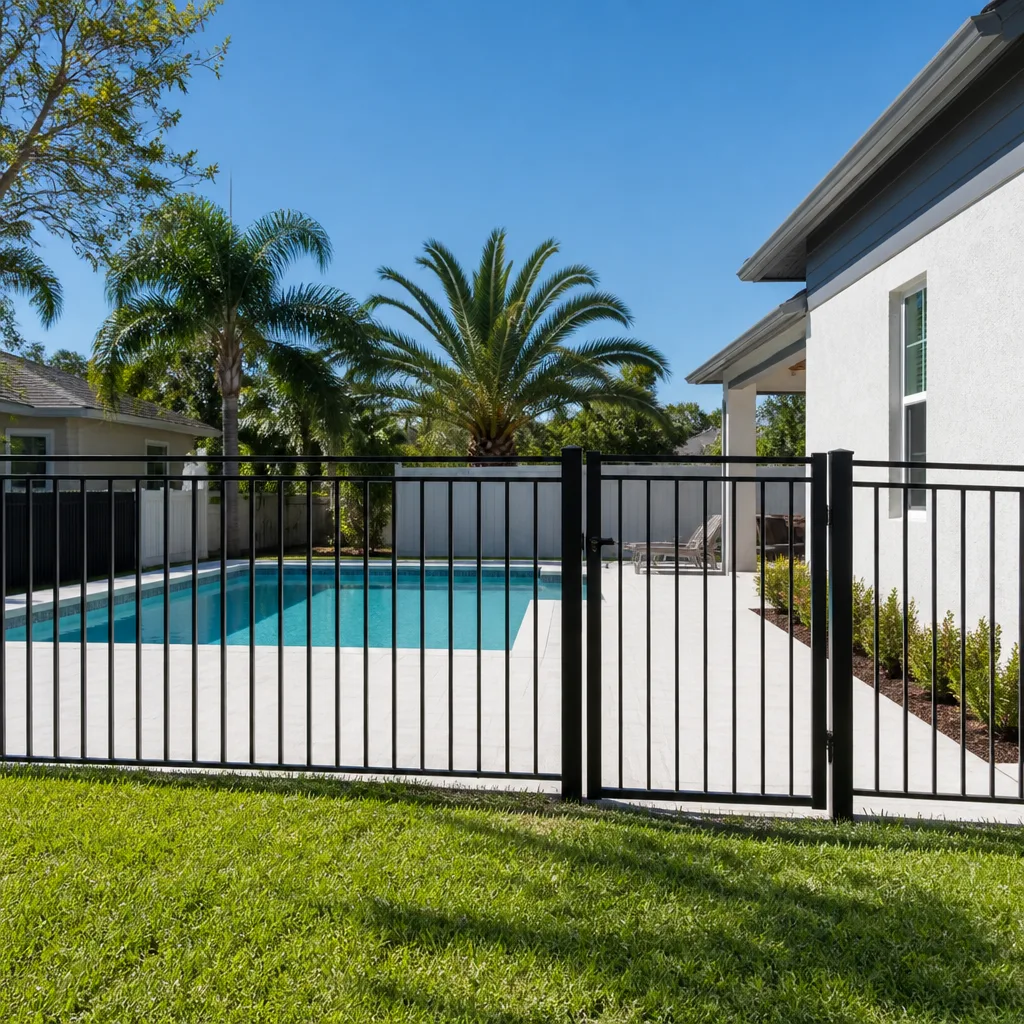
On a North Las Vegas block fence, we measure every crack with a pencil line dated on the wall. If the line hasn’t moved in three months, it’s dead. If it’s moved, you know exactly how fast. When the fence needs replacement rather than monitoring, our Fence Installation in North Las Vegas page covers block, wrought iron, and composite options with the same written price discipline we apply to every trade.
Caliche and Settlement: What North Las Vegas Soil Does to Homes
Caliche is a calcium-carbonate layer that forms in desert soils when water moves downward and deposits minerals. It can be a foot thick or a dozen feet thick, it’s harder than most concrete, and it doesn’t drain. When a North Las Vegas home was built over caliche that was broken up during site prep, or over caliche that wasn’t broken up at all, the drainage and the soil movement under the slab behave differently than in the neighborhoods across town where the layer sits deeper or is absent.
The surface signs of caliche-related settlement are specific:
- Door bind. A door that suddenly sticks at the top corner or swings open on its own is showing you that the frame has racked. New bind at one door is often a hinge issue. Bind at three doors in the same hallway is a slab.
- Floor slope. A marble or a glass of water that rolls across a kitchen floor when set down isn’t a rounding error. Slabs that settle move at the perimeter faster than the center, and the floor becomes a shallow bowl.
- Gap at baseboards. A gap between baseboard and drywall that opens at one corner of a room, especially when the same gap closes at the opposite corner, is a sign the floor is moving relative to the walls.
- Caulking separation at the exterior. Caulk pulling away at the base of stucco is normal when it’s a thin line around the whole house. Pulling away at two corners while staying tight on the other two is differential movement.
- Cracks in the garage floor slab. Garage slabs in North Las Vegas are typically poured thinner than the main house slab and crack more readily. A crack that’s been stable for ten years is not the same as a crack that opened this spring.
The geotechnical report math. A soil report in the North Las Vegas market runs $500 to $1,200 for a residential property with three or four boring locations. The report tells you the depth of caliche, the soil classification, the moisture content, and whether the slab is moving or the soil under it is the source. If you skip the report and add drainage or a small footing repair that doesn’t address the actual cause, you can spend $8,000 to $15,000 on a fix that delays the problem eighteen months. The report pays for itself the moment it stops you from doing the wrong repair. For any addition, ADU, or new slab on a North Las Vegas lot, the report is also part of the permit set – our Home Additions & ADU in North Las Vegas page gets into how that fits into a project scope.
Efflorescence vs. Active Water Intrusion on Block
Efflorescence is the white, powdery salt deposit that appears on block walls, concrete, and pavers when moisture moves through the masonry and evaporates at the surface, leaving the dissolved salts behind. In North Las Vegas, alkali groundwater is common in the western and northern neighborhoods, and block fences that were built without a capillary break at the base pull groundwater up and bloom white within a season. The question is whether the bloom is the last dry breath of moisture from construction, or whether water is actively entering the wall.
The two-minute field test. Dry brush a patch of the bloom with a stiff nylon brush, enough to remove the visible powder. Take a photo with your phone and date it. Wait two weeks and look again. If the bloom hasn’t returned, you’re looking at residue from the initial cure or from a single wetting event, and there’s no active source. If the bloom returns, water is moving through the wall on a regular basis, and the source is somewhere upslope, above the wall, or at a failing joint.
Water intrusion on a block wall also leaves other evidence: dark staining at the mortar joints, moss or algae on the shaded side, white marks concentrated at the base, and paint or stucco blistering within six inches of the ground. Efflorescence on a wall that’s otherwise sound is cosmetic and the fix is drainage, grading, and a breathable sealant. Efflorescence on a wall that’s showing stair-step cracks is telling you something else.
The same test applies to concrete pavers and driveways. Light bloom on pavers after installation is normal. Bloom that returns on a driveway that’s been down three years means water is sitting under the base or the joint sand isn’t draining, and that’s worth a look before you start pricing replacement. If you’re comparing repair versus replacement, our Driveway & Pavers in North Las Vegas page lists the numbers for Techo-Bloc, Cambridge Pavers, and standard concrete side by side so the comparison is honest.
Roofing Warning Signs Specific to North Las Vegas
North Las Vegas roofs fail in ways you don’t see in wetter climates. There’s no freeze-thaw cycle to work the sealant loose and no ongoing rain to reveal a leak early. Damage often sits invisible until the first monsoon of the season and then shows up as a ceiling stain, by which time the underlayment has been failing for two or three years. The signs below are the ones we find on North Las Vegas roofs before the interior leak.
- Flashing separation at parapet walls. NLV has a lot of flat-roof and low-slope homes, and where the roof deck meets the parapet there’s a metal flashing that caps the wall and runs down onto the roof surface. That flashing is sealed with a lap sealant, and the lap sealant has a service life of roughly five to seven years in the desert sun. When it separates, water runs behind the flashing during a monsoon and shows up at the parapet ceiling inside. Walk your roofline with binoculars after any rain and look for daylight between the flashing and the wall.
- Tile slippage on 4:12 pitches. Many North Las Vegas subdivisions were built with concrete tile on shallow 4:12 pitches, which is near the minimum for tile. The wire ties holding the tiles break down over time, and tiles start to slide out of line. Any tile that’s sitting lower than its neighbor has lost its tie. A single slipped tile is a $150 to $300 repair. A slipped tile that lets water past the underlayment for one season is $1,200 to $2,500 of drywall and framing.
- Ridge and valley underlayment failure. The underlayment under tile or shingle is the actual waterproofing layer, not the tile. It fails first at the ridge and at valleys where the two roof planes meet, because those are the areas with the most seams. Look at the ridge line from the ground with a pair of binoculars for lifted or curled shingles, or for tile that’s out of plane. Look at the valley on both sides of the intersection for granules collecting at the bottom (asphalt shingle roofs) or for exposed underlayment between tiles.
- Granule loss on shingles. Walk your North Las Vegas gutter lines after a wind event and look at the granules. A handful of dark granules after a storm is normal wear. A continuous strip of granules along the entire gutter line means the shingle is down to the felt and you’re within a season of the leak.
- Ceiling stains that appear after a wind event. A stain that appears after a monsoon wind, rather than after a steady rain, is often a wind-driven rain issue at a flashing or at the ridge vent. Those leaks are narrow and diagnosable. A stain that appears after any rain of any size is a broader underlayment failure.
Our roofing crews work with GAF and Owens Corning systems, which matters when you’re asking whether the underlayment under your tile will last as long as the tile on top of it. The layers work as a system, and replacing one without the other is the definition of a repair that calls you back in eighteen months.
The Triage Matrix: Green, Yellow, Red
Sort what you’re looking at into one of three buckets. The bucket tells you how fast to act and whether the fix is monitoring or a written assessment.
GREEN – monitor annually, no action required.
- Hairline cracks under 1/8 inch in stucco, with no water staining behind them.
- Efflorescence on newly installed block or pavers that does not return after dry brushing and a two-week wait.
- Caulk separation around one window, with no other signs at the same corner.
- Shingle granule loss in a scattered handful per gutter length after a wind event.
- Single slipped tile on a 4:12 pitch roof, with no interior staining and no daylight showing.
YELLOW – written assessment within 90 days.
- Stair-step crack in a block wall wider than 1/8 inch, with no offset between the two sides.
- Door bind on two or more doors in the same hallway, or a door that swings on its own.
- Efflorescence that returns after the dry-brush test, even if you can’t find the source.
- Any diagonal crack running from a window corner inward, wider than 1/8 inch.
- Flashing separation at a parapet wall, visible after the last rain, with no interior stain yet.
RED – stop using the space, call a licensed contractor within 30 days.
- Horizontal crack in a foundation wall or a retaining wall, at any width.
- Through-wall crack in any wall where you can see daylight or slip a credit card into it.
- Any wall section that has offset from the section on the other side of a crack.
- Floor slope substantial enough that a marble rolls across a room on its own.
- Any repair where the structural component involves high-tension springs, main electrical, or gas – do not attempt, and do not let an unlicensed “handyman” touch it. Garage door spring tension on a standard 8-foot door runs several hundred pounds at rest, and spring or cable work causes serious injury every year in the valley. Electrical panel and gas line work has the same profile. Those are licensed-trade calls, period.
When the yellow-category item is a block wall that needs rebuilding rather than repairing, our Rowan Construction Group North Las Vegas home page covers the trades and the process. If the item is a driveway that needs replacement, we’d quote it with a numbered line-item scope and a written price before the crew arrives, so the number you agreed to is the number on the final invoice.
What You Can Monitor Yourself
You can monitor. You can’t diagnose structural issues yourself, and you shouldn’t try. Here’s what’s safe to watch and what makes the monitoring useful when a professional does show up.
- Pencil-line every visible crack. Draw a thin pencil line perpendicular to the crack at its widest point, and write the date next to it. If the crack grows past the line, you have documentation of when it moved and how far. That log cuts an hour off any assessment.
- Photograph with the door frame in view. Cracks and baseboard gaps mean nothing without a reference point. Put a tape measure in the shot with the crack beside it. Photos without scale don’t survive a second look.
- Note the weather when a stain appears. A stain that shows up after wind-driven monsoon rain is a different defect than one that shows up after steady rain. Write it down the day you see it. By the time you call a contractor, memory is unreliable.
- Run the efflorescence test once a season. Dry brush, photograph, wait two weeks, photograph again. Move it to a calendar reminder each October and each April.
- Walk your property after every monsoon. Ten minutes, phone in hand, looking at parapet flashing, valley intersections, and block wall bases. Most of the defects that become expensive started as a small observation a homeowner had the chance to log.
Common Mistakes to Avoid
- Treating every crack as urgent. Most stair-step cracks in a North Las Vegas block wall are mortar shrinkage and a couple hundred dollars to repair. Calling a structural engineer for a hairline crack in the stucco is money spent for no information. Measure the crack, date it, and let the movement decide.
- Treating no crack as no problem. The inverse mistake is worse. Roof underlayment failures in North Las Vegas don’t show on the interior until they’ve been running for two or three seasons. Get on the roof lines with binoculars twice a year.
- Filling cracks before the movement stops. Caulking a stair-step crack wider than 1/8 inch hides the movement from every future inspector. Record it, photograph it, and let a licensed contractor tell you whether to fill, stitch, or monitor before you seal it.
- Adding drainage without addressing the source. Regrading a North Las Vegas lot so water runs away from the house is often correct, but if the caliche layer is trapping water under the slab, the grading does nothing. Get the geotechnical report first, then build the repair around what the report actually shows.
- Trusting a “free inspection” that ends in a signature. A real inspection produces a written scope with line items and a written price. A free inspection that ends with a same-day signature and a verbal promise is a sales process, not an inspection. Ask for the written price and take a day to read it.
- Hiring anyone without a license. Nevada requires a license for residential construction work above a low threshold, and unlicensed work becomes your problem when the wall fails. Ask for the license number, the background-check policy, and a certificate of insurance, and verify all three.
- Assuming the contractor who did the original work will stand behind it. Most North Las Vegas homes were built by production builders, and the warranty on that construction expired years ago. The homeowner is now the general contractor of record on every repair.
See the difference
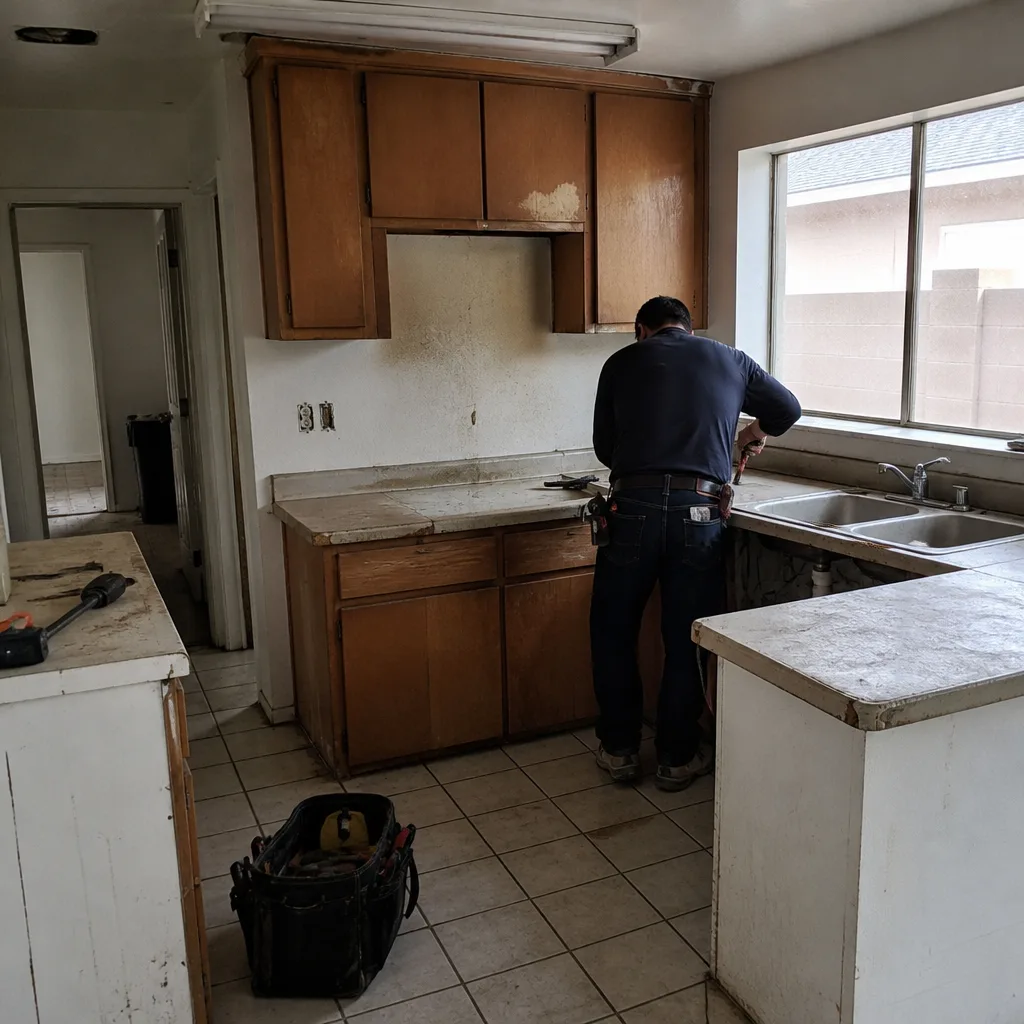 Before
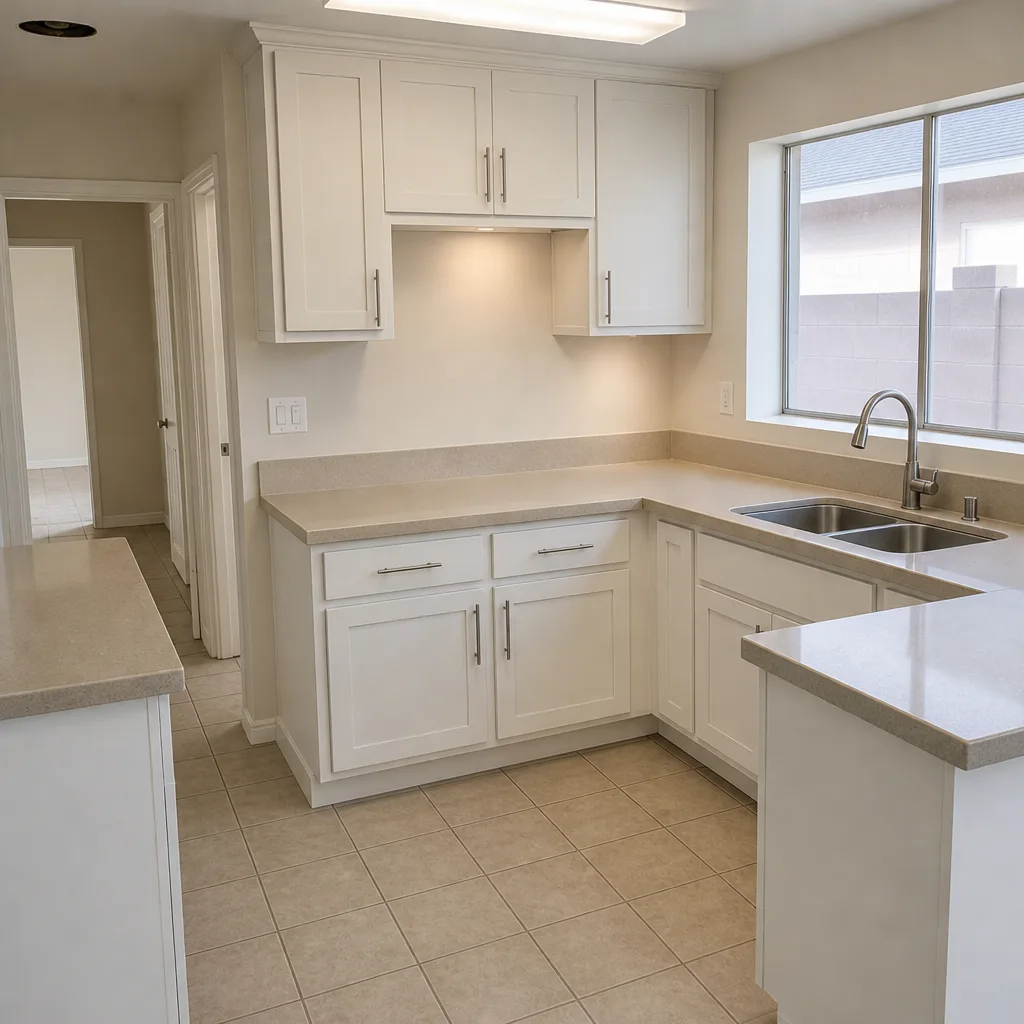 After
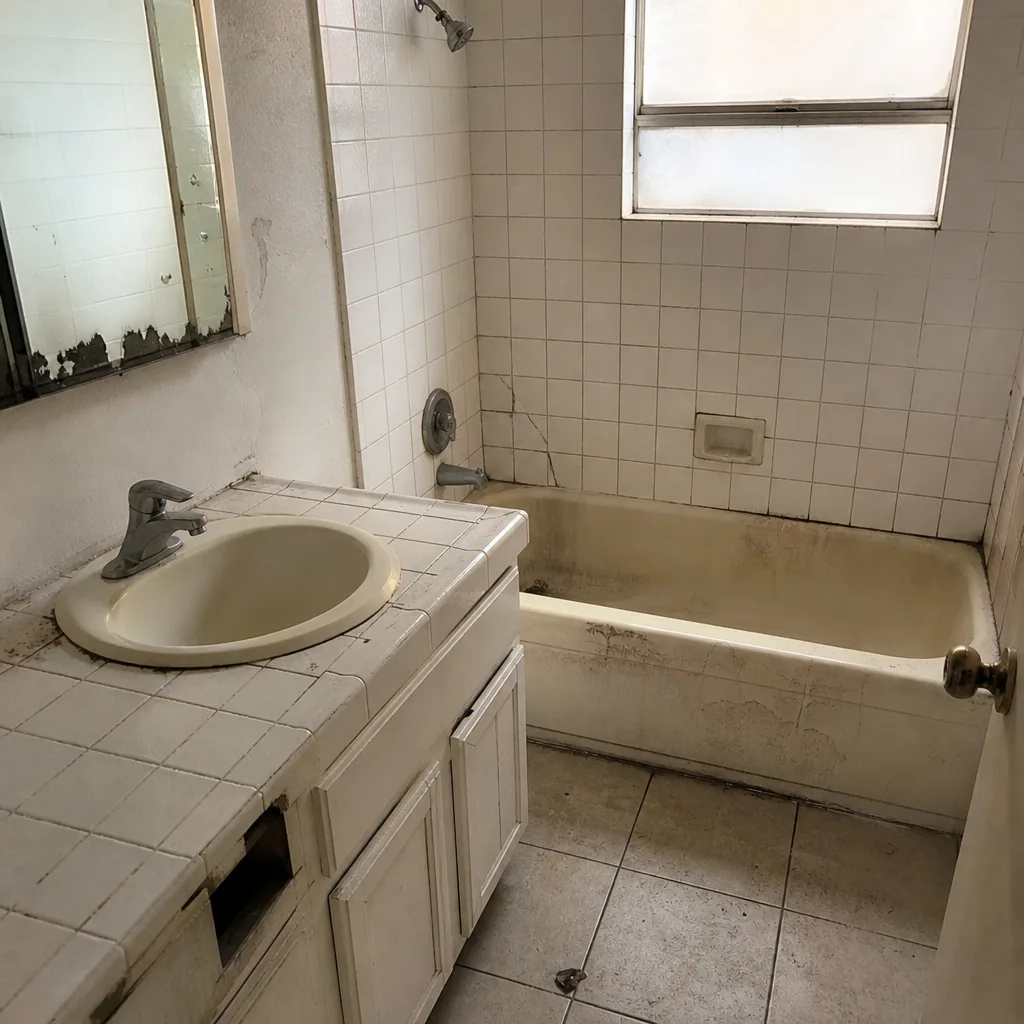 Before
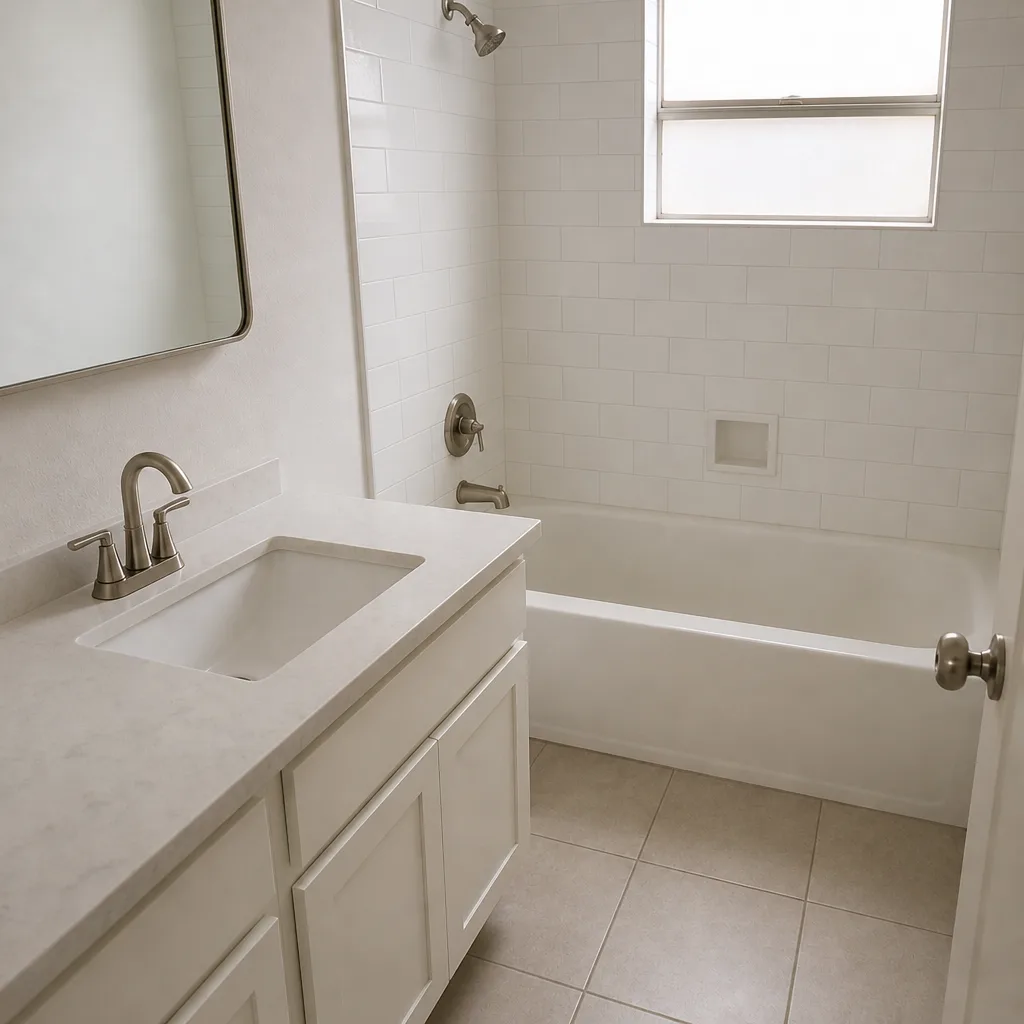 After
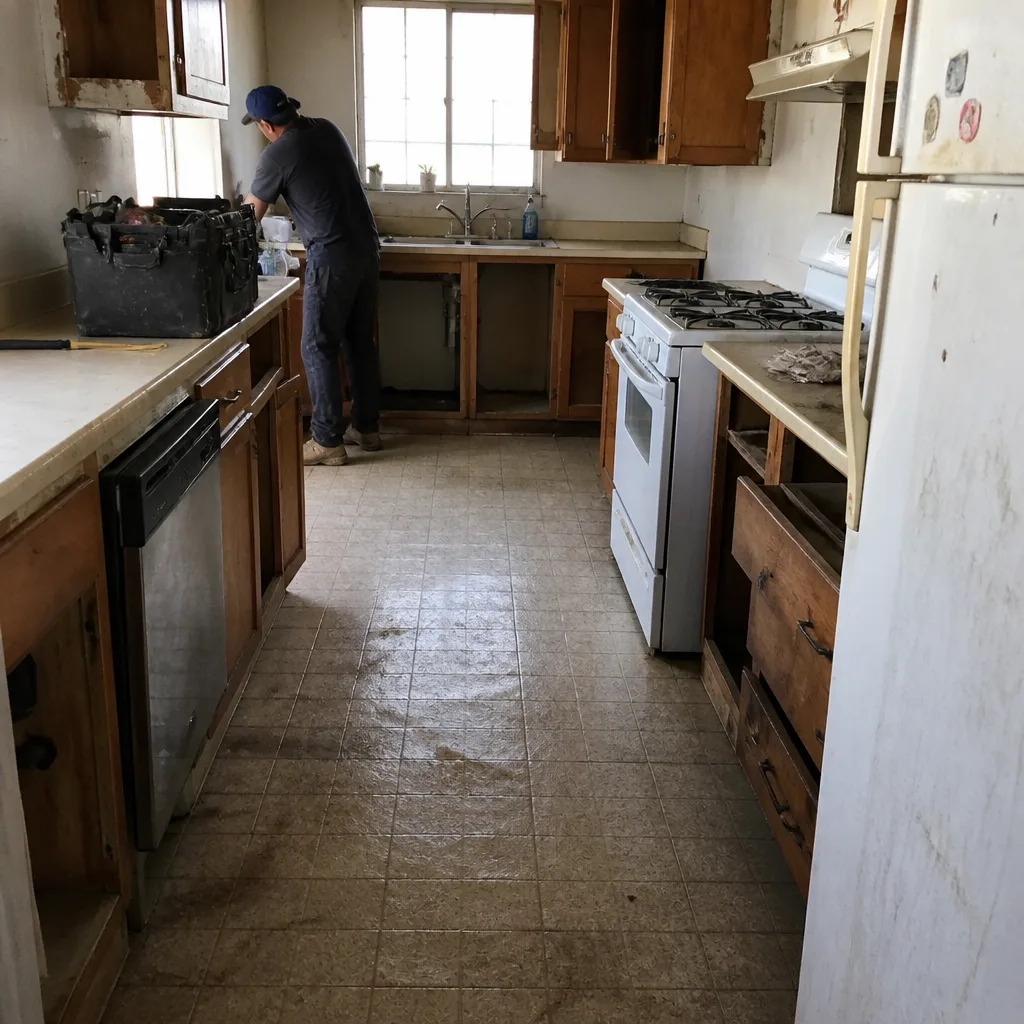 Before
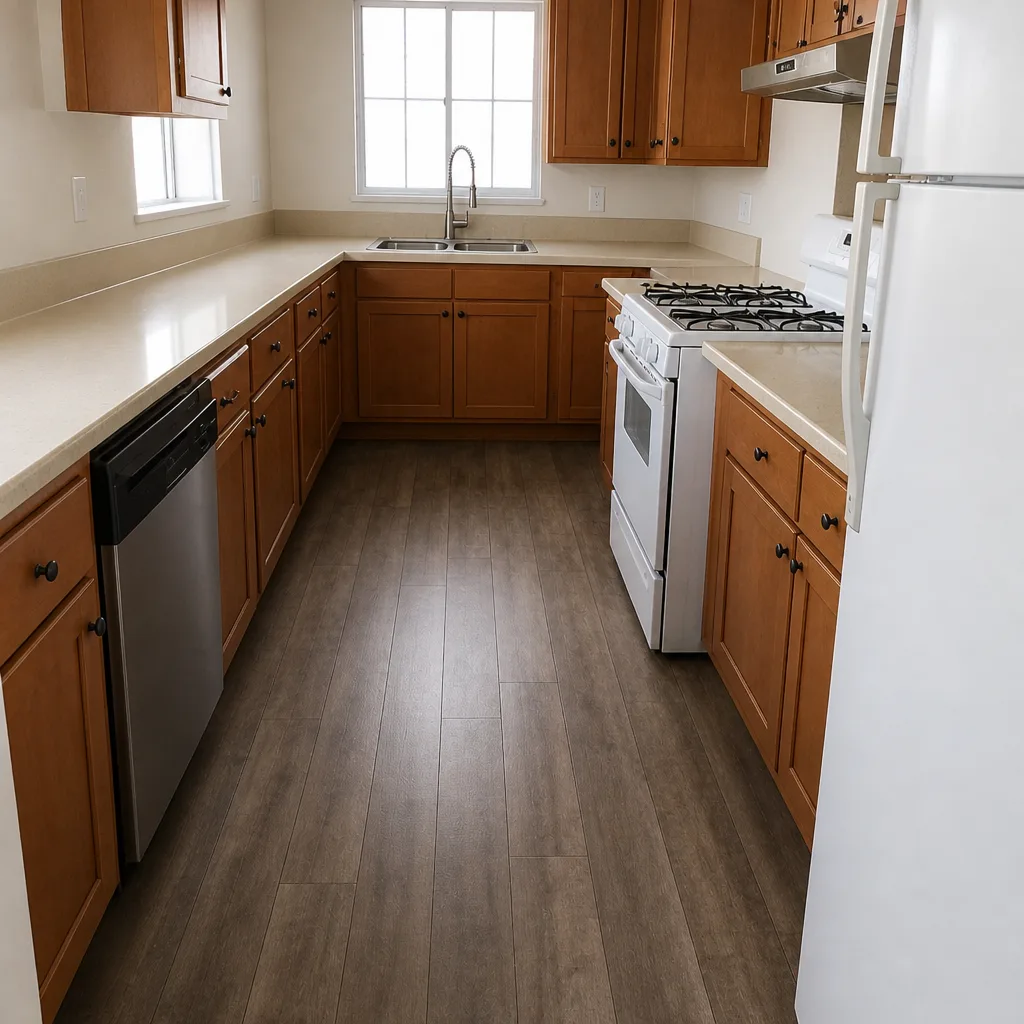 After
When to Call a Professional
Call a professional for any yellow-category defect that’s moved since you logged it, for every red-category defect regardless of movement, and any time the work involves high-tension garage door components, electrical panels or wiring, gas lines, or roof work at height. Those four categories are the ones that send people to the emergency room every year, and no amount of online instruction substitutes for a trained trade. Also call for anything under a permit requirement: structural repairs, additions, and any change to a foundation or load-bearing wall need a permit and an inspection, and pulling those is the contractor’s job, not yours.
Rowan Construction Group North Las Vegas offers free estimates in North Las Vegas – call (844) 708-4417 to schedule an assessment. Every visit includes a documented photo record at no additional charge, and every estimate comes as a written price before any work starts. If you already have a written estimate from another contractor, we’ll review it line by line as a free second opinion. Our technicians have up to 19 years of experience, are background-checked and uniformed, and a live person answers the phone around the clock.
Frequently Asked Questions
A residential geotechnical report in North Las Vegas typically runs $500 to $1,200, covering three to four boring locations and a written report on soil classification, caliche depth, and moisture content. It’s the cheapest single decision-grade tool a homeowner has for a settlement question, and it’s often required as part of the permit set for additions and ADUs. Call (844) 708-4417 for an exact scope and price on a report for your property – estimates are free.
No. The majority of stair-step cracks in North Las Vegas block walls are mortar joint shrinkage from the initial cure and have been stable since the wall was built. A stair-step crack is structural when it’s wider than 1/8 inch, when it appeared suddenly, or when the wall section on one side is offset from the other. Pencil-line the crack with a date and check it every three months; movement is the deciding factor.
Efflorescence is the white salt bloom that appears on masonry when moisture moves through and evaporates at the surface, and it’s cosmetic when the source was a single wetting event. It becomes a warning sign when it returns after dry brushing and a two-week wait, because that means moisture is entering the wall on a regular basis. Get a written assessment within 90 days if the bloom returns. Call (844) 708-4417 to schedule one.
On the concrete tile and shingle roofs common in North Las Vegas, underlayment typically has a service life of 15 to 20 years, and lap sealant at parapet flashing and valleys lasts five to seven years before it needs replacement. The tile and shingles can look fine while the layer that actually stops water is failing underneath. Get the roofline inspected with binoculars twice a year and call (844) 708-4417 to schedule a written assessment if you find anything that concerns you.
Not under our process. No change proceeds on any job until a written change order is signed, which is the discipline behind our Haven Standard Clause 1: the price is written before anyone picks up a tool. If a contractor can’t point to that same rule in their own contract, treat any verbal price as a number, not a quote. Call (844) 708-4417 to schedule a free estimate with a written price.
Cosmetic crack repair in stucco or drywall generally doesn’t require a permit, but any repair touching a foundation, a load-bearing wall, or a structural footing does. North Las Vegas requires permits for structural repairs, additions, and ADUs, and the inspection is what protects you if you sell the home. Any contractor who suggests skipping the permit is telling you something about how they work. Call (844) 708-4417 for a free estimate and we’ll confirm what your scope requires.
The Bottom Line
Most of what alarms North Las Vegas homeowners about their homes isn’t structural, and most of what’s structural doesn’t alarm them in time. Measure the cracks, date them with a pencil line, run the efflorescence test once a season, and look at your roof line with binoculars after every monsoon. When a defect moves, spreads, or appears suddenly, get a written assessment within 90 days and pay $500 to $1,200 for a geotechnical report rather than $8,000 for a repair that doesn’t address the cause. The signs are readable. The tools for reading them are cheap. The license and the insurance required to fix them are what a professional brings to the table, and that’s the point at which a call replaces the binoculars.
Call (844) 708-4417 to schedule a free estimate with Rowan Construction Group North Las Vegas. Every job is quoted with a flat written price and a written scope before work begins, every change order is signed before the change proceeds, every crew is background-checked and uniformed, and every visit comes with a documented photo record as standard. If you have a written estimate from another contractor and want a second opinion before you sign, we’ll review it line by line at no charge.
Written by the team at Rowan Construction Group North Las Vegas.